
Thermoelectric vs Compressor Wine Cooler: The Clear Winner for Your Home
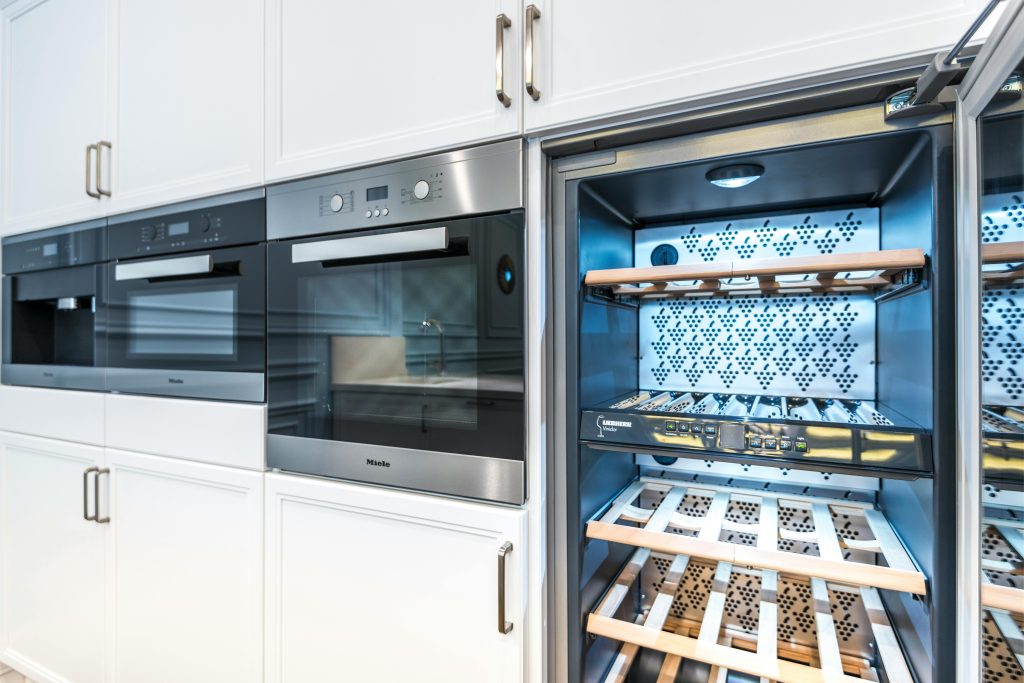 Modern kitchen with built-in appliances, including two ovens and an open wine fridge with wooden shelves, all set in white cabinetry.
Picture this: you’ve just brought home a beautiful bottle of Pinot Noir, only to realize your kitchen fridge is too cold and your countertop too warm. Sound familiar? You’re not alone. Thousands of wine lovers face this exact dilemma every day, leading them to search for the perfect wine cooler. But here’s where things get confusing – should you choose a thermoelectric or compressor wine cooler?
The good news is that by the end of this guide, you’ll know exactly which type suits your needs and why one clearly outperforms the other in most real-world situations.
Understanding the Two Main Types of Wine Coolers
 A marble bar counter displays several wine glasses with white wine, a metal ice bucket filled with white wine bottles, more bottles of wine, and a bar shelf in the background. The setting appears elegant and well-lit.
Before diving into the comparison, let’s clear up the confusion about how these systems actually work.
How Thermoelectric Wine Coolers Work
Thermoelectric wine fridges use something called the Peltier effect. Think of it as a electronic heating and cooling system with no moving parts. When electricity passes through special ceramic plates, one side gets cold while the other gets hot. A small fan then circulates the cool air around your wine bottles.
How Compressor Wine Coolers Work
Compressor wine coolers work just like your kitchen refrigerator. They use a refrigerant that cycles through coils, compressing and expanding to create cooling. A compressor motor drives this process, making it more powerful than thermoelectric systems.
The Real-World Performance Battle
 A close-up of red wine being poured from a bottle into a clear wine glass, with a blurred background and a visible hand holding the bottle.
Now comes the crucial question: which one actually performs better in your home?
Cooling Power: Compressor Takes the Lead
Here’s where compressor wine coolers clearly win. A compressor system can cool your wine collection 30-40 degrees below room temperature, while thermoelectric models struggle to reach more than 20-25 degrees below ambient temperature.
What does this mean for you? If your dining room gets warm in summer, a thermoelectric unit might fail to keep your wines at the ideal 55°F. Meanwhile, a compressor wine fridge will maintain perfect temperatures regardless of your home’s climate.
Energy Efficiency: A Surprising Truth
You might assume thermoelectric models are more energy efficient since they have fewer moving parts. While they do use less electricity per hour, they often run continuously, which can actually increase your energy bills over time.
Compressor wine coolers cycle on and off, leading to better overall efficiency in most homes. The best wine cooler to buy from an energy perspective is typically a well-insulated compressor model.
Thermoelectric Wine Fridge Pros and Cons
 Two hands are placing ice cubes into a metal bucket filled with bottled wine and ice. The bucket sits on a decorative, patterned table. The focus is on the bottles, ice, and hands.
Let’s break down the reality of owning a thermoelectric wine cooler:
Pros:
- Virtually silent operation
- No vibration to disturb wine sediment
- Lower upfront cost
- Compact designs perfect for small spaces
- No refrigerant chemicals
Cons:
- Limited cooling capacity
- Poor performance in warm rooms
- Shorter lifespan (3-5 years typical)
- Struggles in humid conditions
- Not suitable for large collections
Compressor Wine Fridge Pros and Cons
 Two men holding wine glasses stand in front of shelves filled with wine bottles, with one man reaching for a bottle. A floral arrangement is visible in the foreground on the left.
Now for compressor models:
Pros:
- Powerful, consistent cooling
- Works in any room temperature
- Longer lifespan (8-12 years)
- Better for larger collections
- More dual zone options available
Cons:
- Higher upfront cost
- Some noise from the compressor
- Slight vibration (though minimal in quality units)
- Requires proper ventilation
Which Wine Cooler is Best for Your Situation?
The answer depends on your specific needs, but here’s my honest recommendation:
Choose Thermoelectric If:
- You live in a consistently cool climate
- You want the quietest wine cooler for home use
- You’re storing fewer than 12 bottles
- You’re looking for the best wine fridge under $200
- Your wine cooler will sit in a bedroom or quiet area
Choose Compressor If:
- You want reliable performance year-round
- You’re serious about wine storage
- You plan to store more than 20 bottles
- You live in a warm climate
- You want a dual zone wine fridge
- You’re looking for the best wine fridge for home use overall
Making Your Final Decision
 A man in a white polo shirt holds a wine bottle and a glass of red wine, standing by shelves filled with wine bottles in a modern wine cellar with marble walls.
After reviewing hundreds of models and talking to countless wine enthusiasts, compressor wine coolers emerge as the clear winner for most people. They simply offer better performance, reliability, and value over time. Yes, they cost more upfront, but consider this: would you rather spend $150 on a thermoelectric unit that might struggle in summer, or invest $300-400 in a compressor model that will properly protect your wine collection for years to come?
For wine cooler beginners, I especially recommend starting with a small compressor unit. You’ll get consistent results and won’t outgrow it as quickly as you might with a limited thermoelectric model.
The best wine cooler to buy is ultimately one that fits your space, budget, and collection size while maintaining proper storage temperatures year-round. In most cases, that means choosing a quality compressor wine fridge from a reputable brand. Your wine deserves proper storage, and you deserve peace of mind knowing your investment is protected. Choose wisely, and your future self will thank you every time you open a perfectly preserved bottle.
Once you’ve chosen your cooler type, it pays to think about everything else that goes alongside it. Proper storage isn’t just about the unit itself — how you position bottles, manage humidity, and maintain the fridge across seasons all play a role. Our seasonal wine fridge maintenance guide walks you through exactly what to check and adjust throughout the year. And if you’re storing sparkling wine or Champagne, the rules are slightly different — see our guide to storing Champagne and Prosecco for specifics. For independent reviews of specific wine fridge models, The Spruce Eats wine cooler reviews offer solid, well-tested buyer guidance. A little extra research now saves a lot of disappointment later.