
Wine and Chocolate Pairing Guide
You'll discover why wine and chocolate can clash dramatically, plus the one golden rule that transforms every pairing attempt into success. We'll break down the best wines for dark, milk, and white chocolate, explore why Port wine remains the most foolproof choice, and share expert tips for hosting memorable wine and chocolate tasting events.
You'll also learn which wines to completely avoid with chocolate desserts and get a handy pairing chart to reference whenever you're planning your next chocolate and wine experience.
Why wine and chocolate is harder to pair
than most people think
The Classic Red Wine Mistake Everyone Makes
Picture this: you've splurged on a beautiful bottle of bold Cabernet Sauvignon and a bar of premium dark chocolate. You pour yourself a generous glass, break off a piece of chocolate, and settle in for what should be pure indulgence. Instead, your mouth is hit with an unpleasantly bitter, astringent mess that makes you wonder if something's wrong with the wine or the chocolate.
You're not alone in this experience. This scenario plays out countless times because most people assume that wine and chocolate pairing follows the same logic as wine and cheese – the bolder, the better. Unfortunately, wine and chocolate pairing operates by completely different rules, and what seems like a natural match often creates a flavor disaster.
Why Your Taste Buds Rebel Against Bold Reds and Dark Chocolate
The clash you experience isn't imaginary – there's real chemistry behind why red wine and chocolate pairing goes wrong so often. Dark chocolate contains natural compounds called tannins, which create that slightly dry, puckering sensation on your tongue. When you pair this with a tannic red wine like Cabernet Sauvignon or young Bordeaux, you're essentially doubling down on bitterness.
Your mouth becomes a battlefield where chocolate tannins fight wine tannins, and neither wins. Instead of the smooth, luxurious experience you expected, you get:
-
Harsh, metallic aftertastes
-
Overwhelming bitterness that masks both the wine's fruit flavors and chocolate's sweetness
-
A dry, astringent mouth feel that lingers unpleasantly
This explains why tannins work with dark chocolate only when you understand how to balance them properly, not overwhelm your palate.
The Sweetness Equation Most People Get Wrong
Here's where things get tricky: chocolate isn't just bitter – it's also sweet. Even the darkest 85% cocoa chocolate contains some sugar, while milk chocolate can be intensely sweet. When you pair sweet chocolate with a dry red wine, you create another type of imbalance.
Your palate expects harmony between sweetness levels. A bone-dry wine next to sweet milk chocolate makes the wine taste even more acidic and harsh, while the chocolate becomes cloying. This is why wine with milk chocolate requires completely different thinking than wine with dark chocolate.
The Alcohol Amplification Effect
Most people don't realize that chocolate can actually amplify the perception of alcohol in wine. The fats in chocolate coat your mouth differently than other foods, which can make high-alcohol wines taste burning or hot. This is particularly noticeable with:
-
New World Cabernets (often 14%+ alcohol)
-
Bold Shiraz or Zinfandel wines
-
Any wine above 13.5% alcohol when paired with rich chocolate desserts
Why “Rules of Thumb” Lead You Astray
The biggest problem with wine and chocolate pairing is that most advice treats all chocolate the same. You'll see suggestions like “pair red wine with chocolate” without considering that milk chocolate, dark chocolate, and white chocolate are completely different beasts requiring entirely different wine partners.
The cocoa percentage and wine pairing guide matters enormously. A 60% dark chocolate behaves nothing like an 85% dark chocolate when meeting wine. The higher the cocoa content, the more bitter compounds you're dealing with, which means your wine choice needs to shift accordingly.
Even chocolate preparation affects pairing success. Wine with chocolate cake presents different challenges than wine with pure chocolate because flour, eggs, and other ingredients change how flavors interact. Wine with chocolate truffles requires different thinking than wine with chocolate fondue due to texture and temperature differences.
The good news? Once you understand these principles, wine and chocolate pairing becomes much more predictable and enjoyable. You just need to abandon the “bold wine with rich food” mentality and learn to work with chocolate's unique characteristics instead of fighting against them.
The one golden rule of wine and chocolate pairing
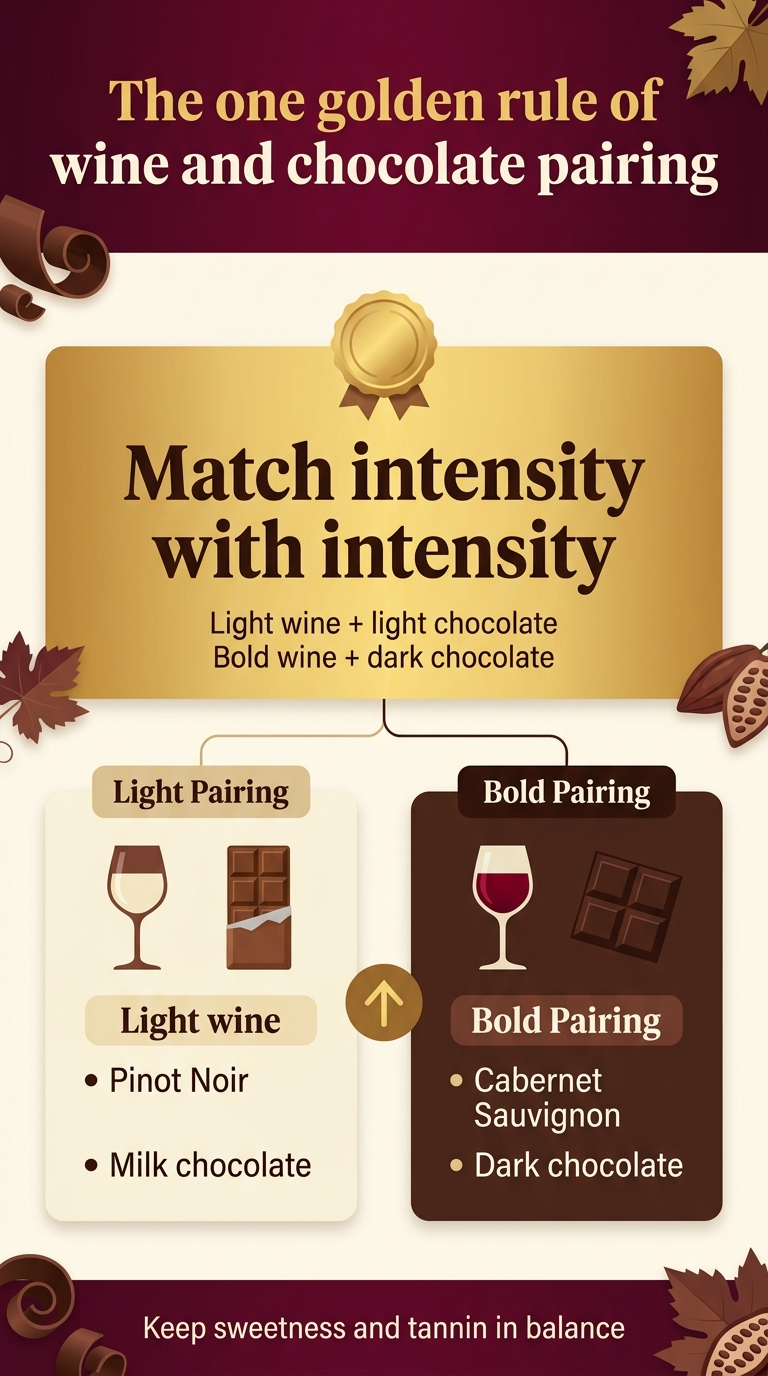
You need to remember this simple rule above all others: your wine must always be as sweet as — or sweeter than — your chocolate. This isn't just a suggestion; it's the cornerstone of successful wine and chocolate pairing that will save you from countless disappointing combinations.
When you choose a wine that's drier than your chocolate, something unpleasant happens on your palate. The sweetness of the chocolate makes the wine taste sour, thin, and almost bitter. Your taste buds perceive the contrast as harsh and unbalanced, turning what should be a luxurious experience into something that leaves you reaching for water.
Think about it this way: when you bite into a piece of dark chocolate with 70% cocoa content, your mouth experiences both sweetness and bitterness. If you follow this with a dry Cabernet Sauvignon, the wine's tannins clash with the chocolate's residual sweetness, creating an astringent sensation that overpowers both flavors. Instead of harmony, you get conflict.
Why This Rule Works Every Time
Your palate processes sweetness in a specific sequence. When you taste something sweet first, it temporarily reduces your sensitivity to sweetness in the next thing you taste. This means if your chocolate is sweeter than your wine, the wine will taste more acidic and bitter than it actually is.
The solution lies in matching or exceeding the sweetness level. When your wine is as sweet as your chocolate — or slightly sweeter — both flavors complement each other beautifully. The wine's sweetness doesn't compete with the chocolate; instead, it enhances the chocolate's cocoa notes while the chocolate brings out the wine's fruit characteristics.
A Quick Proof of Concept
Try this simple test at home: take a piece of milk chocolate and pair it first with a dry red wine, then with a Port or late-harvest Riesling. With the dry wine, you'll notice how the chocolate makes the wine taste sharp and unpleasant. With the sweet wine, both elements work together, creating layers of flavor that build on each other.
How to Apply This Rule Instantly
You don't need to be a sommelier to use this rule effectively. When selecting wine for any chocolate, ask yourself these questions:
-
Is this chocolate sweet, semi-sweet, or bitter?
-
Does my wine have noticeable sweetness, or is it dry?
-
If I'm unsure, am I choosing the sweeter option?
This rule applies whether you're pairing wine with dark chocolate, milk chocolate, white chocolate, or chocolate desserts. The specific variety of wine matters less than ensuring it meets this fundamental sweetness requirement.
Your success with wine and chocolate pairing doesn't depend on memorizing complex flavor profiles or spending hours studying wine regions. Master this one golden rule, and you'll consistently create pairings that work beautifully together, impressing your guests and satisfying your own palate every time.
Best wine with dark chocolate
Why Dark Chocolate Works Better with Bold Reds
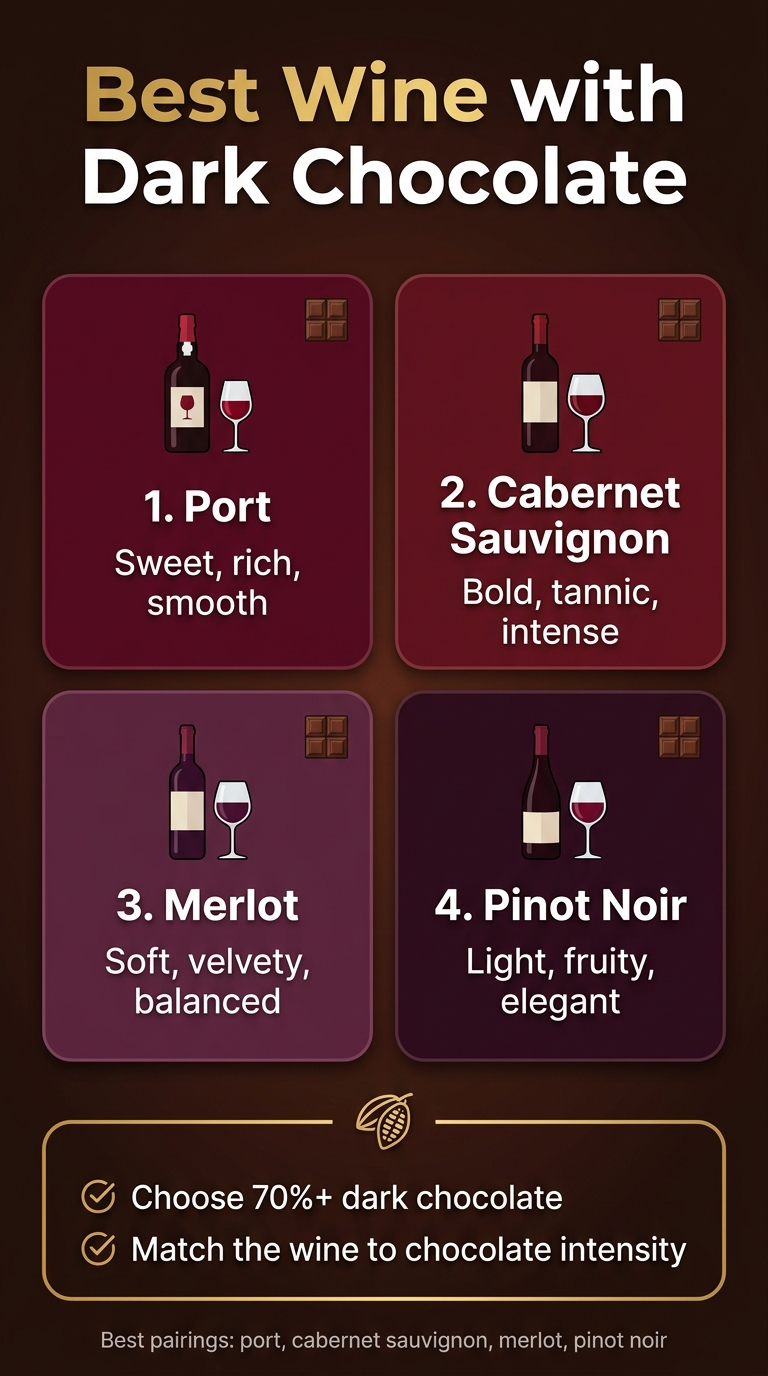
Your best bet for pairing wine with dark chocolate (70% cocoa and higher) lies with robust red wines that can stand up to chocolate's natural intensity. Dark chocolate contains more tannins and less sugar than its milk and white counterparts, creating a natural bridge with bold, tannic red wines. The cocoa's bitter compounds actually complement the tannin structure in red wine rather than fighting against it.
When you sip a full-bodied red alongside dark chocolate, the tannins in both interact to smooth out any harsh edges while amplifying the rich, earthy flavors. This is why light, delicate wines fall flat with dark chocolate – they simply can't match its power.
Top Wine Choices for Dark Chocolate
Zinfandel
You'll love how California Zinfandel‘s jammy fruit flavors play against dark chocolate's intensity. The wine's natural spiciness and moderate tannins create a warming sensation that brings out chocolate's deeper notes. Look for bottles like Turley Wine Cellars Zinfandel or Ridge Lytton Springs – both have the structure to complement 70-85% cocoa without being overwhelmed.
Cabernet Sauvignon
This pairing only works with high-cocoa dark chocolate (75% and above). Cabernet's firm tannins and dark fruit flavors mirror chocolate's complexity beautifully. You'll taste how the wine's blackcurrant notes enhance chocolate's fruity undertones while the tannins balance any lingering bitterness. Try Caymus Napa Valley Cabernet or Justin Isosceles for exceptional results.
Malbec
Argentine Malbec brings a velvet-smooth texture that melts perfectly with dark chocolate. The wine's plush fruit and soft tannins create an almost dessert-like experience. You'll notice how Malbec's natural earthiness complements chocolate's roasted qualities. Catena Malbec and Alamos Malbec both offer excellent value for chocolate pairing.
Banyuls – The Classic French Match
This fortified wine from southern France represents the gold standard for chocolate pairing. Banyuls combines the richness of port with unique Mediterranean flavors that seem custom-made for dark chocolate. You'll experience layers of dried fruit, nuts, and spice that echo and amplify chocolate's complexity.
Ruby Port
Ruby Port's sweetness and concentration make it nearly foolproof with dark chocolate. The wine's berry flavors and fortified strength create a luxurious combination that feels indulgent without being cloying. Graham's Six Grapes or Cockburn's Fine Ruby Port offer reliable options that work with any quality dark chocolate.
What Doesn't Work and Why
Avoid pairing dark chocolate with light reds like Pinot Noir or Beaujolais – these wines taste thin and acidic against chocolate's richness. Dry white wines create an even worse match, as their acidity clashes harshly with cocoa's tannins, leaving an unpleasant metallic aftertaste. Save your Sauvignon Blanc and Chardonnay for other occasions when dark chocolate isn't on the menu.
The key is matching intensity with intensity – your wine needs enough body and flavor concentration to complement rather than compete with dark chocolate's bold character.
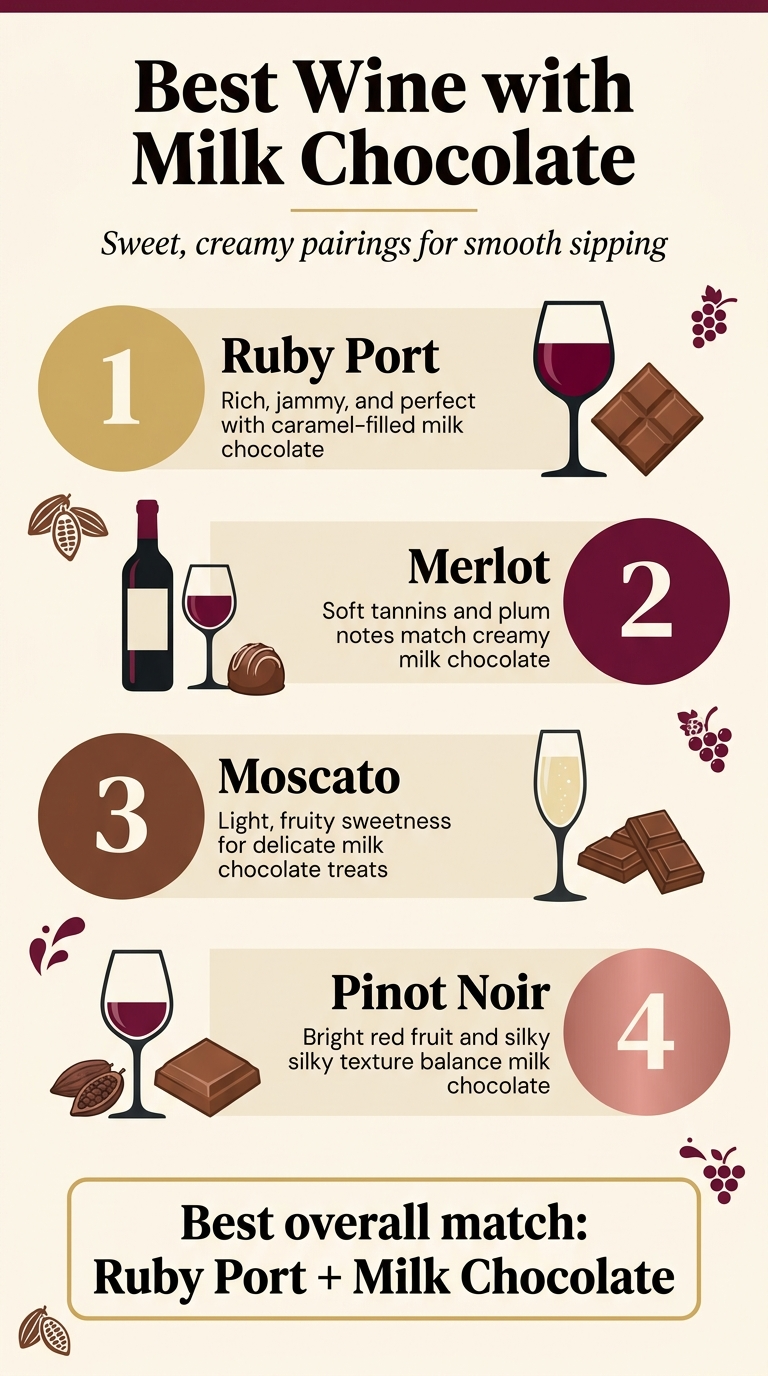
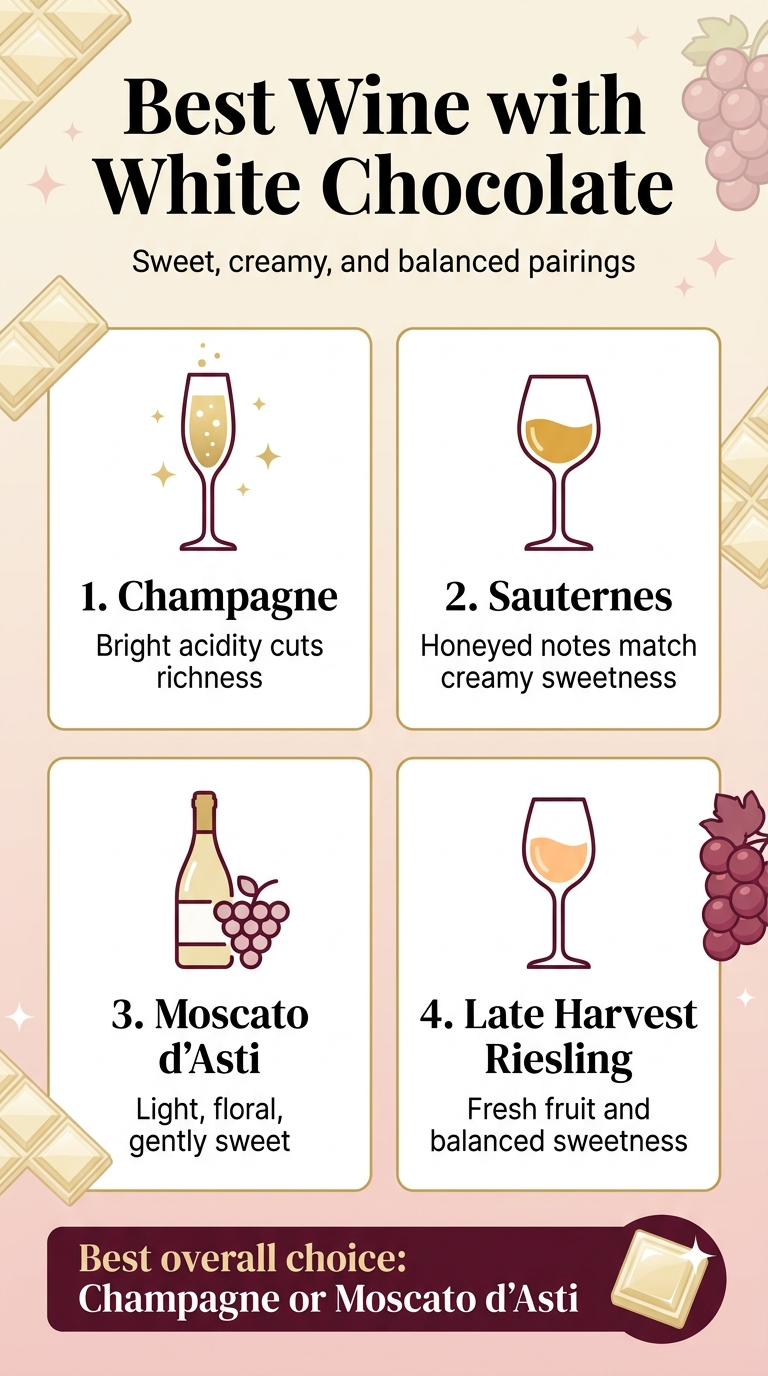
Port wine and chocolate: why this is the most reliable pairing
Why Port Wine Reigns Supreme
When it comes to wine and chocolate pairing, Port wine stands alone as the undisputed champion. You'll find that sommeliers consistently recommend Port above all other wines because it delivers reliable, delicious results across virtually every chocolate type. The secret lies in Port's unique production process – the addition of grape spirits during fermentation creates a naturally sweet, fortified wine that harmonizes beautifully with chocolate's complex flavors.
Port's high alcohol content (typically 19-20%) and residual sweetness create the perfect balance to complement chocolate's richness without being overpowered. You won't experience the clash that often happens when dry wines meet sweet chocolate, making Port your safest bet for impressive pairings every time.
Ruby Port with Dark Chocolate: A Classic Match
Ruby Port represents your entry point into the world of Port wine with chocolate. This youthful, vibrant style maintains fresh fruit flavors and a ruby-red color that pairs exceptionally well with dark chocolate containing 60-85% cocoa.
You'll discover that Ruby Port's berry flavors – think blackberry, cherry, and plum – create a stunning contrast with dark chocolate's bitter intensity. The wine's sweetness softens chocolate's harsh edges while its fruit notes add complexity to each bite. Try pairing a quality Ruby Port with single-origin dark chocolate from Ecuador or Madagascar for an experience that showcases both products' distinct characteristics.
For your next chocolate tasting, consider these Ruby Port combinations:
-
70% dark chocolate with raspberry-filled centers
-
Plain dark chocolate squares with sea salt
-
Dark chocolate truffles dusted with cocoa powder
Tawny Port: Perfect for Milk Chocolate Adventures
Tawny Port takes your chocolate pairing game to the next level, especially when you're working with milk chocolate and caramel-based confections. This style ages in wooden barrels, developing nutty, caramel, and dried fruit flavors that mirror the creamy sweetness of milk chocolate.
You'll find that aged Tawny Port (10, 20, or 30-year expressions) offers incredible depth with notes of toffee, almonds, and figs. These flavors create seamless bridges with milk chocolate's buttery texture and vanilla undertones. The wine's amber color even visually complements milk chocolate's warm brown hue.
Your best Tawny Port pairings include:
-
Milk chocolate with hazelnuts or almonds
-
Caramel-filled chocolates
-
Chocolate pralines
-
Milk chocolate with coffee or espresso centers
LBV Port: Your Chocolate Dessert Board Star
Late Bottled Vintage (LBV) Port offers you the perfect middle ground between Ruby and Vintage Port styles. This wine spends 4-6 years in barrel before bottling, developing more complexity than Ruby Port while remaining approachable and ready to drink immediately.
LBV Port shines when you're creating chocolate dessert boards because it complements multiple chocolate types simultaneously. You can confidently serve one bottle with an assortment that includes dark chocolate bonbons, milk chocolate cookies, and even white chocolate-covered strawberries.
The wine's balanced structure handles variety beautifully, making it your go-to choice when you're unsure about your guests' chocolate preferences. LBV Port's moderate tannins and concentrated fruit flavors adapt to whatever chocolate combinations you present.
Pro Tips for Perfect Port and Chocolate Service
Temperature matters significantly when you're serving Port wine with chocolate. Serve your Port slightly chilled (60-65°F) to maintain freshness while allowing the wine's complex flavors to shine. Let your chocolate come to room temperature before serving – this allows the cocoa butter to soften, releasing maximum flavor.
Consider the intensity matching principle: lighter Ports work better with milk chocolate, while robust Vintage Ports can handle the most intense dark chocolates. You'll achieve the best results when both elements complement rather than compete with each other.
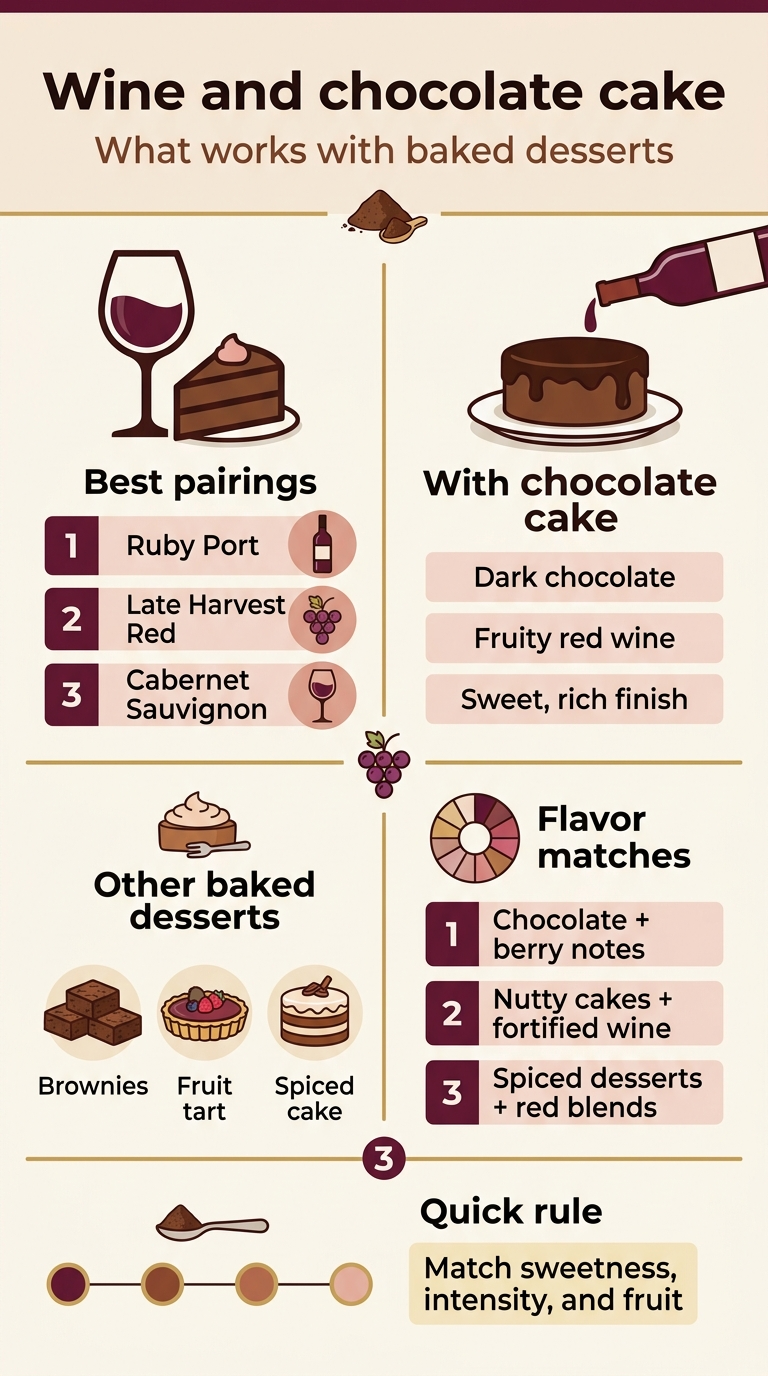
Wine and chocolate cake: what works with baked desserts
Why Chocolate Desserts Change the Wine Pairing Game
When you move from a simple chocolate bar to baked chocolate desserts, everything changes. Your wine pairing strategy needs to adapt because baked desserts bring different sugar levels, textures, and additional ingredients that can completely alter how the chocolate interacts with wine. The flour, eggs, butter, and varying sweetness levels in chocolate cake create a more complex flavor profile than pure chocolate alone.
You'll find that the cocoa percentage becomes less important when dealing with baked goods, while factors like moisture content, additional flavors, and overall sweetness take center stage. A rich chocolate fondant with its molten center requires a different wine approach than a light chocolate sponge cake or an airy chocolate mousse.
Sparkling Shiraz: The Australian Secret for Chocolate Cake
Your dinner party guests will be amazed when you serve sparkling Shiraz with chocolate cake. This Australian classic works brilliantly because the wine's natural fruit flavors complement the cake's sweetness while the bubbles cleanse your palate between bites. The effervescence cuts through the dense texture of chocolate cake, preventing palate fatigue that can happen with still wines.
Sparkling Shiraz brings just enough tannins to balance the chocolate without overwhelming the delicate cake structure. You'll discover that the wine's berry notes enhance any fruit elements in your dessert, whether it's chocolate-berry cake or even a simple chocolate layer cake with vanilla frosting.
French Fortified Wines: Banyuls and Maury with Chocolate Fondant
For your most impressive chocolate desserts like molten chocolate fondant or lava cake, reach for Banyuls or Maury – these French fortified wines from the Languedoc region are your secret weapons. Both wines offer the perfect balance of sweetness and complexity to match the intense chocolate experience of a warm fondant.
Banyuls, with its nutty, dried fruit characteristics, complements the rich, flowing chocolate center beautifully. The wine's natural acidity prevents the pairing from becoming cloying, while its fortified strength matches the dessert's intensity. Maury offers similar benefits with slightly more robust flavors that can handle even the darkest chocolate fondants.
These wines work because they're made from Grenache grapes that develop concentrated flavors through partial fermentation, creating natural sweetness that doesn't compete with your dessert but enhances it.
Recioto della Valpolicella: The Mousse Master
When you're serving chocolate mousse, Recioto della Valpolicella becomes your best friend. This Italian sweet red wine has the perfect light body to complement mousse's airy texture without overwhelming its delicate nature. The wine's dried fruit flavors – think raisins and figs – create beautiful harmony with chocolate's earthiness.
You'll appreciate how Recioto's natural sweetness matches the mousse's sugar content while its gentle acidity keeps each spoonful fresh and interesting. The wine's silky texture mirrors the mousse's smoothness, creating a luxurious mouthfeel experience that your guests will remember.
Practical Dinner Party Strategies
Your wine selection should consider the entire dessert course, not just the chocolate element. If you're serving chocolate cake with coffee, choose wines that complement both flavors. For chocolate desserts with nuts, look for wines with complementary nutty notes. When your chocolate dessert includes caramel or toffee elements, fortified wines with oxidative aging characteristics work wonderfully.
Keep your wine serving temperature slightly cooler than usual with chocolate desserts – this prevents the sweetness from becoming overwhelming and maintains the wine's refreshing qualities throughout the dessert course.
Sparkling Wine and Chocolate Pairings for Special Occasions
Champagne's Effervescence with Dark Chocolate Intensity
When you pair Champagne with dark chocolate, you're creating a sophisticated contrast that transforms both elements. The bubbles cut through the richness of cocoa while the wine's acidity brightens the chocolate's deep, sometimes bitter notes. However, you need to choose your Champagne style carefully.
Avoid bone-dry Brut Champagne with chocolate – the stark dryness clashes with the sweetness. Instead, reach for a Demi-Sec Champagne or a rich Blanc de Noirs style. The slight sweetness in Demi-Sec creates harmony with dark chocolate's natural sugars, while the fuller body of Blanc de Noirs stands up to chocolate's intensity.
Your best bet is pairing vintage Champagne with premium dark chocolate (70% cocoa or higher). The aged complexity in vintage bottles mirrors the sophisticated flavor development in quality dark chocolate. Try this combination with chocolate truffles dusted with sea salt – the effervescence lifts the salt while complementing the chocolate's earthiness.
Prosecco's Light Touch with Delicate Chocolate Mousse
Prosecco brings a gentler approach to wine and chocolate pairing. Its softer bubbles and naturally lower acidity make it perfect for delicate chocolate preparations where you don't want the wine overpowering subtle flavors.
You'll find Prosecco works beautifully with chocolate mousse, especially milk chocolate versions. The wine's light sweetness doesn't compete with the dessert's creamy texture, and the bubbles provide a cleansing palate effect between spoonfuls. Extra Dry Prosecco offers just enough sweetness to complement without overwhelming.
For your next dinner party, try serving Prosecco di Valdobbiadene with white chocolate mousse infused with lemon or vanilla. The wine's floral notes enhance these delicate flavors while the effervescence keeps your palate refreshed.
Rosé Sparkling Wine's Romance with Strawberry Chocolate
Rosé sparkling wine creates magical moments with chocolate, especially when fruit flavors enter the picture. The wine's berry notes naturally complement chocolate-covered strawberries or strawberry-filled chocolates, creating a pairing that's both romantic and delicious.
You can choose from Champagne Rosé, Rosé Crémant, or even sparkling rosé from California or Australia. Each brings subtle differences – French versions tend toward elegance and minerality, while New World options often show more fruit-forward character.
This pairing shines during Valentine's Day or anniversary celebrations. The pink hue sets a romantic mood while the flavors create genuine harmony. Try pairing a dry rosé sparkling wine with dark chocolate bark studded with dried strawberries and pistachios.
Cava's Crisp Character with Nutty Chocolate Varieties
Spanish Cava offers exceptional value in sparkling wine and chocolate pairing. Its crisp, clean profile works wonderfully with chocolates featuring nuts, caramel, or toffee elements. The wine's bright acidity cuts through rich, buttery flavors while its mineral backbone provides structure.
You'll discover Cava particularly excels with praline chocolates, chocolate-covered almonds, and chocolate bars with hazelnuts. The wine's traditional method production creates fine bubbles that enhance rather than overwhelm these textural combinations.
Gran Reserva Cava, aged longer on its lees, develops more complexity that pairs beautifully with sophisticated chocolate creations like salted caramel truffles or chocolate with marcona almonds.
Creating Celebration-Worthy Combinations for Any Event
Your sparkling wine and chocolate pairing success depends on matching intensity levels and complementary flavors. Start with these proven combinations:
-
Birthday celebrations: Moscato d'Asti with white chocolate birthday cake
-
Anniversaries: Champagne Rosé with dark chocolate-dipped strawberries
-
Holiday parties: Lambrusco with chocolate brownies or chocolate fondue
-
New Year's Eve: Crémant de Loire with chocolate truffles
Temperature matters significantly in these pairings. Serve your sparkling wines properly chilled (45-50°F) and let your chocolates come to room temperature for optimal flavor release. Create tasting flights by offering three different sparkling wines with various chocolate styles, allowing guests to discover their preferred combinations.
Consider the timing too – sparkling wine with chocolate works best as a dessert course or late-evening treat rather than with heavy meals.
Expert Tips for Hosting Wine and Chocolate Tasting Events
Setting Up Your Tasting Space
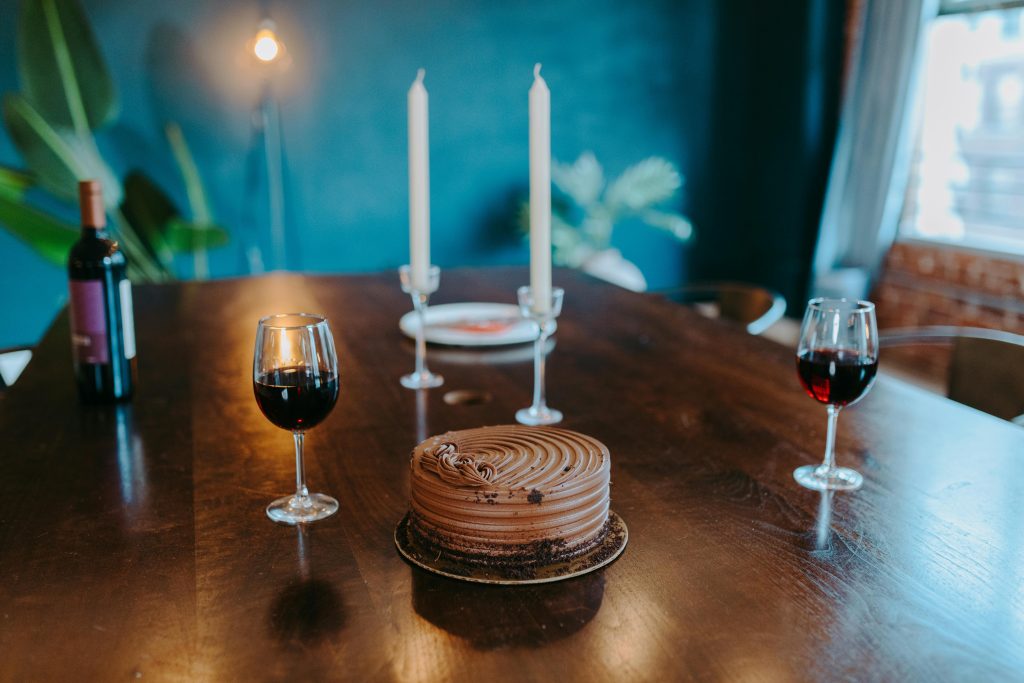
Creating the perfect environment for your wine and chocolate tasting event sets the stage for an unforgettable experience. Choose a well-lit room with natural light if possible, as your guests will want to properly see the colors of both the wine and chocolate. Set up individual tasting stations with proper glassware – you'll need different glasses for reds, whites, and sparkling wines. Provide each guest with a tasting mat or placemat that includes spaces for multiple wine glasses and small plates for chocolate samples.
Keep the room temperature comfortable but slightly cool, around 65-68°F, since chocolate can melt quickly and wine should be served at proper temperatures. Have plenty of water available and provide small crackers or plain bread for palate cleansing between tastings. This becomes especially important when you're moving from dark chocolate with bold red wine to white chocolate with sweet wine pairings.
Choosing Your Wine and Chocolate Selection
Your success depends heavily on thoughtful selection of both wines and chocolates. Start with three to five wine styles that showcase different pairing principles. Include a Port wine with chocolate pairing as your anchor – this combination rarely fails and gives guests confidence. Add a bold red wine like Cabernet Sauvignon with dark chocolate, a lighter option like Pinot Noir with milk chocolate, and perhaps a sweet white wine with white chocolate.
For chocolates, choose varying cocoa percentages to demonstrate how darkness affects wine choice. Include 70-85% dark chocolate, quality milk chocolate around 30-40% cocoa, and premium white chocolate. Consider adding flavored chocolates like salted caramel or orange-infused varieties to show how additional flavors impact wine pairing choices.
Structuring the Tasting Experience
Begin your event with lighter pairings and progress toward more intense combinations. Start with sparkling wine and lighter chocolates before moving to the robust Port wine and dark chocolate pairings that many consider the gold standard. This progression prevents the heavier, more tannic wines from overwhelming your guests' palates early in the evening.
Guide your guests through each pairing systematically. Have them taste the wine first, then the chocolate, then both together. This sequence helps them understand how the flavors interact and why certain combinations work while others clash. Explain the reasoning behind each pairing – why tannins complement dark chocolate's bitterness, or how the sweetness in dessert wine balances chocolate's intensity.
Interactive Elements and Education
Make your tasting interactive by including blind pairing challenges where guests match wines to chocolates without knowing the combinations beforehand. Create scorecards where attendees can rate each pairing and note their preferences. This engagement helps guests develop their own palate preferences and understand wine and chocolate pairing principles.
Share interesting facts throughout the evening about cocoa percentage and wine pairing, or why milk chocolate proves harder to pair with wine than dark chocolate. Explain how the fat content in chocolate affects wine perception and why certain wine styles work better than others with chocolate desserts.
Managing the Flow and Timing
Plan for 15-20 minutes per pairing combination to allow proper tasting and discussion. Provide palate cleansers between each pairing – unsalted crackers, plain water, and even apple slices work well. Watch your guests' energy levels and adjust timing accordingly, as wine and chocolate can be quite rich together.
Consider ending with a special treat like wine with chocolate cake or chocolate truffles paired with a dessert wine. This creates a memorable finale that guests will associate with successful wine and chocolate pairing experiences.
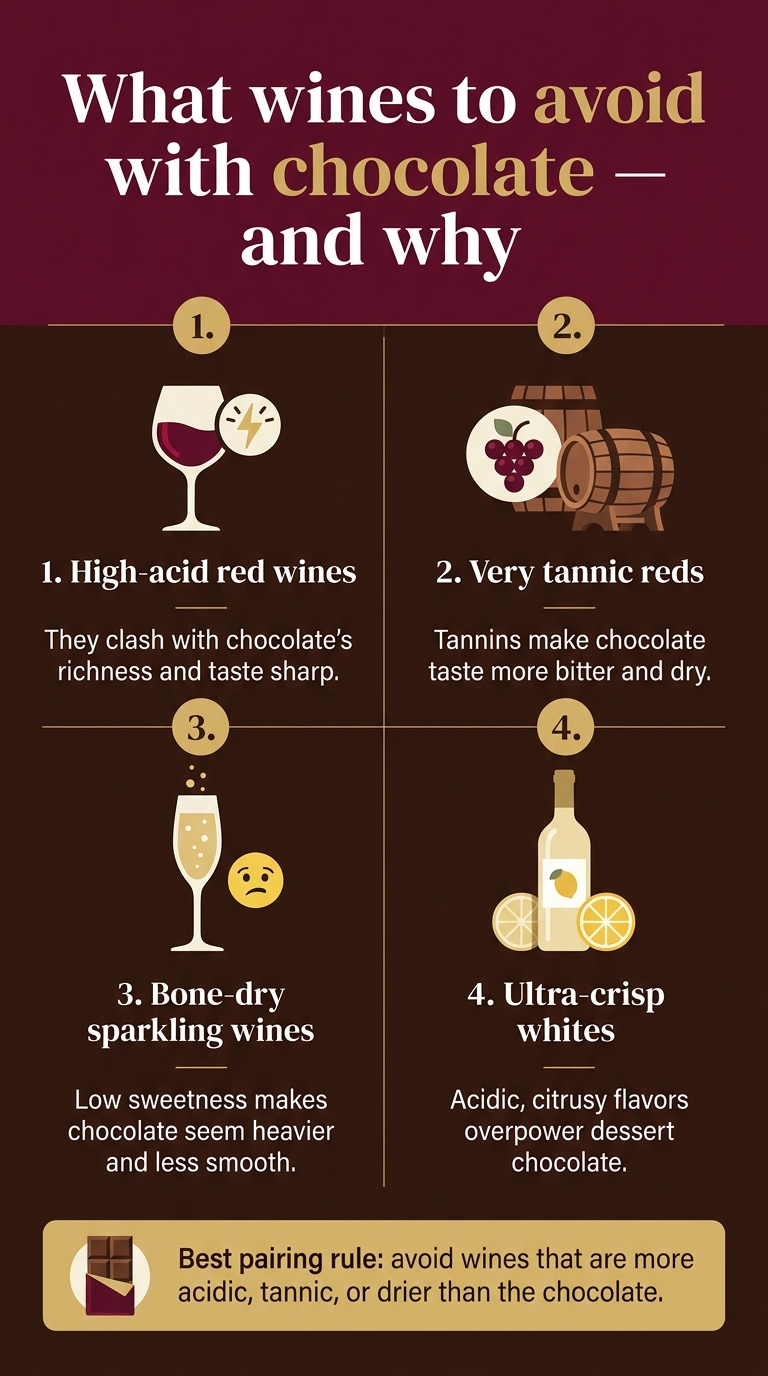
What wines to avoid with chocolate — and why
Dry Tannic Reds with Delicate Chocolates
Young Cabernet Sauvignon, aggressive Barolo, or any high-tannin red wine will completely overpower milk chocolate and white chocolate. The harsh tannins clash with the delicate sweetness, creating a bitter, astringent experience that makes both the wine and chocolate taste unpleasant.
Your best wine with dark chocolate might be a bold Malbec, but that same wine will destroy the subtle flavors in milk chocolate. The cocoa content in milk chocolate (usually 30-40%) simply can't stand up to the intensity of these wines. You'll end up tasting mostly bitterness with none of the creamy, sweet notes that make milk chocolate appealing.
White chocolate faces an even worse fate against tannic reds. Since white chocolate contains no cocoa solids, it relies entirely on cocoa butter, vanilla, and sugar for its flavor profile. Heavy tannins will completely mask these delicate notes, leaving you with an unbalanced, harsh combination that does neither component any favors.
Dry White Wines and Sparkling Wines
Crisp Sauvignon Blanc, bone-dry Chablis, and most dry Champagnes create a jarring contrast with chocolate's natural sweetness. The high acidity in these wines fights against the sugar content in chocolate, creating a sour, unpleasant taste that highlights all the wrong flavors.
You might think sparkling wine adds celebration to chocolate, but dry Champagne with chocolate is actually one of the worst wine and chocolate pairing combinations possible. The bubbles intensify the acidity, making the clash even more pronounced. Your chocolate will taste flat and overly sweet, while the wine becomes sharp and unforgiving.
Even with dark chocolate, dry whites struggle because they lack the body and richness needed to complement chocolate's intensity. The wine becomes thin and acidic against chocolate's richness, creating an unbalanced experience where neither component shines.
Oaked Chardonnay Disasters
Heavily oaked Chardonnay presents a unique problem when paired with any type of chocolate. The oak tannins interact with chocolate's compounds in a way that creates an unpleasant metallic taste that lingers on your palate long after you've finished both the wine and chocolate.
This metallic reaction happens because oak tannins are different from grape tannins. While grape tannins can complement chocolate's bitterness (especially in dark chocolate), oak tannins create chemical interactions that produce off-flavors. You'll notice this metallic taste most prominently with milk chocolate and white chocolate, but even dark chocolate suffers from this pairing.
Light-Bodied Wines That Get Lost
Delicate Pinot Grigio, light Beaujolais, and other subtle wines simply disappear when paired with chocolate. Chocolate's rich, intense flavors completely overwhelm these wines, making them taste like water with a slight alcoholic bite.
Your wine with chocolate cake or wine with chocolate dessert needs enough body and flavor intensity to hold its own. Light wines can't compete with chocolate's natural richness, leaving you with an unbalanced pairing where you're essentially eating chocolate with flavorless liquid.
Overly Sweet Wines
While sweet wines generally work better with chocolate than dry wines, some dessert wines are so sweet they compete directly with chocolate rather than complementing it. Late-harvest Rieslings with residual sugar above 150g/L can make chocolate taste bitter and unappetizing because your palate becomes overwhelmed with sweetness from multiple sources.
The key is finding wines with enough sweetness to complement chocolate without creating sugar overload that numbs your taste buds to both components' unique characteristics.
Wine and chocolate pairing chart — save this reference
You'll want to bookmark this comprehensive wine and chocolate pairing chart—it's your go-to reference for creating perfect combinations every time. Whether you're planning a romantic evening or hosting friends, this chart takes the guesswork out of pairing wine with chocolate.
| Chocolate Type | Best Wine Match | Second Best Option |
|---|---|---|
| Dark Chocolate (70%+) | Tawny Port | Cabernet Sauvignon |
| Dark Chocolate (60-70%) | Ruby Port | Malbec |
| Milk Chocolate | Pinot Noir | Moscato d'Asti |
| White Chocolate | Moscato | Demi-Sec Champagne |
| Chocolate Truffles | Banyuls | Recioto della Valpolicella |
| Chocolate Cake | Zinfandel | Lambrusco |
| Chocolate Mousse | Sauternes | Sweet Riesling |
| Chocolate Brownies | Shiraz | Merlot |
| Chocolate Fondue | Port (any style) | Maury |
| Salted Chocolate | Tawny Port | Barolo |
| Orange Chocolate | Moscato | Gewürztraminer |
| Mint Chocolate | Ruby Port | Beaujolais |
| Hazelnut Chocolate | Pinot Noir | Chianti Classico |
| Chocolate Cheesecake | Late Harvest Riesling | Rosé Champagne |
| Hot Chocolate | Amaretto | Bailey's Irish Cream |
How to Use This Wine and Chocolate Pairing Guide
Your chocolate's cocoa percentage matters more than you might think when selecting wine. Dark chocolates with higher cocoa content pair beautifully with bold, tannic red wines or fortified wines like Port. The bitterness in dark chocolate actually complements the tannins in red wine, creating a harmonious balance.
For milk chocolate, you'll want to dial down the intensity. Lighter red wines or slightly sweet options work best because milk chocolate's creaminess can be overwhelmed by heavy, tannic wines. White chocolate presents unique challenges since it contains no actual cocoa—think of it more as a sweet, vanilla-flavored confection that pairs well with dessert wines.
Special Occasion Pairings
When you're hosting a wine and chocolate tasting event, this chart becomes your secret weapon. Start with lighter pairings like milk chocolate and Pinot Noir, then work your way up to the bold combinations like dark chocolate with Tawny Port. Your guests will appreciate the progression from delicate to intense flavors.
For Valentine's Day or romantic evenings, focus on the Port wine pairings—they're virtually foolproof and create an elegant, sophisticated experience. Ruby Port with 60-70% dark chocolate creates the perfect balance of sweetness and richness that makes any evening special.
Pro Tips for Perfect Pairings
Temperature plays a crucial role in your wine and chocolate experience. Serve your wines at proper temperatures: reds around 60-65°F and dessert wines slightly cooler. Let your chocolate reach room temperature before tasting—cold chocolate mutes flavors and makes pairing more difficult.
When you're trying artisan or Belgian chocolates, stick to the fundamentals in this chart but be prepared to adjust. Small-batch chocolates often have unique flavor profiles that might work better with your second-choice wine option.
Affordable Wine and Chocolate Combinations
You don't need to break the bank for excellent wine and chocolate pairings. Many of the wines in this chart are available for under $20, making them perfect for regular enjoyment. Portuguese Ports offer exceptional value, while Spanish wines like Jumilla or Monastrell provide affordable alternatives to pricier Cabernet Sauvignons.
You now have all the tools you need to create stunning wine and chocolate pairings that will impress your guests and delight your taste buds. Remember the golden rule: match the intensity of your wine with the intensity of your chocolate, and you'll rarely go wrong. Port wine remains your safest bet when you're unsure, while sparkling wines can elevate special occasions into memorable experiences.
The next time you're planning a dinner party or simply treating yourself to an indulgent evening, skip the guesswork and refer back to your pairing chart. Start with small tastings to discover your personal preferences, and don't be afraid to experiment beyond the traditional combinations. Your palate is unique, and the perfect pairing is the one that brings you the most joy. Save that reference chart, gather some quality chocolate and wine, and start your delicious journey into one of the world's most sophisticated flavor adventures.
Take Your Dessert Pairing Knowledge Further
Wine and chocolate is one speciality within the broader world of dessert and wine pairing — and understanding the principles here opens up every other sweet pairing too. Our 7 tasty pairings for dessert and wine guide covers fruit tarts, cheesecake, crème brûlée, and more with the same sweetness-matching logic you've found here. If Port wine has become a new discovery for you, our complete guide to fortified wines covers Ruby, Tawny, Vintage, and LBV Port in depth alongside Sherry, Madeira, and Marsala — everything you need to shop and serve with confidence. And if you're planning a wine and chocolate tasting event, our food and wine pairing guide covers the hosting logistics and pairing principles that make any tasting evening run smoothly.