
Wine oxidation is defined as the chemical process where oxygen exposure alters a wine’s color, aroma, and flavor. The primary compound responsible for oxidative aromas is acetaldehyde, which has a low perception threshold of around 100 mg/L. Sulfur dioxide (SO₂) acts as wine’s main antioxidant defense, and EU legal maximums set SO₂ at 150 mg/L for dry red wines and 200 mg/L for dry white wines. Oxidation can be a winemaker’s tool or a wine’s worst enemy, depending entirely on how much oxygen gets in and when.
Affiliate Disclosure: Some links on Fine Wine World are affiliate links, meaning we may earn a paid commission if you click through and make a purchase — at no extra cost to you. Affiliate programs use cookies to track commissions, which may collect personal data. You can read more about how we handle your data in our Privacy Policy and Affiliate Disclosure. We only recommend products we genuinely trust.
What is wine oxidation, and what happens chemically?
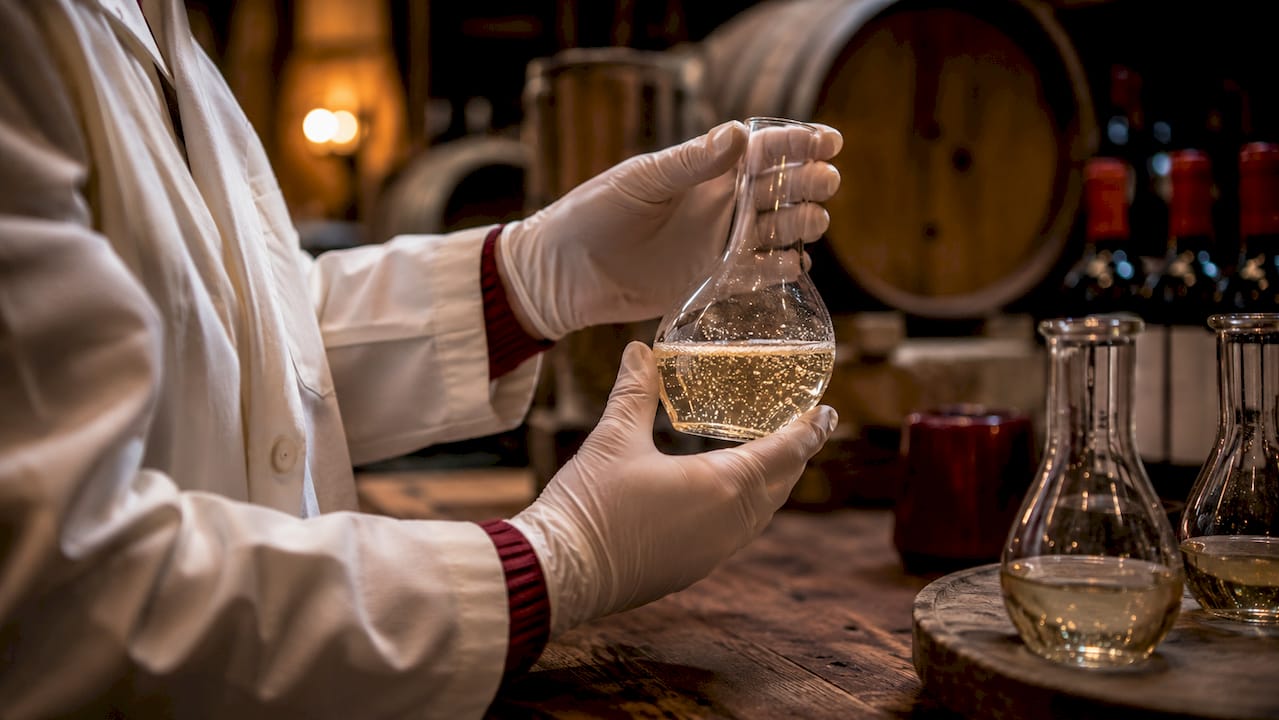
Oxidation in wine is a non-enzymatic chemical reaction that dominates once wine is bottled. Oxygen reacts with iron and copper ions naturally present in wine to form reactive radical species. These radicals attack polyphenols, converting them into quinones. Quinones cause browning and trigger the flavor changes you notice in an oxidized bottle.
SO₂ plays a protective role by intercepting hydrogen peroxide and reducing quinones before they cause damage. Commercial wines typically contain 60–130 mg/L of SO₂ for this reason. Without adequate SO₂, the chain reaction accelerates and the wine deteriorates quickly.
Enzymatic oxidation is a separate process that only occurs in grape must before fermentation begins. Once fermentation is complete, enzymatic activity stops. Bottled wine faces only non-enzymatic oxidation from that point forward.
It helps to know how oxidation differs from other common wine faults:
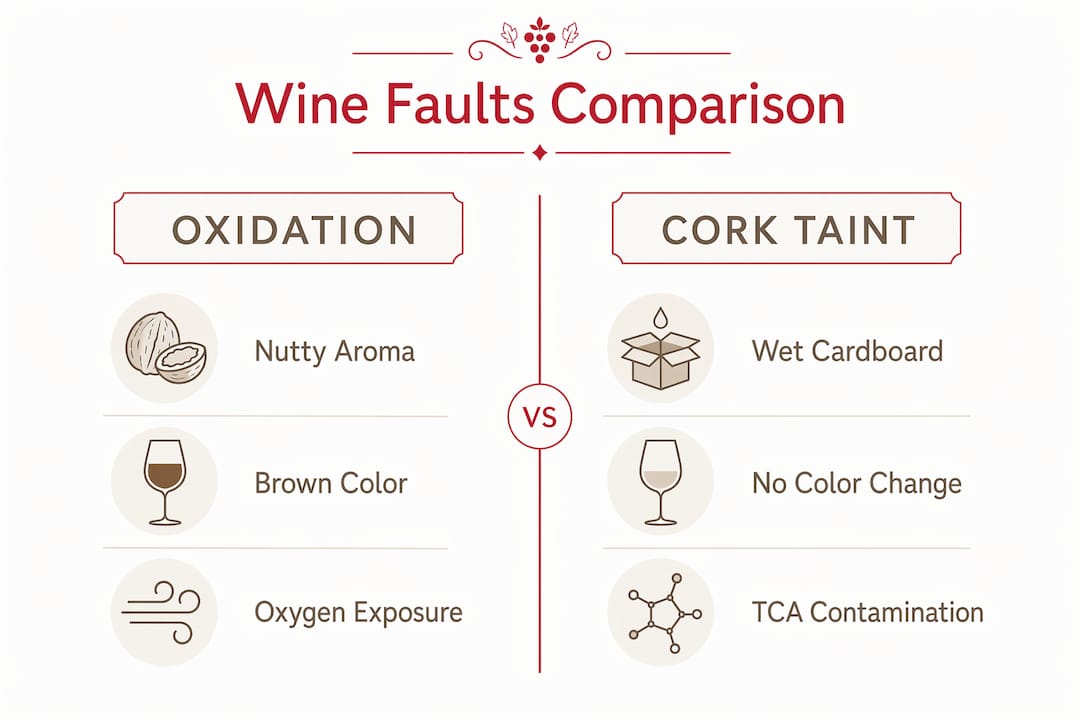
- Cork taint: Caused by TCA (2,4,6-trichloroanisole) contamination. Smells like wet cardboard or a damp basement. Completely unrelated to oxygen.
- Reduction: The opposite of oxidation. Caused by too little oxygen exposure, producing sulfur or struck-match aromas.
- Oxidation: Caused by too much oxygen. Produces nutty, bruised apple, or sherry-like aromas from acetaldehyde buildup.
Pro Tip: If a wine smells like wet cardboard, that is cork taint, not oxidation. Oxidation smells nutty and flat. Knowing the difference saves you from sending back a perfectly good bottle.
How does oxidation change the taste, aroma, and appearance of wine?
Color change is the most visible sign of oxidation. White wines shift from pale straw to deep amber or brown. Red wines lose their vibrant ruby color and move toward brick or tawny tones. These visual cues are reliable early warnings before you even smell the wine.
The aroma profile of an oxidized wine centers on acetaldehyde. You will notice:
- Nutty notes: Almonds, walnuts, or hazelnuts
- Bruised apple: A soft, overripe fruit quality
- Caramel or honey: Particularly in white wines
- Sherry-like character: A dry, oxidative quality common in wines exposed to significant oxygen over time
The table below compares oxidation with two other common wine faults so you can tell them apart at the glass.
| Fault | Primary aroma | Color change | Cause |
|---|---|---|---|
| Oxidation | Nutty, bruised apple, sherry-like | Yes, browning | Excess oxygen exposure |
| Cork taint | Wet cardboard, musty | Minimal | TCA contamination |
| Reduction | Struck match, sulfur, rubber | None | Too little oxygen |
Controlled oxidation is a different story. Slow, deliberate oxygen exposure improves aromatic complexity and softens mouthfeel in aged wines. This is the principle behind barrel aging and intentionally oxidative styles like Sherry, Madeira, and Tawny Port. The difference between a complex aged wine and a flat, stale one is the amount and rate of oxygen exposure.
A common myth is that any nutty or caramel note in a wine signals a fault. That is not true. In wines designed for oxidative aging, those notes are the point. The fault only occurs when oxidation happens faster than intended or in a wine not built for it.
What factors influence how fast a wine oxidizes?
Cork quality is the single biggest variable in how quickly a bottled wine oxidizes. A porous, dry, or compromised cork allows more oxygen to pass through. Storing bottles upright dries out corks, breaks down their seal, and accelerates oxygen ingress. Horizontal storage keeps the cork in contact with wine, maintaining its moisture and integrity.
Wine composition also plays a major role:
- Polyphenol content: Wines richer in polyphenols have stronger antioxidant capacity. They produce less acetaldehyde during oxidation because polyphenols act as free radical scavengers that slow the chain reaction.
- SO₂ levels: Higher free SO₂ provides more protection. Wines with low or no added SO₂ oxidize faster.
- Metal ion concentration: Iron and copper accelerate oxidation. Winemakers sometimes fine wines to reduce metal content.
- Grape variety: Oxidative stability varies by variety. Some red varieties show little sensory change under oxygen stress. Others shift quickly to dried fruit and cooked vegetable notes.
Temperature and closure type also matter. Warmer storage speeds up all chemical reactions, including oxidation. Screw caps and synthetic closures allow far less oxygen transfer than natural cork, which is why many producers use them for wines meant to be drunk young.
Pro Tip: Check your wine storage temperature regularly. Storing wine above 70°F (21°C) noticeably speeds up oxidation, even in a well-sealed bottle.
How can you identify, prevent, and manage wine oxidation?
Catching oxidation early and storing wine correctly makes a real difference. Here is a practical approach:
- Check the color first. A white wine that looks amber before it should be aged is a red flag. A red wine with a wide brick or orange rim suggests oxidation has progressed.
- Smell before you sip. Nutty, flat, or sherry-like aromas in a wine not designed for that style signal oxidation. Fresh wines should smell vibrant and varietal.
- Store bottles on their side. Horizontal storage keeps the cork hydrated and reduces oxygen ingress. This is the single most effective prevention step for cork-sealed bottles.
- Control temperature. Keep wine between 50°F and 65°F (10°C–18°C). Consistent temperature matters as much as the number itself.
- Use inert gas after opening. Products like argon or nitrogen gas canisters displace oxygen in an open bottle. This slows oxidation significantly and can extend an open bottle’s life by two to three days.
- Recork tightly and refrigerate. Even red wines benefit from refrigeration after opening. Cold temperatures slow the oxidation process. Bring the wine back to serving temperature before the next pour.
- Know your wine’s tolerance. Delicate white wines like Pinot Grigio oxidize within hours of opening. Fuller-bodied reds with high tannin and polyphenol content hold up longer. Adjust your handling accordingly.
Oxidized wine is safe to drink but has lost its intended character. It will taste flat and stale rather than harmful. The goal is always to preserve the wine’s freshness until you are ready to enjoy it. For wines you plan to age, understanding the dos and don’ts of wine aging gives you a real advantage.
Key Takeaways
Wine oxidation is a chemical reaction driven by oxygen, iron, copper, and polyphenol interactions, and managing SO₂ levels and storage conditions is the most effective way to control it.
| Point | Details |
|---|---|
| Oxidation defined | Oxygen reacts with wine compounds to produce acetaldehyde, causing nutty, flat aromas and color changes. |
| SO₂ is the main defense | Commercial wines use 60–130 mg/L of SO₂ to intercept reactive species before they damage flavor. |
| Storage position matters | Horizontal storage keeps corks hydrated and reduces oxygen ingress compared to upright storage. |
| Controlled oxidation adds value | Slow oxygen exposure during aging builds complexity; excess oxygen creates a fault. |
| Oxidation differs from cork taint | Oxidation smells nutty and sherry-like; cork taint smells like wet cardboard from TCA contamination. |
Oxidation is not the villain most wine drinkers think it is
Most wine lovers hear “oxidation” and assume something went wrong. I used to think the same thing. After years of tasting wines across styles and regions, I have come to see oxidation as one of the most misunderstood forces in wine.
The wet cardboard smell that ruins a bottle? That is cork taint, not oxidation. Oxidation has its own distinct character: nutty, warm, and sometimes beautifully complex. Tawny Port, Amontillado Sherry, and aged white Burgundy all carry oxidative notes by design. Those wines are not flawed. They are intentional.
The practical lesson I keep coming back to is this: learn your wines. Know which ones are built for aging and which ones are built for drinking young. Store them correctly and stop assuming every nutty note is a fault. Sometimes it is the wine doing exactly what it was made to do.
— Adriana
Deepen your wine knowledge with Fine-wine-world
Fine-wine-world covers the full picture of wine education, from understanding chemical processes like oxidation to knowing which wines to open tonight.
Whether you want to explore wine regions of the world to understand how growing conditions shape oxidative stability, or you need practical guidance on wine storage and aging, Fine-wine-world has guides written for everyday wine lovers. You will also find tips on food and wine pairing to get the most from every bottle you open. No jargon, no snobbery. Just honest, useful wine knowledge from people who genuinely love the stuff.
FAQ
What does oxidized wine taste like?
Oxidized wine tastes flat, stale, and nutty, with bruised apple or sherry-like aromas caused by acetaldehyde buildup. White wines often develop a caramel or honey quality, while reds lose their fruit and take on dried or cooked notes.
Is oxidized wine safe to drink?
Yes, oxidized wine is safe to drink. It has lost its intended freshness and character, but it poses no health risk.
How do I know if my wine is oxidized or corked?
Oxidation smells nutty, flat, and sherry-like. Cork taint smells like wet cardboard or a damp basement from TCA contamination. They are completely different faults with unrelated causes.
How long does an open bottle of wine last before oxidizing?
Most white wines last 1–3 days after opening, while fuller-bodied reds can hold for 3–5 days when recorked and refrigerated. Using an inert gas like argon extends this window noticeably.
Does the type of closure affect wine oxidation?
Yes. Screw caps allow far less oxygen transfer than natural cork, making them better for wines meant to be drunk young. Natural cork suits wines designed for gradual oxidative aging over many years.