
What Is a Wine Flight? Your Beginner's Guide
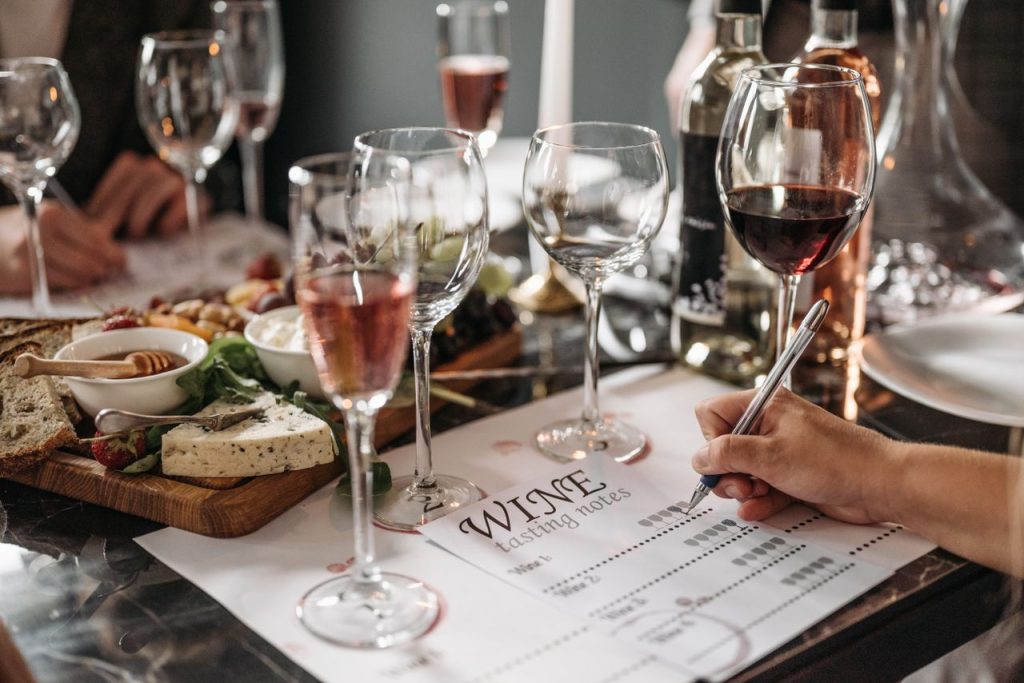
A wine flight is a curated selection of small pours of related wines, served together so you can taste and compare them side by side. Instead of committing to a full glass, you get to explore several wines at once, each one typically 1 to 2 ounces compared to the standard 5-ounce pour. Most flights include 3 to 8 wines, all connected by a shared theme like grape variety, region, vintage, or producer.
The whole point is comparison. You’re not just drinking; you’re noticing how one Chardonnay differs from another, or how a Pinot Noir from Burgundy stacks up against one from Oregon. That side-by-side format is what makes a flight so useful, whether you’re brand new to wine or just trying to sharpen your palate.
Here’s a quick snapshot of what a wine flight typically looks like:
- Number of wines: typically 3 to 8 pours per flight, sometimes more in formal settings
- Pour size: 1 to 2 ounces per wine, well below a standard glass
- Common themes: same grape variety, same region, same producer, or same vintage
- Setting: wineries, wine bars, restaurants, and tasting rooms
- Purpose: side-by-side comparison to explore flavor, aroma, and style
Affiliate Disclosure: Some links on Fine Wine World are affiliate links, meaning we may earn a paid commission if you click through and make a purchase — at no extra cost to you. Affiliate programs use cookies to track commissions, which may collect personal data. You can read more about how we handle your data in our Privacy Policy and Affiliate Disclosure. We only recommend products we genuinely trust.
Where does the term “wine flight” come from?
The word “flight” has been used in English for centuries to describe a group of things moving together, like a flight of birds or a flight of stairs. That same sense of “a collection moving in formation” carried over into food and drink. According to the Oxford English Dictionary, the earliest documented use of “flight” as a restaurant term for a sampling of food or drink appeared in the New York Times on March 29, 1978, describing grouped tastings of German late-harvest wines.
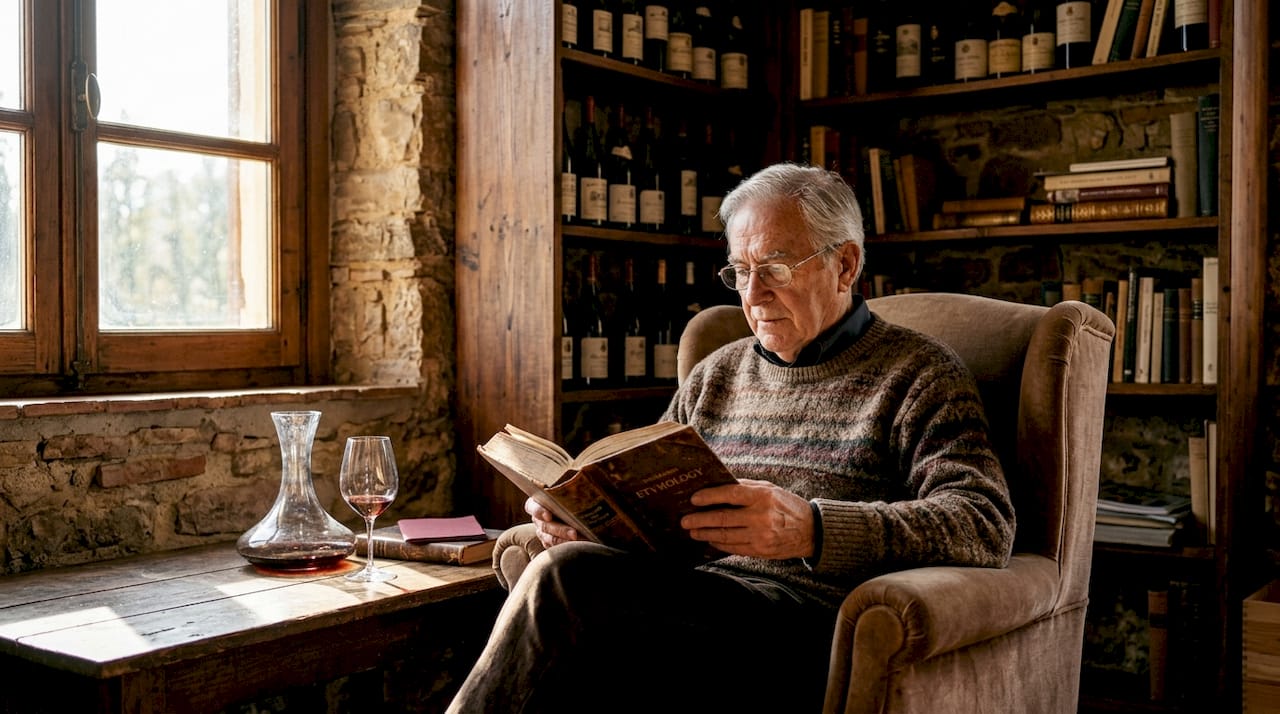
From those early dining-room roots, the term spread quickly through American wine culture. Tasting rooms, wine bars, and professional certification programs like WSET and the Court of Master Sommeliers all adopted the format. Today, a flight is one of the most common ways people encounter structured wine tasting for the first time.
A few key facts about the term’s origins:
- “Flight” derives from the Old English concept of a group moving together
- First documented food and drink use: New York Times, march 1978
- Grew from fine dining into casual wine bars and tasting rooms
- Now standard in professional wine education programs
How to build the perfect wine flight at home
Building your own flight is easier than it sounds, and it’s one of the best ways to learn what you actually like. The key is picking a clear theme so your wines have something to say to each other.
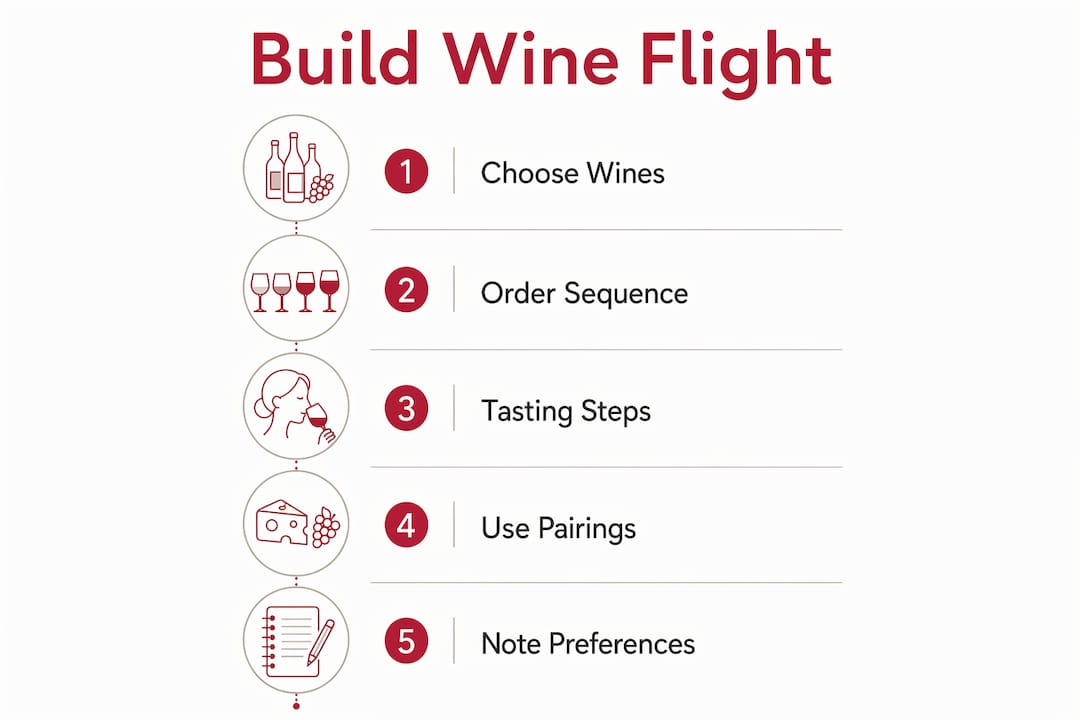
Start with a handful of wines. That’s enough to notice real differences without overwhelming your palate. A good beginner theme is the same grape from different regions, like three Sauvignon Blancs from New Zealand, California, and France. You’ll be surprised how different the same grape can taste depending on where it’s grown.
Order matters more than most people expect. The recommended sequence runs from lightest to boldest: sparkling first, then light whites, fuller whites, lighter reds, bolder reds, and finally sweet wines. Starting with a heavy red and then moving to a delicate white is like listening to a rock concert before a string quartet. The delicate one just disappears.
Use a tasting mat or lined-up glasses so you can go back and re-taste. Revisiting a wine after you’ve tried the others often reveals things you missed the first time. A spittoon is worth having too, especially if you’re tasting more than four wines.
Practical tips for building your flight:
- Choose a small selection of wines with a clear unifying theme
- Pour small amounts per wine to keep the total amount manageable
- Arrange glasses from lightest to boldest, left to right
- Use a tasting mat or labeled cards so you don’t lose track
- Include one contrasting wine to highlight differences
- Keep a spittoon nearby for extended sessions
If you want help choosing wines that work well together, the Vinoperte app uses AI-based recommendations to suggest pairings and flights based on your preferences.
How does a wine flight actually work during tasting?
Once your glasses are lined up, the tasting itself follows a simple rhythm. You move from left to right, lightest to fullest, giving each wine a moment before moving on. The smaller pour size, just 1–2 ounces, is intentional. It keeps you evaluating rather than just drinking.
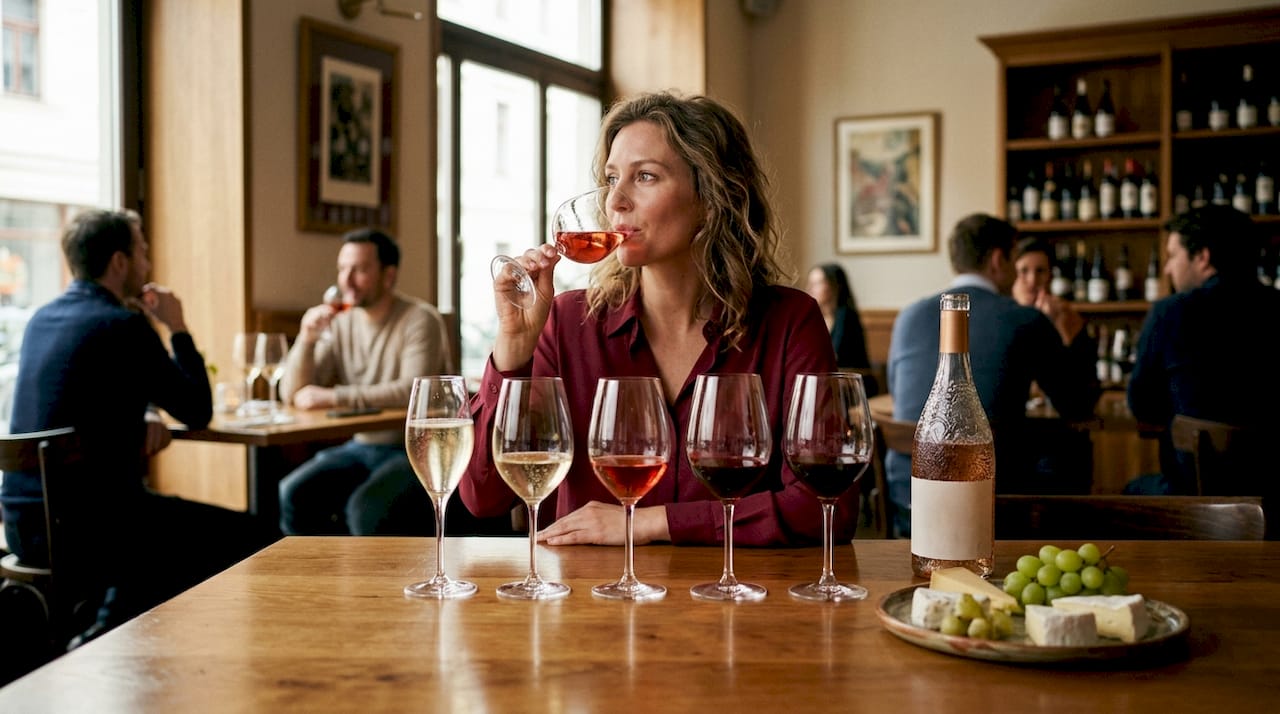
For each wine, take a quick look at the color, then swirl and smell before you sip. Notice the aromas first, then the flavors, then how the wine feels in your mouth. Is it light or heavy? Dry or a touch sweet? Does it leave a long finish or fade quickly? These are the questions that turn casual sipping into real learning.
Spitting is completely normal during a flight, and professionals do it routinely. Using a spittoon lets you taste through many wines without the alcohol adding up, and it keeps your palate fresh so the last wine gets the same attention as the first. Nobody at a tasting room will bat an eye.
Key elements of the tasting process:
- Taste in order from lightest to boldest to protect your palate
- Evaluate color, aroma, and flavor before comparing across glasses
- Take brief notes, even just a word or two per wine
- Revisit earlier wines after tasting the full flight
- Spit freely to stay sharp and keep the experience educational
Why wine experts say flights are the best way to learn
Sommeliers consistently point to the side-by-side format as the fastest path to genuine wine knowledge. When you taste wines in isolation, it’s hard to pin down what you’re experiencing. Put two or three together, and suddenly the differences become obvious. That Pinot Noir that seemed “a bit tannic” makes perfect sense once you taste it next to a lighter one.
Flights also cut through decision fatigue. Staring at a long wine list can feel paralyzing, especially when you’re still figuring out what you like. A flight lets you try several styles quickly, so by the time you order a full glass, you actually know what you want. That’s a genuinely useful shortcut.
For anyone building their wine tasting skills, flights are also a low-pressure way to explore unfamiliar grapes or regions without committing to a full bottle. You might discover that you love Grüner Veltliner or that Malbec from Mendoza is your new go-to. Those discoveries only happen when you’re tasting actively, not just drinking.
Pro Tip: Ask your server or tasting room host to explain the theme of the flight before you start. Knowing why the wines were chosen together gives you a framework for what to look for, and you’ll get far more out of the experience.
Expert insights on why flights work so well:
- Side-by-side comparison makes subtle differences immediately obvious
- Flights help you identify personal preferences faster than solo tastings
- Spitting is standard practice and keeps your evaluation accurate
- Flights reduce the overwhelm of ordering from a long wine list
- Structured tasting builds wine literacy and confidence for future selections
Ready to put this into practice? Fine-wine-world has everything you need to go deeper, from food and wine pairing guides to full wine tasting resources built for everyday wine lovers.
Key Takeaways
A wine flight is the most practical way to learn what you like, because tasting wines side by side reveals differences that a single glass never could.
| Point | Details |
|---|---|
| Flight size and pours | A typical flight includes several wines, each served in a small pour. |
| Tasting order matters | Move from lightest to boldest to keep your palate fresh throughout. |
| Themes connect the wines | Flights are built around a shared grape, region, vintage, or producer. |
| Spitting is encouraged | Using a spittoon during a flight preserves your palate and keeps evaluation accurate. |
| Flights build real knowledge | Side-by-side comparison helps you identify preferences and understand wine style faster than solo tasting. |