
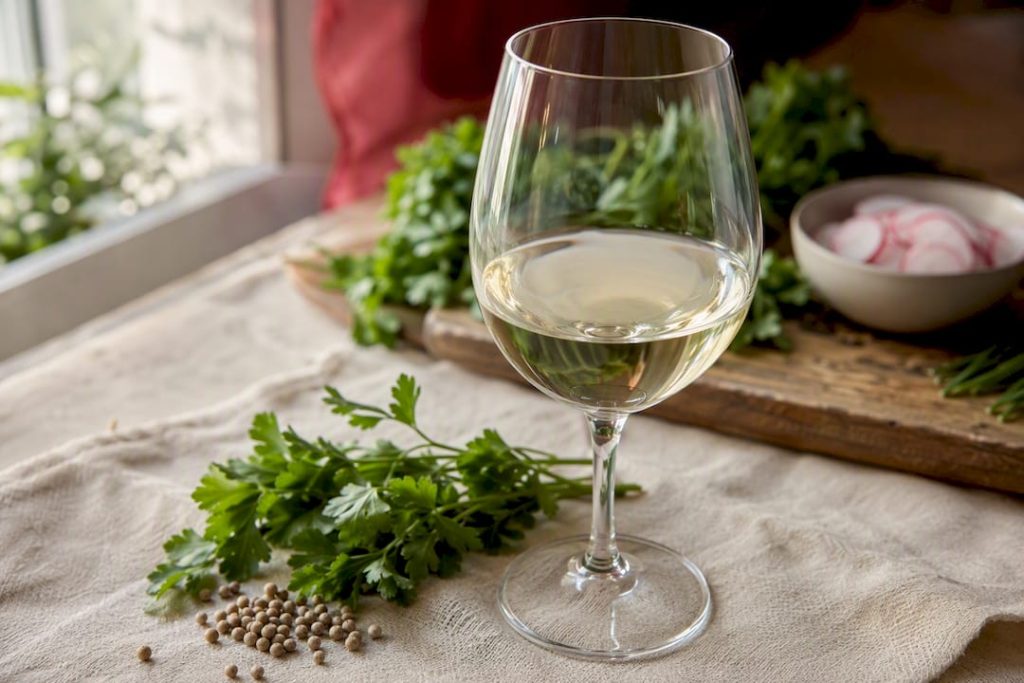
Grüner Veltliner is Austria’s signature white grape, a dry, high-acid wine known for its peppery, herbaceous personality and its knack for making dinner taste better. You’ll find it labeled simply as “Grüner” on many wine lists, and once you know what to look for, it’s easy to spot again.
The flavor markers are distinctive enough that you’ll recognize them blind after just a glass or two:
- White pepper and lentil-like spice on the nose
- Citrus, green apple, and lime zest up front
- A grassy, herbaceous edge with wet-stone minerality
- Styles ranging from lean, everyday bottles to richer, age-worthy Smaragd wines from steep Austrian slopes
That range is part of what makes it so useful at the table. A crisp Weinviertel bottling wakes up a salad; a dense Wachau Smaragd stands up to roast pork. Few white grapes cover that much ground while staying recognizably themselves.
Affiliate Disclosure: Some links on Fine Wine World are affiliate links, meaning we may earn a paid commission if you click through and make a purchase — at no extra cost to you. Affiliate programs use cookies to track commissions, which may collect personal data. You can read more about how we handle your data in our Privacy Policy and Affiliate Disclosure. We only recommend products we genuinely trust.
Key Takeaways
Grüner Veltliner succeeds because its high acidity and peppery, savory character handle foods, especially vegetables, that overwhelm most other white wines.
| Point | Details |
|---|---|
| Signature flavor profile | White pepper, citrus, and herbaceous notes define the grape across nearly every region. |
| Region shapes style | Weinviertel delivers freshness; Wachau Smaragd delivers weight and aging potential. |
| Serve slightly cool | 45 to 50°F for everyday bottles, 50 to 55°F for richer Smaragd wines. |
| Best pairing category | Asparagus, artichoke, schnitzel, and moderately spicy dishes all pair reliably. |
| Aging is the exception | Only low-yield, site-driven Smaragd wines reward five or more years in the cellar. |
Table of Contents
- What Is Grüner Veltliner and Where Did It Come From?
- How Terroir Shapes Grüner Veltliner Across Austria’s Regions
- What Does Grüner Veltliner Taste Like?
- How to Serve and Taste Grüner Veltliner the Right Way
- The Best Food Pairings for Grüner Veltliner
- Does Grüner Veltliner Age Well?
- Why Wine Critics Take Grüner Veltliner Seriously
- GrüVe, Weissgipfler, and Other Names You’ll See
- Notable Producers Worth Seeking Out
- What Does Grüner Veltliner Cost?
- Is Grüner Veltliner Getting More Popular?
- Ready to Try Grüner Veltliner for Yourself?
- Our Take on Grüner Veltliner’s Underrated Status
- Frequently Asked Questions About Grüner Veltliner
- Sources
What Is Grüner Veltliner and Where Did It Come From?
Grüner Veltliner is Austria’s most planted grape, accounting for roughly a third of the country’s total vineyard area, concentrated in the regions of Weinviertel, Wachau, Kamptal, Kremstal, and Burgenland. The name itself has caused a fair amount of confusion over the decades, mostly because it sounds like it should be related to Roter Veltliner or Frühroter Veltliner. It isn’t. Genetic testing has confirmed these are distinct varieties with separate pedigrees, despite the shared name.
The real breakthrough in understanding this grape’s background came in 2007, when researchers ran DNA analysis and settled a long-standing mystery.
- The parentage question. For years, ampelographers debated Grüner Veltliner’s origins, since it didn’t obviously resemble other well-known Central European varieties.
- The 2007 discovery. DNA testing showed Grüner Veltliner is a natural crossing of Traminer (also known as Savagnin) and a nearly forgotten local variety from Sankt Georgen am Leithagebirge, a small village near Austria’s border with Hungary.
- The Hochkultur expansion. Through the 20th century, Austrian growers adopted high-trellis training systems that boosted yields and made large-scale plantings practical across the flatter Weinviertel region.
- International arrival. Grüner Veltliner stayed largely unknown outside Austria until the 1990s, when a wave of quality-focused winemaking and stronger export marketing introduced it to sommeliers and collectors abroad.
That late international debut matters. Unlike Riesling or Chardonnay, which built global reputations over a century, Grüner Veltliner’s fame is a relatively recent story, and it’s still being written.
How Terroir Shapes Grüner Veltliner Across Austria’s Regions
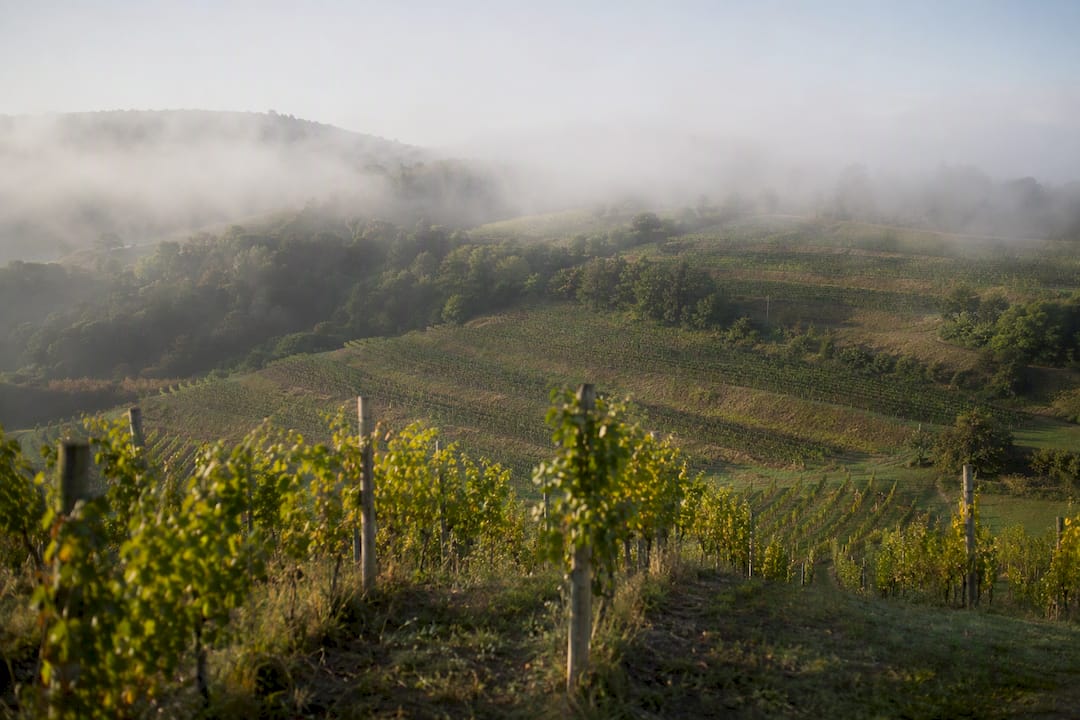
Grüner Veltliner is a mid-ripening grape that tolerates a range of soils but rewards low yields with more concentrated flavor. Left unchecked, vines can overproduce, which dilutes the peppery character that makes the grape worth seeking out in the first place. Growers also watch for fungal pressure in humid vintages, since the grape’s tight clusters can trap moisture.
Where a vine grows changes what ends up in the glass:
- Weinviertel: Austria’s largest wine region by volume, producing fresh, straightforward Grüner Veltliner under Austria’s first DAC (Districtus Austriae Controllatus) designation. Expect green apple, white pepper, and a light body built for weeknight drinking.
- Wachau: Steep, terraced vineyards along the Danube produce some of the country’s most serious Grüner Veltliner, classified by ripeness into Steinfeder, Federspiel, and Smaragd tiers, with Smaragd representing the fullest-bodied, longest-lived style.
- Kamptal and Kremstal: Neighboring regions with similarly rocky, mineral-driven soils that produce wines with more weight and aging potential than Weinviertel, though generally less intense than top Wachau sites.
- Burgenland: Warmer and flatter than the Danube regions, yielding riper, rounder styles alongside the area’s better-known red wines.
- New World plantings: Small experimental plots exist in places like New Zealand, Australia, and the United States, though volumes remain tiny compared to Austrian production.
Pro Tip: If a bottle just says “Grüner Veltliner” with no region, it’s probably Weinviertel or a broad Niederösterreich blend, built for easy weeknight drinking rather than contemplation. Look for Wachau, Kamptal, or Kremstal on the label if you want more complexity.
What Does Grüner Veltliner Taste Like?
The tasting profile of Grüner Veltliner centers on a distinctive white pepper note that few other white grapes deliver so consistently. Alongside that spice, expect green apple, lime, and grapefruit-adjacent citrus, plus a savory streak of garden herbs, snap pea, and occasionally lentil. The finish often carries a wet-stone or flinty minerality, especially from Wachau and Kamptal fruit.
Common characteristics you’ll pick up in the glass:
- Acidity: Consistently high, giving the wine a snappy, mouthwatering quality
- Body: Ranges from light and zippy to dense and textured, depending on region and winemaking
- Sweetness: Almost always dry, with sugar reserved for rare late-harvest exceptions
- Alcohol: Typically moderate, though Smaragd bottlings can push toward 13.5% or higher
Winemaking choices shape the final personality more than almost any other factor. Most Austrian producers ferment and age Grüner Veltliner in stainless steel or old, large neutral casks rather than new oak barrels. Stainless steel locks in the grape’s fresh, peppery character. Older casks add a touch of texture without stamping the wine with vanilla or toast flavors. New oak, when it’s used at all, tends to be reserved for experimental cuvées, since it can mute the pepper and citrus notes that define the grape.
Statistic Callout: Grüner Veltliner makes up roughly a third of all vineyard plantings in Austria, which explains why it dominates Austrian wine lists the way Chardonnay dominates California’s.
Smaragd bottlings, the top ripeness classification in the Wachau, show riper fruit, more concentration, and often a honeyed depth that develops with a few years in the bottle. If you’ve only tried a basic supermarket Grüner, a good Smaragd can feel like meeting a completely different grape.
How to Serve and Taste Grüner Veltliner the Right Way
Serve Grüner Veltliner cold but not ice-cold. Aim for 45 to 50°F for everyday bottlings, and let fuller Smaragd wines warm slightly toward 50 to 55°F so their texture and aromatics can open up. A standard white wine glass works fine, though a slightly larger bowl helps release the peppery aromatics on richer examples.
- Pour and look. Note the color; pale straw usually signals a leaner style, while deeper gold hints at riper fruit or bottle age.
- Swirl and smell. Look for white pepper first, then citrus and herbs underneath.
- Taste and hold. Let the wine sit on your tongue for a second; the acidity should feel bright, almost electric.
- Note the finish. A mineral, slightly savory finish is the grape’s signature.
Decanting is rarely necessary. Reserve it for full-bodied Smaragd wines with a few years of age, where a short 20 to 30 minute decant can soften any initial tightness. For storage, keep opened bottles in the fridge and drink within two to three days; unopened bottles are fine in a cool, dark cellar for their intended drinking window.
Pro Tip: If a Grüner Veltliner tastes flat or dull, it’s probably too warm. Drop it back in the fridge for 15 minutes and taste again; you’ll be surprised how much the pepper and acidity snap back into focus.
The Best Food Pairings for Grüner Veltliner
Grüner Veltliner earns its reputation as one of the most food-friendly whites for a simple reason: its acidity cuts through fat and richness, while its peppery, savory character matches green vegetables and herb-driven dishes that trip up other wines. This is the grape sommeliers reach for when asparagus is on the menu, a vegetable notorious for making most wines taste metallic.
Reliable pairings include:
- Asparagus and artichoke: The grape’s vegetal, herbal notes mirror these classically tricky ingredients instead of clashing with them.
- Wiener schnitzel and other breaded, fried foods: High acidity slices through the richness of the fried crust.
- Fried fish and fish and chips: Citrus and minerality echo a squeeze of lemon.
- Pork dishes: From roast pork to schnitzel’s cousin dishes, the wine’s body and acid balance the meat’s fat.
- Sushi and ceviche: Clean citrus notes complement raw fish without overpowering delicate flavors.
- Herb-forward salads: Green, grassy notes in the wine match fresh herbs and leafy greens rather than fighting them.
- Moderately spicy Asian dishes: Enough acidity and fruit to handle chili heat without turning bitter.
Match the style to the meal. A lean, unoaked Weinviertel bottle is the better call for salads, light seafood, or a quick weeknight schnitzel. A richer Wachau Smaragd, with more weight and concentration, holds up better against roast pork, richer cream sauces, or a heartier Asian noodle dish. If you’re building a full menu around the grape, consider a three-course approach: a chilled Weinviertel Grüner with a grilled asparagus starter, a mid-weight Kamptal bottle alongside pan-seared trout, and a Smaragd to close with roasted pork loin. For readers who want a deeper dive into pairing logic, Fine-wine-world’s food and wine pairing guide walks through the acid-fat-spice framework in more detail, and the white asparagus pairing guide is worth a look if that vegetable is the star of your table.
| Dish | Best Grüner Veltliner Style | Why It Works |
|---|---|---|
| Grilled asparagus | Lean Weinviertel | Vegetal notes mirror the dish |
| Wiener schnitzel | Kamptal or Kremstal | Acid cuts the fried crust |
| Roast pork | Wachau Smaragd | Body matches richer meat |
| Sushi or ceviche | Lean Weinviertel | Citrus complements raw fish |
Does Grüner Veltliner Age Well?
Most Grüner Veltliner is made to be opened within a short time after release. Basic Weinviertel and Niederösterreich bottlings are built around fresh fruit and bright acidity, qualities best enjoyed young before the vibrant citrus and pepper notes start to fade.
Age-worthy exceptions do exist, though, and they come from a specific combination of factors:
- Steep, mineral-rich vineyard sites, particularly in the Wachau
- Controlled, lower yields that concentrate flavor and structure
- Smaragd classification, which signals riper fruit and more extract
- Winemaking that favors neutral vessels over new oak, preserving the wine’s ability to develop complexity rather than fatigue
A top Wachau Smaragd can improve for multiple years, gradually trading citrus and pepper for honeyed, nutty, almost Chablis-like depth. Keep any bottle you’re planning to age in a cool, dark spot with stable temperature and minimal light exposure, ideally around 55°F. Our guide to which wines age well in the bottle covers the broader principles if you’re building out a cellar.
Why Wine Critics Take Grüner Veltliner Seriously
Jancis Robinson has documented Grüner Veltliner’s rise from Austrian curiosity to internationally respected white, pointing to blind tastings where top examples held their own against high-quality Chardonnay. That’s a meaningful comparison, since Chardonnay has long been the benchmark for structured, ageworthy white wine.
“Blind tastings have shown top Grüner Veltliners can compete with high-quality Chardonnays and age well when from great sites.” That’s the kind of endorsement that doesn’t come easily in a category as crowded as white wine.
The stylistic discipline behind that reputation is deliberate. Producers who avoid new oak in favor of stainless steel or old casks are making a choice to protect the grape’s pepper and mineral signature rather than layering on vanilla and toast. That restraint is part of why Grüner Veltliner reads as distinctly itself, glass after glass, region after region. It’s also why Fine-wine-world keeps coming back to this grape in our tasting notes and pairing guides: it rewards attention without demanding wine-geek credentials to appreciate.
GrüVe, Weissgipfler, and Other Names You’ll See
Grüner Veltliner picked up several nicknames as it traveled beyond Austria’s borders, and knowing them helps you avoid confusion on a wine list or retail shelf.
GrüVe is the casual, sommelier-friendly nickname that caught on in American wine bars over the past decade, largely because “Grüner Veltliner” is a mouthful to say quickly during a busy dinner service. If you hear someone order “a glass of GrüVe,” they mean this exact grape.
Weissgipfler is an older Austrian-German name still used occasionally, particularly in historical references and by the Austrian Wine Marketing Board, which lists it as an alternate designation for the variety.
Veltlinské Zelené is the Czech and Slovak name for the same grape, reflecting its presence in vineyards across the border in Central Europe. You’ll see this on labels from Moravia and southern Slovakia, where the grape has a smaller but genuine foothold.
None of these names indicate a different grape or a different quality tier; they’re regional or colloquial labels for the same variety. If you spot any of them on a bottle, you’re looking at Grüner Veltliner, just dressed in a different name.
Notable Producers Worth Seeking Out
Certain Austrian estates have built their reputations largely on Grüner Veltliner, and their names are a reliable shortcut if you’re standing in a wine shop deciding what to buy. Wachau producers tend to dominate the conversation about serious, ageworthy examples, given the region’s terraced vineyards and Smaragd classification system.
Look for bottles from estates in the Wachau, Kamptal, and Kremstal that clearly label their vineyard site and classification tier (Federspiel or Smaragd) rather than just the grape name. That level of detail on a label is usually a sign of a producer taking the wine seriously, since site-specific labeling requires the kind of vineyard management that flat, high-volume production doesn’t bother with. Weinviertel producers focused on DAC-certified wines are worth trusting for everyday drinking, since that certification requires meeting specific regional style standards.
When you’re shopping, a good rule of thumb is to let the region do some of the work: a Wachau or Kamptal label is a stronger signal of quality intent than an unlabeled “Austria” bottling, even before you recognize a specific producer name.
What Does Grüner Veltliner Cost?
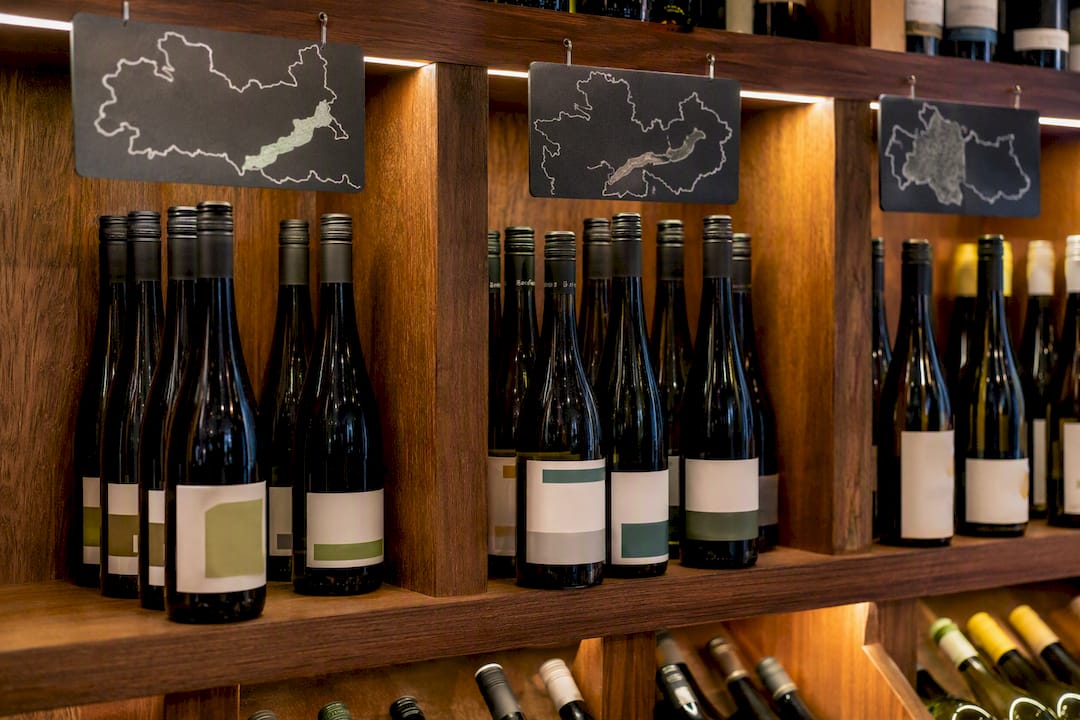
Grüner Veltliner remains one of the better values in the world of serious white wine, largely because it hasn’t yet reached the price ceiling that grapes like white Burgundy or top-tier Riesling command. Entry-level Weinviertel bottlings, built for weeknight drinking, typically run in the affordable range you’d expect from a solid, everyday white.
Move up to Kamptal or Kremstal, and you’re paying a moderate premium for more concentration and site character. Wachau Federspiel sits a notch above that, and Wachau Smaragd, the top classification, commands the highest prices in the category, reflecting lower yields, riper fruit, and genuine aging potential.
Even at the top end, Grüner Veltliner rarely reaches the prices that comparable-quality Chardonnay or white Burgundy demands. That gap is part of why sommeliers and collectors increasingly point to it as an under-the-radar buy. You’re paying for quality and terroir, not for a famous name that inflates the number on the shelf tag.
Is Grüner Veltliner Getting More Popular?
Grüner Veltliner’s international profile has grown steadily since its 1990s breakout, and that momentum hasn’t slowed. American sommeliers now treat it as a default recommendation for diners who want something more interesting than Pinot Grigio but less assertive than Sauvignon Blanc, a positioning that’s helped it move from niche import to regular restaurant pour.
Sustainability has become a bigger part of the story, too. A growing number of Austrian producers, particularly in the Wachau and Kamptal, have shifted toward organic and biodynamic viticulture, partly driven by consumer demand and partly by the steep, terraced sites that already require careful, low-intervention farming. That shift dovetails naturally with a grape whose whole appeal rests on letting the fruit and site speak clearly, without heavy-handed winemaking intervention.
Retail and restaurant demand in the United States has followed a similar upward curve, with more importers bringing in single-vineyard and DAC-certified bottlings rather than generic Austrian blends. If you’re curious how production choices affect what ends up in your glass, Fine-wine-world’s guide on what makes a wine sustainable breaks down what those organic and biodynamic labels actually mean in practice.
Ready to Try Grüner Veltliner for Yourself?
Grüner Veltliner rewards a little curiosity. Start with a Weinviertel bottle for a low-stakes introduction, then work your way toward a Wachau Smaragd once you know what you like. If you want to understand how this grape fits into the broader map of wine regions and terroir, Fine-wine-world’s beginner’s guide to wine regions of the world is a solid next stop, and our breakdown of common wine pairing mistakes will help you avoid the missteps that trip up even confident home cooks. If your curiosity about Austrian wine turns into a trip, wine-focused travel experiences elsewhere in the world are a good reminder that terroir-driven wine culture rewards a visit, wherever it happens to be.
Our Take on Grüner Veltliner’s Underrated Status
Conventional wine advice still treats Grüner Veltliner as a niche pick, something to order when you’re feeling adventurous. That undersells it. The research on its food pairing range, its aging potential at the Smaragd level, and its steady climb in international recognition all point to a grape that deserves a permanent spot in your regular rotation, not just an occasional detour.
Where a lot of guides fall short is treating all Grüner Veltliner as interchangeable. It isn’t. A Weinviertel bottle and a Wachau Smaragd are almost different wines wearing the same name, and pairing them incorrectly, say, serving a delicate schnitzel with a dense Smaragd, undersells both the food and the wine.
If you take one thing from this guide, prioritize matching style to occasion over chasing a specific producer name. Learn the regional cues first. The producer knowledge will follow naturally once you know what you’re looking for on the shelf.
Frequently Asked Questions About Grüner Veltliner
What does Grüner Veltliner taste like?
Expect white pepper, citrus, green apple, and herbal notes, backed by high acidity and a mineral finish. Styles range from light and crisp to full-bodied and age-worthy.
Is Grüner Veltliner similar to Sauvignon Blanc?
They share high acidity and herbaceous qualities, but Grüner Veltliner is generally less aggressively grassy and leans more toward pepper and citrus than Sauvignon Blanc’s characteristic gooseberry and grass notes.
What is the best temperature to serve Grüner Veltliner?
Serve everyday bottlings at 45 to 50°F. Let richer Smaragd wines warm slightly to 50 to 55°F so their aromatics and texture can develop.
What foods pair best with Grüner Veltliner?
Asparagus, artichoke, Wiener schnitzel, fried fish, pork dishes, sushi, and moderately spicy Asian food all pair reliably, thanks to the wine’s acidity and savory character.
Where can I buy Grüner Veltliner?
Most well-stocked wine shops and many restaurants now carry at least one Austrian Grüner Veltliner, often labeled by region (Weinviertel, Wachau, Kamptal) rather than just by grape name.
Does Grüner Veltliner age well?
Most bottles are meant for early drinking, but Wachau Smaragd wines from low-yield, mineral-rich sites can improve for 5 to 15 years in proper cellar conditions.
Sources
- Grüner Veltliner — Jancis Robinson
- Grüner Veltliner food pairing — Vino Critic
- Grüner Veltliner — Wikipedia