
Why Wine Is Stored Sideways: The Real Reason
Wine is stored sideways to keep the cork moist, which maintains an airtight seal and prevents oxygen from spoiling the wine inside. This practice, known as horizontal wine storage, is the standard recommendation for any bottle sealed with a natural cork. A dry cork shrinks, cracks, and lets air in. That air oxidizes the wine, stripping its aromas and flattening its structure. Understanding why bottles are laid down gives you real control over how well your wine keeps.
Affiliate Disclosure: Some links on Fine Wine World are affiliate links, meaning we may earn a paid commission if you click through and make a purchase — at no extra cost to you. Affiliate programs use cookies to track commissions, which may collect personal data. You can read more about how we handle your data in our Privacy Policy and Affiliate Disclosure We only recommend products we genuinely trust.
Why wine is stored sideways: the cork moisture connection
The core reason for storing wine sideways is simple. The wine stays in contact with the inside of the cork, keeping it swollen and tight against the bottle neck. That contact prevents the cork from drying out and shrinking.
Cork desiccation causes micro-leaks that allow oxygen to seep in over time. Oxygen degrades wine by breaking down its aromatic compounds and softening its acid structure in ways that taste flat and stale rather than complex and fresh. A bottle stored upright for months or years loses that protective moisture contact entirely.
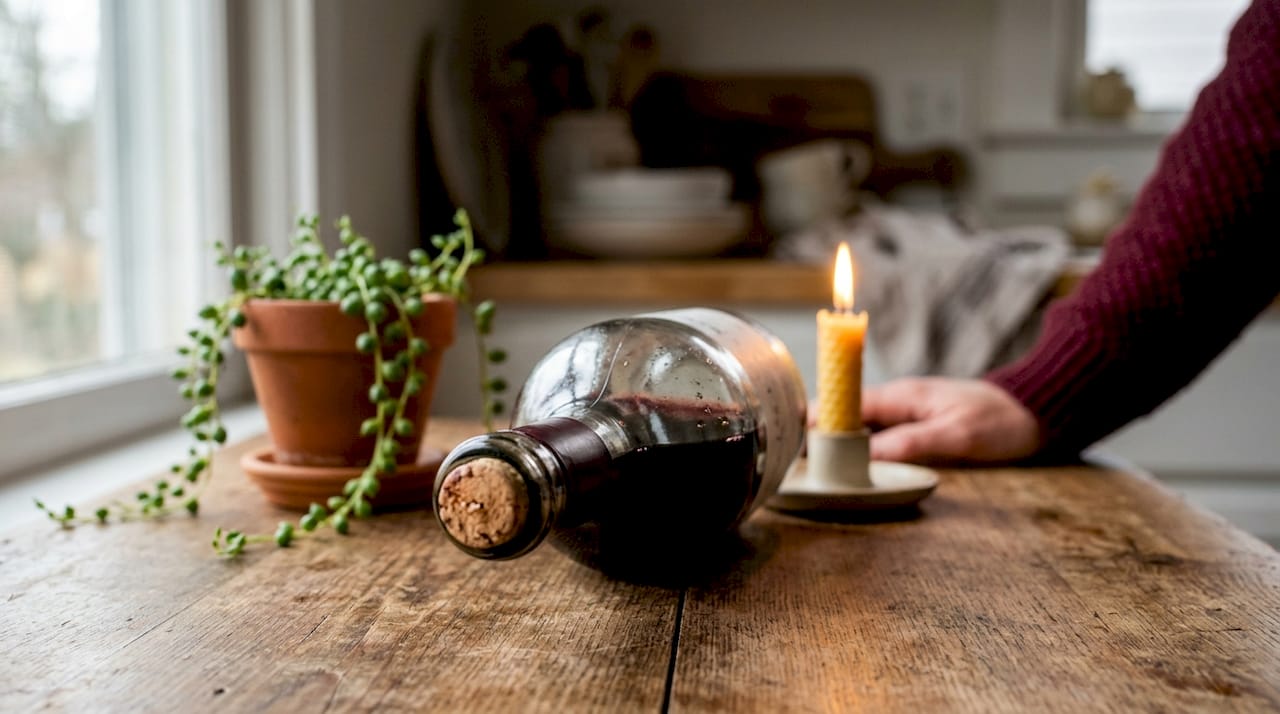
The risk becomes real at low humidity. In environments below 50% relative humidity, natural corks lose moisture and shrink, compromising airtight seals within months or years. Most homes, especially in dry climates or air-conditioned spaces, fall below that threshold regularly. That means a bottle standing upright on your kitchen counter is quietly losing its seal.
Here is what affects cork health most directly:
- Humidity below 50% causes cork shrinkage and micro-leaks
- Humidity above 80% promotes mold growth on labels and corks
- Temperature swings accelerate the expansion and contraction of the cork, weakening its grip over time
- Upright storage removes wine contact from the cork, speeding up desiccation

Pro Tip: If you store wine in a wine refrigerator, check the humidity setting. Many basic units do not regulate humidity at all. A small dish of water or a dedicated humidity tray inside the unit can help maintain the 60–70% range.
Natural cork is a biological material. It responds to its environment the same way wood does. Keep it moist, and it stays flexible and tight. Let it dry out, and it fails.
How horizontal storage helps with sediment and space
Keeping bottles laid down does more than protect the cork. For aged red wines, horizontal storage also manages sediment in a way that improves the final pour.
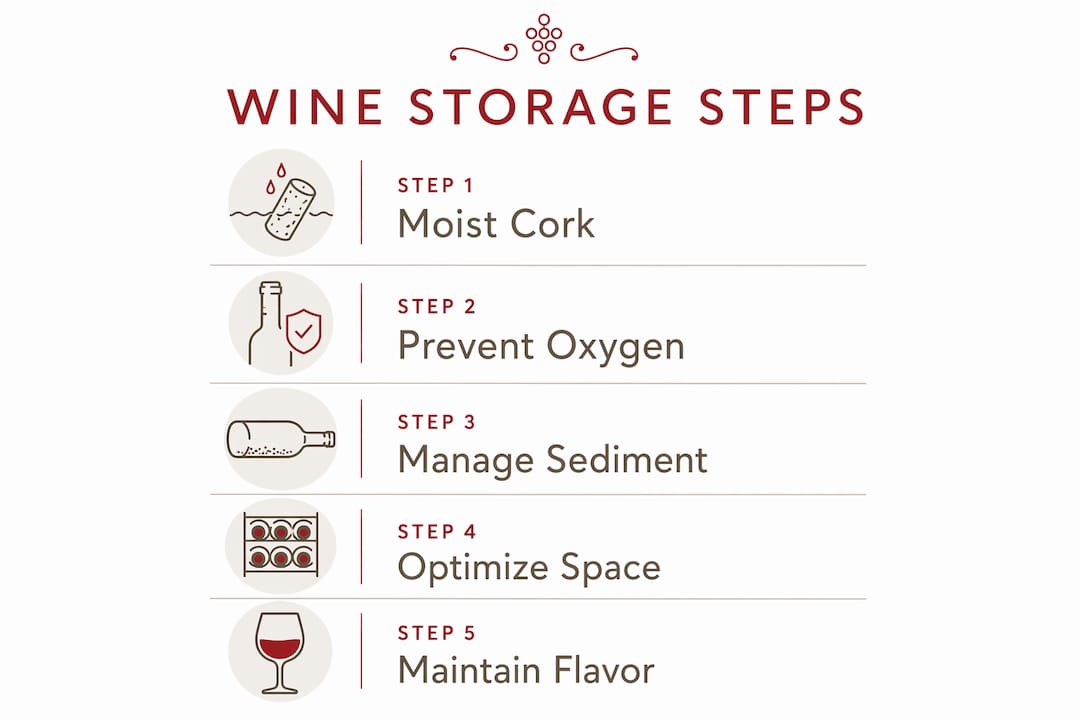
Sediment in aged wines settles along the bottle side during horizontal storage rather than collecting at the bottom. That matters when you open the bottle. Sediment disturbed at the bottom clouds the wine and adds a gritty texture to the glass. When it has settled along the side during storage, a slow, careful pour keeps it in place.
Here is how to handle sediment properly when you store and serve aged wine:
- Store the bottle horizontally for the duration of aging so sediment settles along the lower side of the bottle.
- Stand the bottle upright for 24–48 hours before opening to let sediment drift to the bottom.
- Pour slowly in one continuous motion without tilting the bottle back and forth.
- Use a decanter and a light source behind the bottle neck to catch the sediment line before it reaches the glass.
- Stop pouring when you see the sediment approaching the neck. A small amount of wine left in the bottle is worth the clarity in every glass.
This process is standard practice for cellaring and serving aged wine and makes a noticeable difference in how a fine bottle actually tastes.
Horizontal storage also makes practical sense for space. Wine racks are designed around the sideways bottle because it is the most space-efficient orientation. Bottles stack cleanly, labels face up for easy reading, and the rack footprint stays compact.
Pro Tip: Store bottles at a very slight downward tilt toward the cork end rather than perfectly flat. Storing at an angle keeps both the cork moist and the small air pocket (called ullage) positioned to absorb minor temperature-driven expansion without pushing wine out through the cork.
When upright storage is actually fine
The horizontal rule does not apply to every bottle. Modern closures like screwcaps and DIAM technical corks maintain their seals regardless of bottle orientation. For those bottles, laying them sideways is a convenience, not a preservation requirement.
Sparkling wines add another layer of nuance. The Comité Interprofessionnel du Vin de Champagne (CIVC) recommends upright storage for sparkling wines due to internal pressure effects on cork behavior. The high carbonation inside a Champagne bottle keeps the cork under constant outward pressure. That pressure, combined with the moisture from the wine, already keeps the cork from drying out. Horizontal storage is not harmful for sparkling wines, but it is not required either. For detailed guidance on this, Fine-wine-world has a full guide on storing Champagne and Prosecco.
| Closure type | Horizontal storage needed? | Reason |
|---|---|---|
| Natural cork | Yes | Cork requires wine contact to stay moist and airtight |
| Synthetic cork | No | Synthetic material does not dry out or shrink |
| Screwcap (Stelvin) | No | Metal seal is airtight regardless of orientation |
| Crown cap | No | Used on some sparkling wines; airtight by design |
| DIAM technical cork | No | Engineered for consistent seal without moisture dependency |
Temperature stability is the most critical environmental factor for wine preservation, often more important than bottle orientation. A bottle stored upright in a stable 55°F environment will fare better than one stored horizontally in a space with large temperature swings. Orientation protects the cork. Temperature stability protects the wine itself.
Practical wine bottle storage tips for home
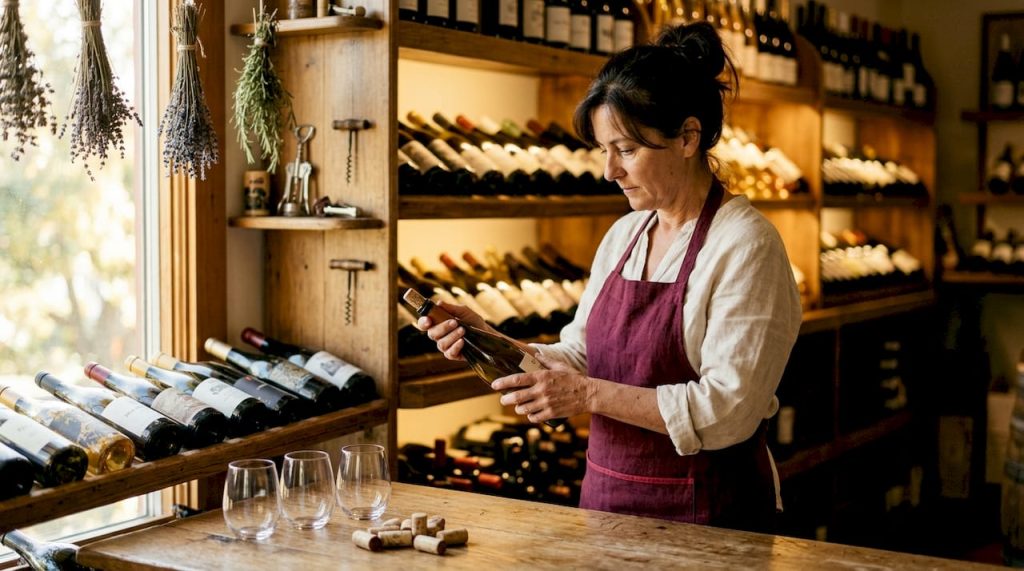
Getting your storing wine conditions right at home does not require a professional cellar. Most casual drinkers can protect their bottles well with a few consistent habits.
The target environment for wine storage is a temperature of 50–59°F and relative humidity of 60–70%. Humidity above 80% risks label mold. Humidity below 50% risks cork drying. Temperature fluctuations accelerate spoilage faster than either humidity extreme.
Here are the most common storage mistakes to avoid:
- Heat above 70°F cooks the wine, accelerating aging in ways that taste cooked and jammy rather than developed
- Direct sunlight breaks down wine through UV exposure; dark glass bottles slow this but do not stop it entirely
- Vibration from appliances like refrigerators, washing machines, or speakers disturbs sediment and may affect long-term aging
- Kitchen storage exposes wine to heat from cooking and frequent temperature changes
- Storing near strong odors can affect cork-sealed bottles over time, as natural cork is porous

UV light and vibration both degrade wine quality. LED lighting in display areas is preferred over fluorescent or incandescent bulbs because it produces no UV output.
For most casual drinkers, a cool, dark closet with bottles laid on their side is sufficient for storing wine less than two years. A dedicated wine refrigerator adds temperature and humidity control for anyone building a small collection or aging bottles beyond that window. Check out Fine-wine-world’s guide to common wine storage mistakes for a full breakdown of what to avoid.
For small apartments or limited space, a countertop wine fridge or a wall-mounted rack in a cool interior room both work well. Fine-wine-world covers this in detail with storage ideas for small spaces.
Key Takeaways
Horizontal wine storage protects natural cork bottles from oxidation by keeping the cork moist, airtight, and structurally sound throughout storage.
| Point | Details |
|---|---|
| Cork moisture is the core reason | Sideways storage keeps wine in contact with the cork, preventing shrinkage and oxygen ingress. |
| Humidity range matters | Keep storage humidity between 60–70% to protect corks without risking mold on labels. |
| Temperature beats orientation | Stable 50–59°F conditions matter more than bottle position for overall wine preservation. |
| Modern closures need no tilt | Screwcaps, synthetic corks, and crown caps maintain their seals upright or horizontal. |
| Sediment management is a bonus | Horizontal aging settles sediment along the bottle side, improving clarity when you pour. |
Horizontal storage in 2026: what actually matters most
I grew up around wine, and the “always store it sideways” rule was treated like gospel. For years, I repeated it without much thought. Then I started paying closer attention to what actually ruined bottles in my own collection, and the answer was almost never orientation.
Heat was the culprit. Every time. A bottle left in a warm car, a rack near a radiator, a case stored in a garage through a hot summer. Those wines tasted flat and tired long before the cork had any chance to dry out. Temperature damage is immediate and irreversible. Cork desiccation is slow and largely preventable.
That said, I do still store all my natural cork bottles on their sides. The practice costs nothing and protects against a real risk. What I have stopped doing is treating it as the only thing that matters. If you have to choose between a horizontal rack in a warm room and an upright bottle in a cool, stable closet, choose the closet every time.
The other thing worth saying: the horizontal rule is genuinely misapplied to a lot of modern bottles. If your wine has a screwcap, you can store it any way you like. The seal is not going anywhere. I see people carefully laying down screwcap bottles in racks while their natural cork bottles sit upright on a sunny shelf. That is the wrong priority entirely.
Focus on temperature first, humidity second, and orientation third. Get those in order, and your wine will keep well.
— Adriana
More wine knowledge waiting for you at Fine-wine-world
Knowing why bottles are laid down is a great start. Fine-wine-world has a full library of guides to take your wine knowledge further. The wine aging dos and don’ts guide covers everything from when to open a bottle to which wines actually benefit from long-term storage. If you want to understand how storage conditions connect to the bigger picture of wine quality and value, the guide on what affects wine quality and price is worth your time. Fine-wine-world is built for everyday wine lovers who want real answers, not gatekeeping. Pull up a glass and keep reading.
FAQ
Why is wine stored sideways and not upright?
Wine with a natural cork is stored sideways so the wine stays in contact with the cork, keeping it moist and airtight. A dry cork shrinks and lets oxygen in, which spoils the wine.
Does all wine need to be stored on its side?
No. Only bottles sealed with natural cork require horizontal storage. Screwcaps, synthetic corks, and crown caps maintain their seals in any orientation.
What humidity is best for storing wine?
The ideal humidity range for wine storage is 60–70%. Below 50% risks cork drying and shrinkage; above 80% risks mold growth on labels and corks.
Can you store Champagne on its side?
Champagne can be stored horizontally, but the CIVC recommends upright storage for sparkling wines. Internal carbonation pressure keeps the cork moist without needing wine contact.
What is the most important factor in wine storage?
Temperature stability is the most critical factor. Consistently cool conditions between 50–59°F protect wine better than any other single variable, including bottle orientation.