
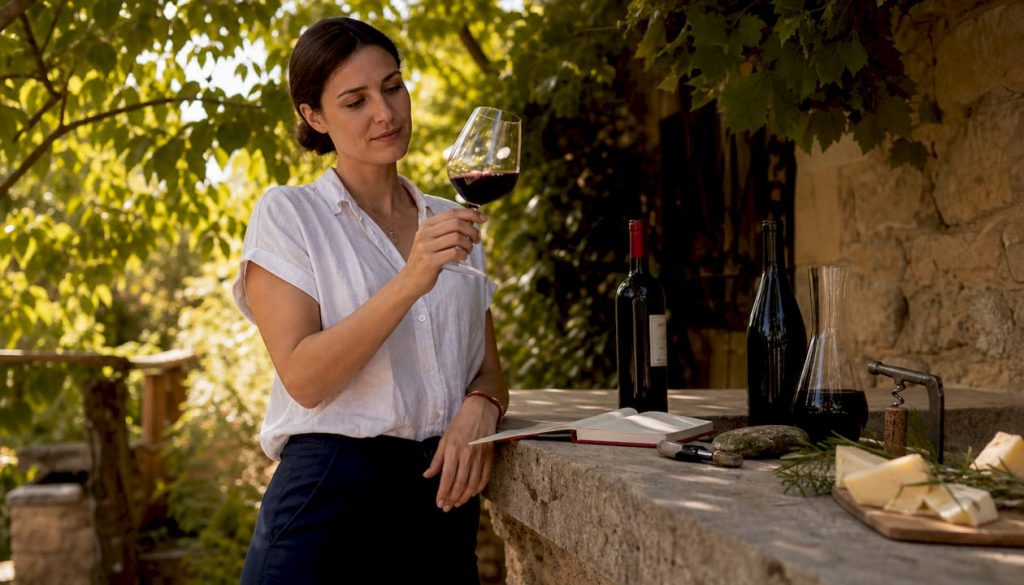
The Role of Texture in Wine Pairing: A 2026 Guide
Texture in a food pairing with wine is all about the physical interaction resulting from tannin grip, weight of body, acidity and effervescence. This interplay dictates table balance far more than flavor alignment. Texture is responsible for the wine pairing that refreshes or overwhelms, cleanses or clashes and leaves the finish feeling pleasant or flat. The Salivary Protein Index is a physical model of the molecular behavior underpinning current pairing science: that tannic wines alleviate dryness in response to high-fat foods. This is a practical tool that flavour matching cannot provide when it comes to understanding these textural components in wine.
Affiliate Disclosure: Some links on Fine Wine World are affiliate links, meaning we may earn a paid commission if you click through and make a purchase — at no extra cost to you. Affiliate programs use cookies to track commissions, which may collect personal data. You can read more about how we handle your data in our Privacy Policy and Affiliate Disclosure. We only recommend products we genuinely trust.
What gives wine mouthfeel and texture?
Wine texture is built from several physical components, each of which you feel rather than taste. Texture includes body, smoothness, creaminess, grip, fizz, heat, and weight, forming a sensory layer that sits beneath aroma and flavor entirely. If you are trying to pair your meal with a wine, whether a wine feels light or full, smooth or grippy is more helpful than specific flavor pursuits.
Tannins are the most misunderstood textural element. Tannin chain shape and length, known as polymerization, affects mouthfeel in ways that total tannin counts cannot predict. Longer tannin chains produce a sandpaper-like astringency, while shorter chains create a velvet sensation. Two wines with identical tannin levels can feel completely different on your palate because of this molecular difference.
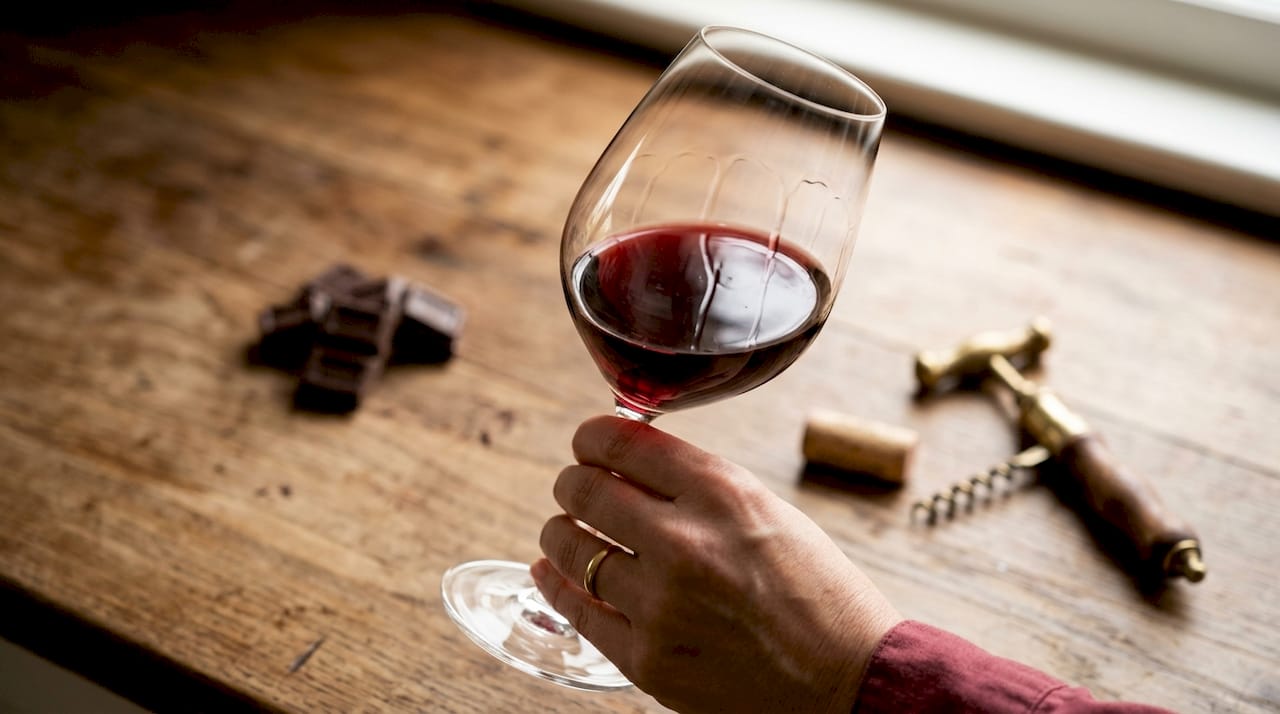
The feeling of astringency is caused by tannins binding salivary proteins and collapsing the mouth’s natural lubrication, leaving that dry, puckering grip. Acidity works differently. It activates your saliva, which cleans the palate and makes you feel light. Alcohol provides a sense of warmth and weight, but it is polysaccharides and residual sugar that give the body its softness.
There is a whole purely physical dimension that adds to it through effervescence. Carbonation forms these tiny bubbles that scrub the mouth and provide a tactile sensation none of your stills can replicate. Which is what makes sparkling wines such an exhilarating accompaniment to rich or crunchy foods.Key textural elements to recognize in any wine:
- Tannin grip: Ranges from silky to rough depending on polymerization
- Acidity: Creates a mouthwatering, refreshing lift
- Body and weight: Driven by alcohol, sugar, and polysaccharides
- Effervescence: Adds a scrubbing, cleansing physical sensation
- Warmth: Alcohol contributes heat that registers as texture, not flavor
Pro Tip: When you taste a wine before pairing it, close your eyes and focus only on how it feels. Is it heavy or light? Does it dry your mouth or make it water? Those physical answers will guide your pairing better than any flavor description.
How does texture interact with different food textures in wine pairing?
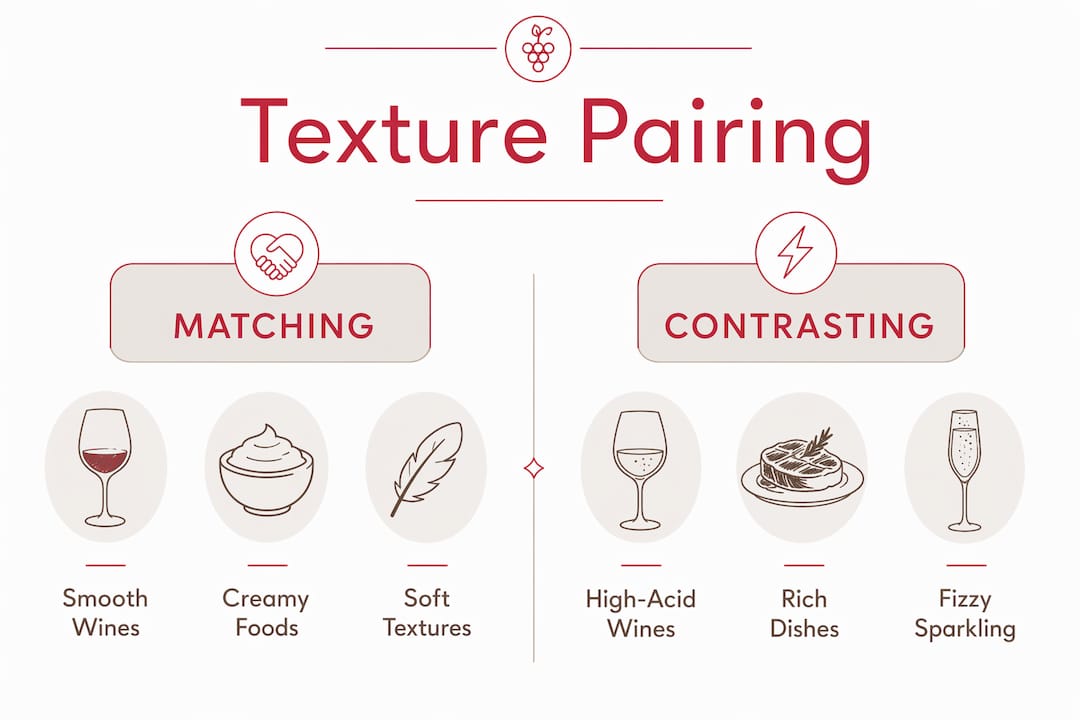
Pairing wine with food texture works on two principles: matching and contrasting. Matching means a smooth, creamy wine alongside a smooth, creamy dish. Contrasting means a sharp, acidic wine cutting through a buttery sauce. Both approaches work, but for different reasons.
Protein and fat in food bind tannins and soften dryness, which is why bold reds smooth out considerably when paired with a ribeye or aged cheese; protein and fat in food bind tannins, softening dryness. The fat blocks the tannins before they can steal away your mouth moisture. This is the key of how the classic goes when we talk about pairing red wine with this class of meat. It is not about flavor. It is about biochemistry.
High-acid white wines refresh the palate in rich, creamy dishes by cutting through fat, and that refreshment happens every 30–60 seconds with each sip. Chablis with cream pasta is more than delicious! It refreshes your taste buds so that the richness never feels like an avalanche. Yet it is also the high acidity, along with firm tannins that means this works with a cream-based pasta too: which will cut through that fats piled on your fork and keep each mouthful feeling fresh.
Sparkling wines pair better with fried foods as carbonation offers a physical lift that stills cannot deliver. The pairing of champagne and fried chicken is not a new one. The fizz cleans your palate of the fat ring, and the acidity rinses it. The outcome is an amalgamation that weighs less than any of its ingredients.
| Food texture | Wine texture to match or contrast | Why it works |
|---|---|---|
| Creamy, fatty dishes | High-acid whites (Chablis, Vermentino) | Acidity cuts fat and refreshes the palate |
| Rich, protein-heavy meats | Grippy tannic reds (Cabernet Sauvignon, Barolo) | Protein binds tannins, softening both wine and food |
| Fried, crunchy foods | Sparkling wines (Champagne, Cava) | Effervescence scrubs fat and adds physical contrast |
| Delicate, light dishes | Smooth, low-tannin reds or light whites | Avoids overpowering the food’s subtle texture |
| Smooth, creamy desserts | Off-dry or sweet wines with matching body | Weight and sweetness align without clashing |
Pro Tip: Think of texture contrast as a reset button. When food is rich and heavy, choose a wine that feels sharp and light. When food is delicate, choose a wine that feels equally gentle. The contrast or match should leave your palate feeling balanced, not fatigued.
Common misconceptions about texture in wine pairings
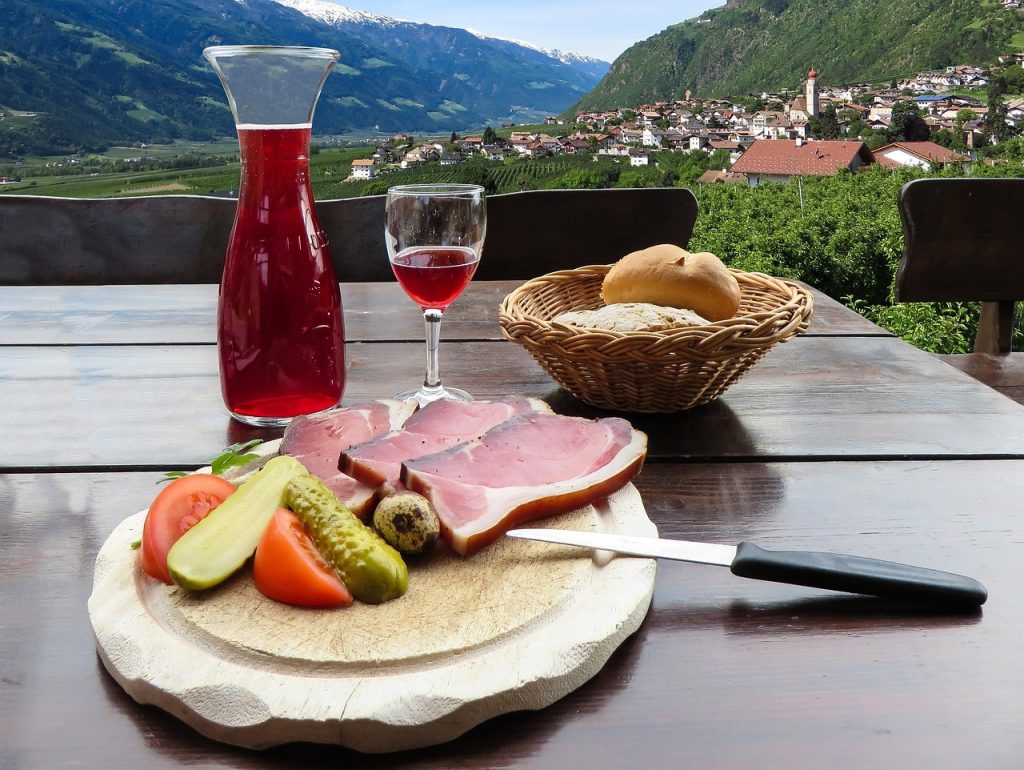
The most common mistake wine lovers make is trusting total tannin counts. We will talk about good tannin, bad tannin, a wine being described as “high in tannin” tells you almost nothing useful about how it might feel! The degree of tannin polymerization has a much greater impact on mouthfeel than concentration. A Pinot Noir with highly polymerized tannins could feel more astringent than a Merlot with more total tannins but shorter chains. Test Data In a trust based approach classification system for sample dataset (train dataset), label is used to generate predictions through a classifier.
Error number two is treating flavor intensity like it was textural weight. A wine can be full with flavor but light on the palate. One of the best examples of this is a Grüner Veltliner: big peppery flavor, light body with high acid. At least by flavor concentration, pairing it with a heavy cream dish is going to feel just gluttonishly anemic.Here are the most frequent texture-related pairing mistakes to avoid:
- Pairing tannic reds with delicate, creamy dishes without acidity. Without protein or fat to bind the tannins, the wine strips the dish of its subtlety and leaves a harsh, dry finish.
- Choosing wine by flavor profile alone. A wine that smells like butter does not necessarily feel buttery. Chardonnay aged in oak can be full-bodied and creamy, or lean and mineral, depending on winemaking. Always taste for texture.
- Ignoring effervescence as a texture tool. Many wine lovers treat sparkling wine as a special-occasion drink rather than a pairing asset. Carbonation is one of the most effective textural contrasts available.
- Overpowering light foods with heavy wines. A full-bodied Amarone will mask the texture of a delicate sole fillet entirely. The wine’s weight dominates, and the food disappears.
- Assuming all reds pair with all meats. A light Beaujolais and a slow-braised short rib are both “red wine and meat,” but the textural mismatch is significant. The wine’s light body cannot stand up to the dish’s richness.
Practical guidelines for choosing wines based on texture
Optimal wine pairings focus on the wine’s ability to cleanse the palate and reduce residual fat coating rather than strictly matching flavor. Start by assessing the food’s texture and richness before you even think about the wine. Is the dish fatty, lean, crunchy, smooth, or delicate? That answer narrows your wine choices immediately.
Use these guidelines to build texture-based pairings with confidence:
- Rich, fatty dishes: Choose high-acid whites like Vermentino, Albariño, or unoaked Chardonnay. Acidity cuts the fat and keeps each bite tasting fresh.
- Protein-heavy red meats: Reach for tannic reds like Cabernet Sauvignon, Barolo, or Syrah. Protein binds tannins, softening the wine and enriching the meat.
- Fried or crunchy foods: Sparkling wines are the best textural match. Champagne, Cava, or Prosecco all deliver the effervescent scrub that resets a fat-coated palate.
- Delicate fish or vegetable dishes: Light, smooth wines with low tannin and moderate acidity work best. Pinot Grigio, Soave, or a light Pinot Noir preserve the dish’s texture without overpowering it.
- Creamy desserts or chocolate: Match body with body. A late-harvest Riesling or a Banyuls brings enough weight and sweetness to align with the dish rather than fight it. You can explore this further in Fine-wine-world’s wine and chocolate pairing guide.
The new pairing guidelines are focused on physiological effects over subjectivity (flavor matching) with the aim of lessening astringency, limiting fat residue and encouraging palate cleansing. This line of thinking answers the question, “Does this taste good together? To “Does this feel balanced together? That is a more reliable test.
Before you commit to a pairing, ask yourself four key pairing questions: Is the wine light or full? Smooth or grippy? Fresh or soft? Does the food need a reset or a match? Those four sensory questions will guide you more reliably than any flavor chart.
Pro Tip: Trust your physical sensations over traditional pairing rules. If a wine makes your mouth feel better after a bite of food, the pairing is working. That physical comfort is the real measure of a great match.
Key Takeaways
Texture in wine pairing is the most reliable guide to balance because it governs physical sensation, palate cleansing, and aftertaste in ways that flavor alone cannot.
| Point | Details |
|---|---|
| Texture beats flavor in pairing | Physical mouthfeel interaction determines balance more reliably than flavor matching. |
| Tannin polymerization matters | Chain length, not total tannin count, determines whether a wine feels silky or rough. |
| Acidity and effervescence cleanse | High-acid whites and sparkling wines physically reset a fat-coated palate between bites. |
| Match weight to weight | Pair full-bodied wines with rich dishes and light wines with delicate foods to avoid masking. |
| Assess food texture first | Identify whether the dish is fatty, lean, crunchy, or creamy before choosing a wine. |
Texture changed how I think about every glass
My wine picks were based on flavor. I would read those tasting notes, associate the adjectives with what we were eating and I was sure of myself. My next pairing was a Barolo with a cream based pasta, which was just disgusting. The wine was austere, the dish clunky, and neither one benefited from the other. That made me think out of the box.
Well to this day I have learnt that texture is the conversation, that is going on between the wine and food. You notice flavor first but texture is a key part of whether you are going to want another bite and another sip. A wine that washes away the mouthfeel after a rich meal is performing an action no pairing can possibly duplicate.
The science is now quite clear on this. The Salivary Protein Index and polymerization research arrived with the words to describe what our mouths were already communicating. Tannins bind fat. Acidity resets the palate. Effervescence scrubs and lifts. These are not abstract concepts. They are things you sense the moment you eat and drink together.
Stop reading tasting notes before you pair — My honest-to-goodness recommendation Open a bottle, pour a glass, sip it and simply say: is it heavy or light? Does it make my mouth dry or do I salivate? Next, gaze down at your plate and inquire the same questions. And if the answers address each other well, then you have your match! I framed this approach using the food and wine pairing principles that I learned at Fine-wine-world, and I have not returned to thinking about flavor first.
— Adriana
Fine-wine-world’s pairing resources go deeper on texture
Fine-wine-world has built a library of guides specifically for wine lovers who want to move beyond guesswork and understand what is actually happening in the glass and on the plate.
The food and wine pairing hub at Fine-wine-world covers texture-based pairing principles in depth, from beginner-friendly breakdowns to more advanced mouthfeel concepts. Whether you are learning which wines work with which foods or building confidence around specific dishes, the guides are written for everyday wine lovers, not sommeliers. Fine-wine-world also covers wine regions, aging, and sustainability, so you can understand where a wine’s texture comes from, not just how to use it at the table.
FAQ
What is texture in wine pairing?
Texture in wine pairing refers to the physical mouthfeel interaction between a wine and food, including tannin grip, body weight, acidity, and effervescence. These elements determine palate balance and cleansing beyond flavor alone.
Why does texture matter more than flavor in pairing?
Texture governs the physical sensation of eating and drinking together. A wine that cleanses fat from the palate or softens through tannin-protein binding improves the dining experience in a way that flavor matching cannot achieve.
How do tannins affect wine and food texture combinations?
Tannins bind salivary proteins and reduce mouth lubrication, creating a dry grip. When paired with protein-rich or fatty foods, those tannins bind to the food instead, softening both the wine’s texture and the dish’s richness.
Which wines have the best texture for fried foods?
Sparkling wines are the best textural match for fried foods. Carbonation provides a physical scrubbing effect that removes fat coating from the palate, delivering a refreshment that still wines cannot replicate.
How do I assess a wine’s texture before pairing it?
Sip the wine and focus on physical sensations: does it feel heavy or light, smooth or grippy, fresh or soft? Those answers, matched against the texture of your dish, will guide a better pairing than any flavor description.