
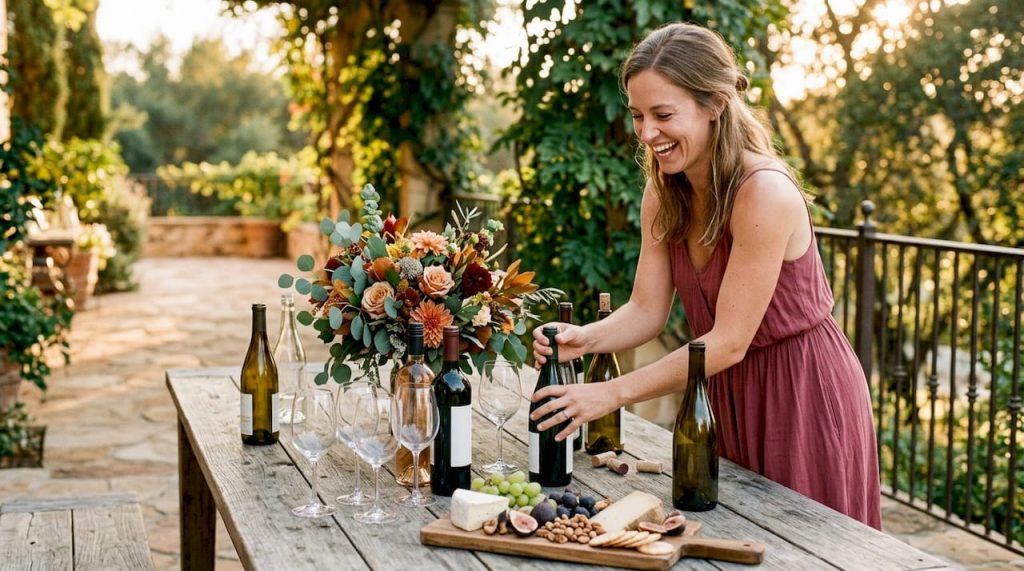
How to Choose Wine for Dinner Parties: A Host's Guide

Choosing wine for dinner parties means selecting versatile, crowd-pleasing bottles that complement your menu and suit a range of tastes. The best hosts treat wine selection as a three-part decision: how much to buy, which styles to stock, and how to match wine to food. Get those three things right, and your guests will remember the evening for all the right reasons. You do not need a sommelier’s vocabulary to pull it off. You need a clear plan and a few reliable bottles.
Affiliate Disclosure: Some links on Fine Wine World are affiliate links, meaning we may earn a paid commission if you click through and make a purchase — at no extra cost to you. Affiliate programs use cookies to track commissions, which may collect personal data. You can read more about how we handle your data in our Privacy Policy and Affiliate Disclosure. We only recommend products we genuinely trust.
How much wine to plan per guest for dinner parties
The standard rule is half a bottle per person for a full dinner party evening. That works out to roughly two and a half glasses per guest, which covers a pre-dinner pour, a glass with the meal, and a top-up before dessert.
A good starting ratio is 60% red to 40% white. That split works for most menus and most crowds, but you should adjust it based on what you are serving and who is coming. A summer seafood menu shifts the balance toward white. A winter roast dinner pulls it back toward red.
Here is a practical planning checklist for your next dinner party:
- Guest count: Multiply the number of guests by half a bottle to get your baseline.
- Party length: Add one extra bottle for every two hours beyond the first two.
- Menu style: Lean white-heavy for fish and vegetable menus; red-heavy for meat-centered meals.
- Occasion type: Casual dinners work well with bottles in the $15–$30 range; formal dinners justify $25–$40 bottles.
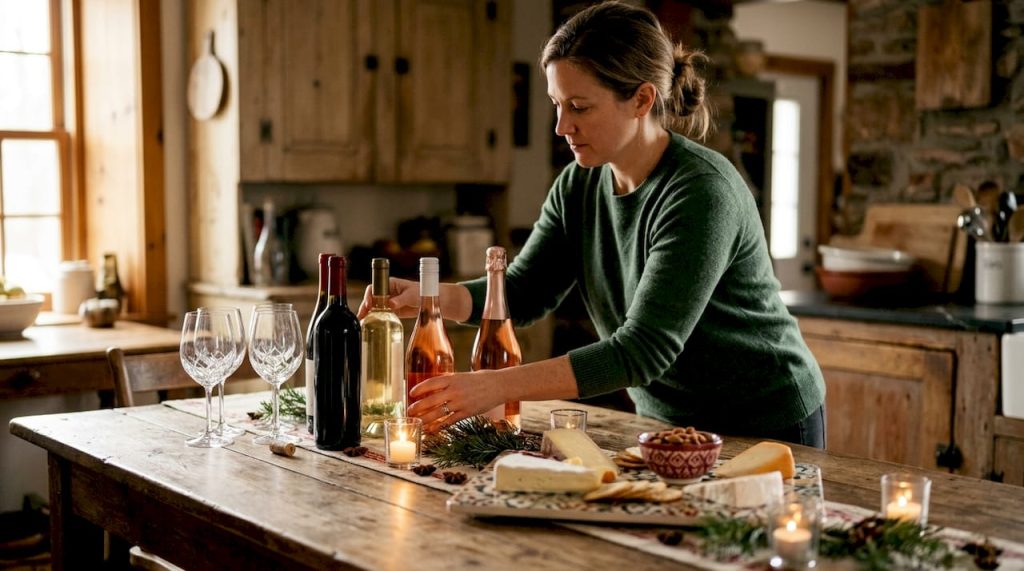
- Backup stock: Always keep at least one extra bottle of both red and white on hand.
Running out of wine mid-dinner is the one hosting mistake guests actually notice. A backup bottle costs less than the awkwardness of an empty table.
Pro Tip: Buy one more bottle than you think you need. If it goes unopened, you have a head start on next time.
Which versatile wines work best for diverse dinner party menus
The three-pillar approach covers almost every dinner party scenario: a crisp unoaked white, a medium-bodied fruit-forward red, and a wild-card bottle such as dry rosé or sparkling Cava. Together, these three styles handle the widest range of foods and palates without requiring you to stock a full wine rack.
Crisp unoaked whites
Sauvignon Blanc is the workhorse of this category. It pairs with salads, fish, goat cheese, and herb-driven dishes. New Zealand Sauvignon Blanc from Marlborough delivers consistent quality at accessible prices. Pinot Grigio from northeastern Italy is another reliable pick, especially for guests who prefer lighter, drier styles.
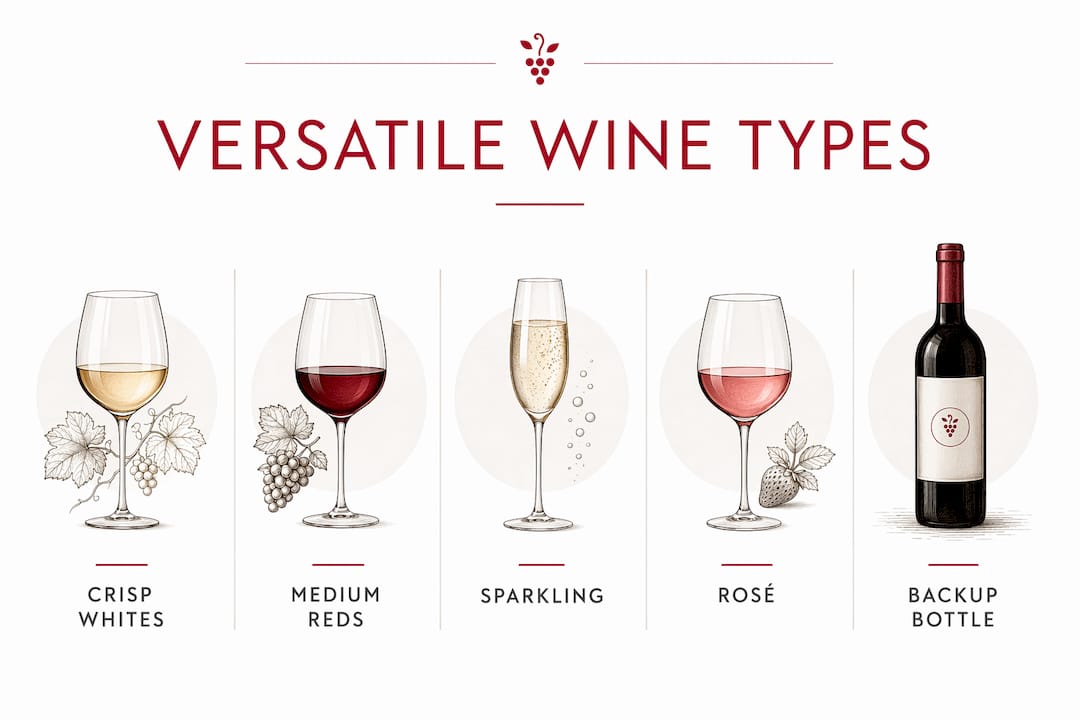
Medium-bodied reds
Pinot Noir is the most food-friendly red wine you can serve. Its lower tannins and bright acidity make it work with salmon, duck, mushroom dishes, and even lighter pasta sauces. It is also the safest red wine for dinner parties when you do not know every guest’s preference. Côtes du Rhône blends offer a slightly fuller alternative at a similar price point.
The wild-card bottle
Dry sparkling wines like Cava work from the first appetizer through to the cheese course. Their acidity and bubbles cut through salt and fat, making them genuinely all-purpose. A dry Provençal rosé fills the same role in warmer months, bridging the gap between white and red drinkers at the same table.
| Wine style | Best for | Example bottle |
|---|---|---|
| Crisp unoaked white | Fish, salads, light starters | Sauvignon Blanc, Pinot Grigio |
| Medium-bodied red | Poultry, pasta, mushroom dishes | Pinot Noir, Côtes du Rhône |
| Dry sparkling or rosé | Appetizers, mixed menus, summer | Cava, Provençal rosé |
Pro Tip: For summer entertaining, swap the red for a chilled dry rosé and keep the sparkling as your opener. Guests who want red can always ask, but most will not.
How to pair wines thoughtfully with your dinner party menu

The golden rule of wine and food pairing is balance. A complex meal needs a straightforward wine. A simple, high-quality dish is where a stellar bottle gets to shine. Trying to match two complex things at once produces a muddy experience where neither the food nor the wine stands out.
The two core pairing strategies are contrast and complement. Complement means matching similar flavors, such as a buttery Chardonnay with a cream sauce. Contrast means using a wine’s acidity or tannin to cut through richness, such as a high-acid Barbera d’Asti with a fatty pork belly. Both strategies work. The key is choosing one deliberately rather than guessing.
Here are the pairing principles that hold up across almost every menu:
- Match body to weight: Light dishes need light wines. A delicate sole fillet gets lost next to a full-bodied Cabernet Sauvignon.
- Use acidity for rich food: High-acid wines like Riesling or Vermentino refresh the palate between bites of fatty or creamy dishes.
- Tannin and protein: Tannic reds like Cabernet Sauvignon pair well with red meat because protein softens the tannin’s grip.
- Avoid competing complexity: Pair a complex bottle with simpler dishes so the wine’s nuances have room to express themselves.
- Spice calls for sweetness: Off-dry Riesling or Gewürztraminer tames heat in spicy dishes better than a dry red. For more on this, Fine-wine-world’s guide to wine and spicy food covers the specifics in detail.
| Food type | Recommended wine style | Why it works |
|---|---|---|
| Grilled red meat | Full-bodied red (Cabernet, Malbec) | Protein softens tannins |
| Pasta with cream sauce | Unoaked Chardonnay, Pinot Grigio | Acidity cuts through fat |
| Roasted chicken | Pinot Noir, dry rosé | Versatile, medium body matches |
| Seafood | Sauvignon Blanc, Chablis | Crisp acidity complements delicate fish |
| Spicy dishes | Off-dry Riesling | Sweetness balances heat |
For hosts serving pasta as a centerpiece dish, Fine-wine-world’s complete pasta pairing guide is worth bookmarking before your next dinner.
Common mistakes hosts make when selecting dinner party wines
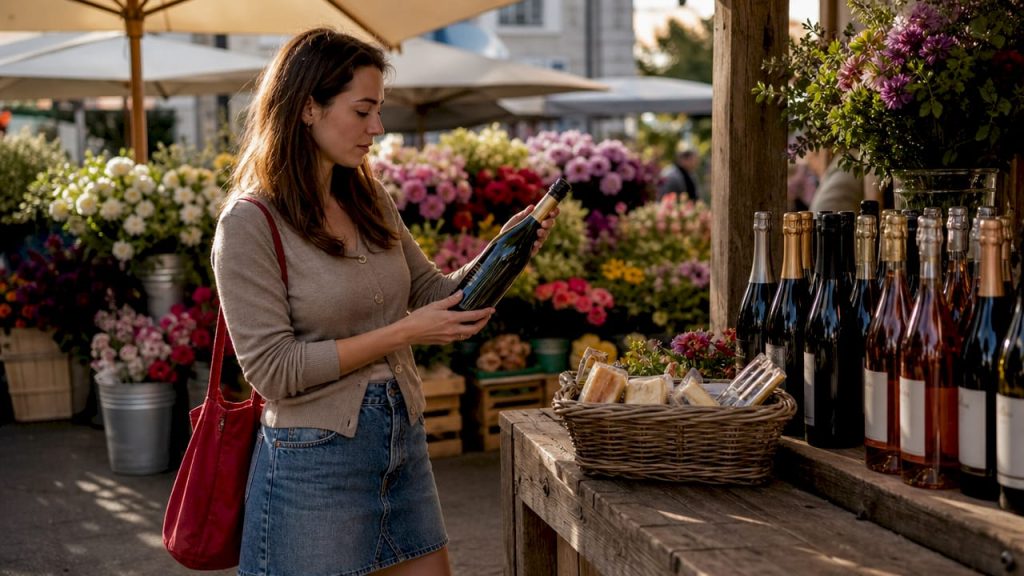
Underestimating volume. Hosts consistently underestimate how much wine a group will drink over a full evening. The fix is simple: buy one more bottle than your calculation suggests and keep it in reserve.
Ignoring your own palate. Enthusiasm for the wine you serve matters more than a high rating from a critic. Guests pick up on a host’s genuine excitement. If you love a bottle, say so. That energy is contagious.
Choosing wines that are too polarizing. Very tannic reds and very sweet whites divide a room. Stick to medium-bodied, moderate-tannin styles for the main pour and save the bold bottles for guests who ask.
Overlooking sparkling wine as a main option. Most hosts treat sparkling wine as an opener and nothing more. Dry Cava and Champagne-method sparkling wines pair with nearly every course, making them one of the most practical choices you can make for a mixed menu.
Overspending on bottles that get lost in the meal. A $70 Burgundy served alongside a heavily spiced stew is wasted. Save premium bottles for simple, clean dishes where the wine can actually be tasted. For casual gatherings, wines in the $15–$30 range consistently outperform their price.
Pro Tip: When you are picking wine for a potluck dinner or a party where you do not know the full menu, Pinot Noir, Sauvignon Blanc, and dry rosé are your three safest bets. They pair with almost everything.
Key Takeaways
The most reliable way to choose wine for dinner parties is to stock three versatile styles, plan half a bottle per guest, and match wine body to food weight rather than chasing perfect pairings.
| Point | Details |
|---|---|
| Plan quantities carefully | Budget half a bottle per person and keep at least one backup bottle of each color. |
| Use the three-pillar approach | Stock a crisp white, a medium-bodied red, and a dry sparkling or rosé to cover most menus. |
| Match body to food weight | Light dishes need light wines; rich dishes need high-acid or tannic wines to balance them. |
| Save complex bottles for simple dishes | A great wine expresses itself best alongside clean, unfussy food. |
| Trust your own taste | Serving a wine you genuinely enjoy creates a better guest experience than chasing ratings. |
What I have learned from hosting with wine
Hosting a dinner party with wine used to feel like a test I had not studied for. I would spend too long in the wine shop second-guessing myself, then arrive home with bottles I was not sure about and a mild sense of dread.
What changed everything was simplifying the decision. I stopped trying to find the “perfect” pairing and started building a short list of wines I genuinely loved and knew would work with a wide range of food. Pinot Noir became my house red. A good Sauvignon Blanc became my house white. A bottle of Cava went in the fridge every time.
The other shift was realizing that my enthusiasm at the table mattered more than the label on the bottle. When I pour a wine I love and say something honest about why I chose it, guests lean in. They taste it differently. That connection is what makes a dinner party feel special, not the price tag.
My honest advice: pick wines you would happily drink alone on a Tuesday. Then buy enough of them. Everything else follows from there. Fine-wine-world’s guide to choosing wine for any occasion helped me build that short list, and it is a good starting point if you are still finding your footing.
— Adriana
Fine-wine-world’s pairing resources for hosts
Knowing which wines to buy is only half the picture. Understanding why certain wines work with certain foods makes every future dinner party easier to plan.
Fine-wine-world’s food and wine pairing hub covers everything from weeknight pasta to holiday roasts, with clear, jargon-free explanations that any host can use. If you want to go deeper on wine origins and what makes each style taste the way it does, the wine regions beginner’s guide gives you the context to shop with real confidence. Both resources are free, practical, and written for everyday wine lovers, not industry insiders.
FAQ
How much wine should I buy for a dinner party?
Plan on half a bottle per person as your baseline, then add one extra bottle of each color as backup. For a party of eight, that means five bottles minimum plus two in reserve.
What are the best red wines for dinner parties?
Pinot Noir is the most crowd-friendly choice because its low tannins and bright acidity pair with poultry, pasta, and lighter meat dishes. Côtes du Rhône blends offer a fuller-bodied alternative at a similar price.
What is the best wine ratio of red to white for a dinner party?
A 60/40 red-to-white ratio works as a reliable starting point. Adjust toward more white for seafood or summer menus, and toward more red for hearty winter meals.
Can sparkling wine work throughout an entire dinner party?
Yes. Dry sparkling wines like Cava pair with appetizers, main courses, and cheese because their acidity and bubbles complement salt, fat, and a wide range of flavors.
How much should I spend on wine for a dinner party?
Casual dinners work well with bottles in the $15–$30 range. For more formal dinner occasions, bottles in the $25–$40 range offer noticeably more polish without requiring a large budget.