
How to Start a Wine Journal: A Beginner's Guide

A wine journal is a personal record of every wine you taste, capturing your impressions, the bottle’s details, and the moment you shared it. When you start a wine journal, you give yourself a tool that prevents the all-too-common frustration of loving a wine and forgetting its name by the next morning. The practice also sharpens your palate over time. Recognized tasting frameworks like the WSET (Wine & Spirit Education Trust) systematic approach to tasting all begin with written notes, and for good reason. Writing forces you to pay attention in a way that casual sipping never does.
Affiliate Disclosure: Some links on Fine Wine World are affiliate links, meaning we may earn a paid commission if you click through and make a purchase — at no extra cost to you. Affiliate programs use cookies to track commissions, which may collect personal data. You can read more about how we handle your data in our Privacy Policy and Affiliate Disclosure. We only recommend products we genuinely trust.
What should every wine journal entry include?
A complete entry does not need to be long. Three data points cover the essentials: the wine’s name, region, grape, and vintage; a brief flavor note; and whether you would buy it again. That quick method takes about 30 seconds and effectively prevents forgetting beloved bottles.
The core details
Every entry should capture the basics first:
- Wine name and producer: The label is your primary reference point.
- Vintage: The year affects flavor significantly, especially for age-worthy wines.
- Region and grape variety: Knowing that a Barolo comes from Nebbiolo in Piedmont, Italy, builds regional knowledge over time.
- Price: Optional, but useful when comparing value across bottles.
Sensory notes
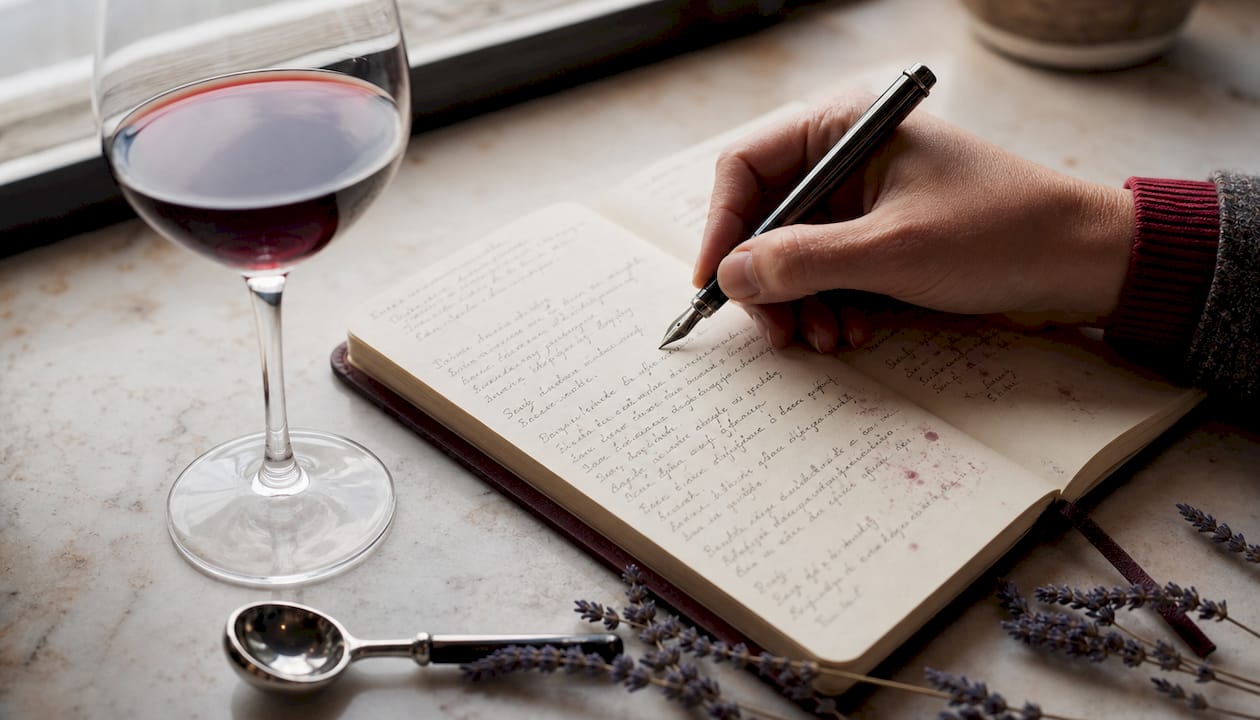
Sensory notes are the heart of any wine review notebook. You do not need to write like a sommelier. Simple descriptors work perfectly well. Note the color (deep ruby, pale gold), the aromas (cherry, toast, citrus), and the flavors on the palate (tart, smooth, earthy). Finish with a quick impression of the aftertaste and body. The wine tasting terms guide at Fine-wine-world lists 36 common descriptors that make this step much easier for beginners.
Personal impression and context
Rate the wine on whatever scale feels natural to you: stars, points out of 10, or a simple thumbs up or down. Then add context. Recording food pairing, occasion, and company adds meaningful depth beyond basic tasting notes, because context shapes perception and builds richer memories that help with future pairing choices.
Pro Tip: Scan or photograph the label right after opening the bottle. Visual documentation enhances recall and adds a sensory dimension that text alone cannot replicate.
How do you choose the right format for your wine log?
Choosing a format that fits your lifestyle is the single most important decision you make when setting up a personal wine log. A format you enjoy using is one you will actually maintain.
| Format | Best for | Key advantage | Main drawback |
|---|---|---|---|
| Paper notebook | Tactile learners, home tastings | Reflective, no screen needed | Not searchable, can be lost |
| Digital wine app | On-the-go drinkers | Fast, portable, searchable | Requires phone battery and habit |
| Spreadsheet | Data-oriented enthusiasts | Fully customizable fields | Setup takes time upfront |
| Hybrid (paper + photo) | Visual memory types | Combines depth with imagery | Two-step process |
Paper journals offer a tactile, reflective experience that many wine lovers find more personal. Digital apps offer portability and speed, which matters when you are at a restaurant and want to log a wine before the conversation moves on. Neither option is objectively better. The right choice is whichever one you will open consistently.
Pro Tip: Start with the format you already use for other notes, whether that is a pocket notebook or your phone’s notes app. Switching tools later is easy. Building the habit is the hard part.
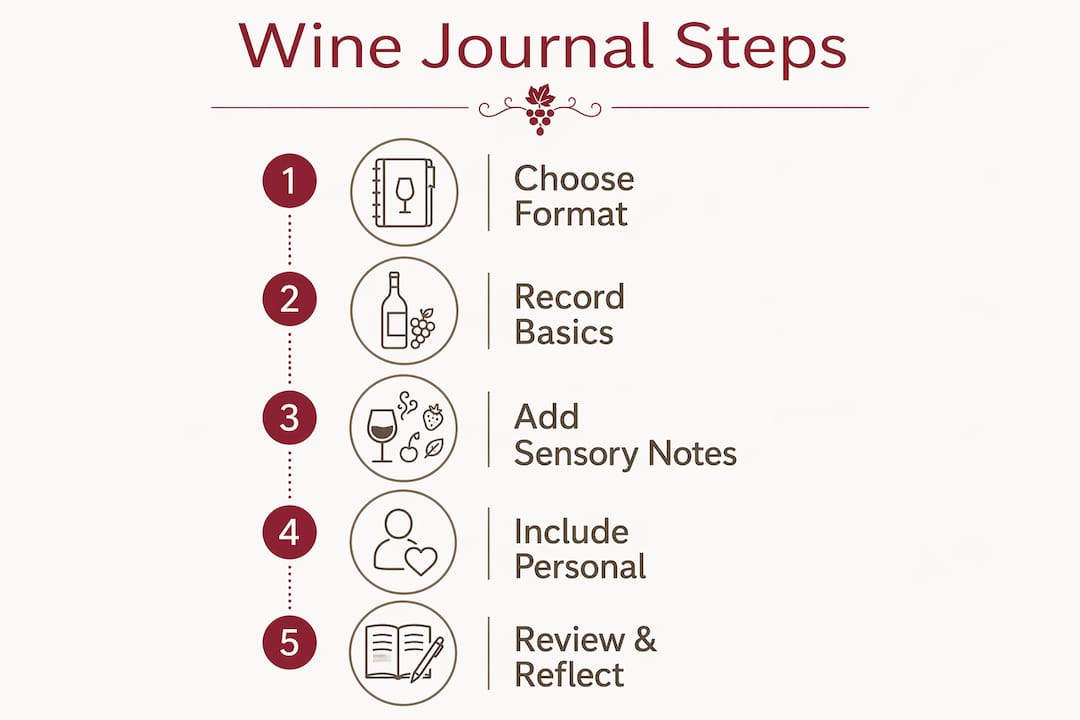
A basic template for any format should include five fields: wine name, date tasted, one aroma note, one flavor note, and a repurchase rating. That structure takes under a minute to fill out and gives you a searchable record within weeks.

How to start and maintain a wine journal step by step
Consistency beats perfection every time. A wine diary with 50 simple entries teaches you far more than five elaborate ones written months apart.
Log the basics immediately. Write the wine name, vintage, and region while the bottle is still on the table. Memory fades fast, and flavor impressions can fade within an hour if you do not capture them promptly.
Add your sensory note in one sentence. “Dark fruit, medium body, dry finish” is enough for a casual bottle. You do not need paragraphs.
Rate it and decide. Would you buy this wine again? A simple yes, no, or maybe is more useful than a complex score when you are standing in a wine shop six months later.
Expand for special bottles. When you open something memorable, a gift, a cellar find, or a wine from a region you are studying, write more. Note the food pairing, the occasion, and what surprised you. Fine-wine-world’s guide to wine tasting techniques walks through a structured approach you can apply for these deeper entries.
Review your entries monthly. Flip back through your notes and look for patterns. Do you consistently love wines from Burgundy? Do high-tannin reds always disappoint you? Your journal answers these questions without you having to rely on memory.
Use your journal before buying. Before your next wine shop visit, scan your entries for grapes and regions you rated highly. This turns your personal wine log from a diary into a practical shopping tool.
Pro Tip: Starting simple with minimal required notes and expanding as you gain confidence increases the chance you will stick with journaling long term. Quick entries for casual wines, detailed notes for special bottles.
Wine journal ideas to make your record uniquely yours
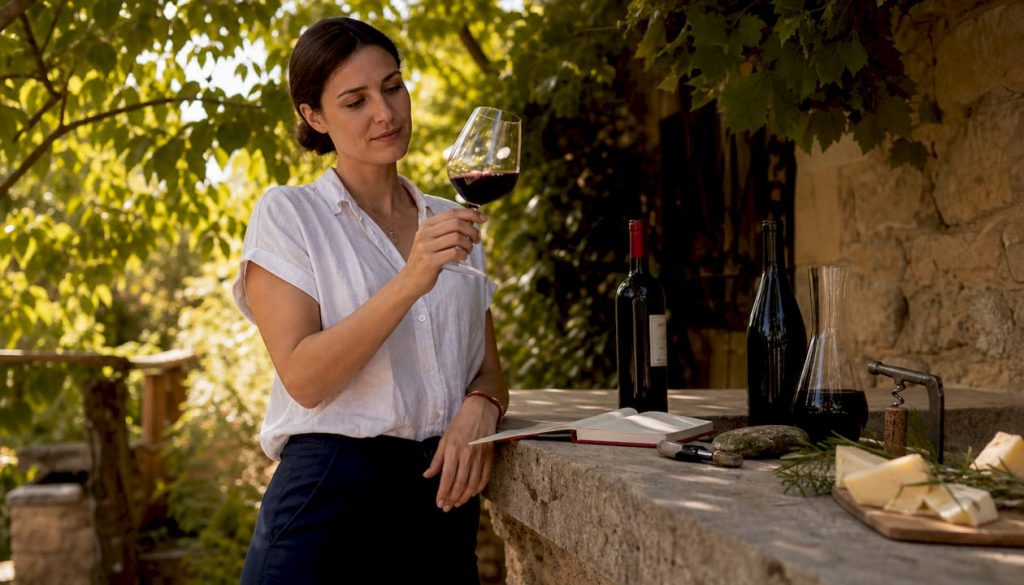
A wine tasting journal becomes genuinely useful when it reflects your personality, not a textbook template. Personalization is what separates a journal you love from one you abandon after three entries.
- Create your own rating symbols. A heart for wines you love, a question mark for ones that confused you, and an X for bottles to avoid. Custom notation speeds up recording and makes future reference easier.
- Track your companions. Note who you shared the wine with. Taste is social, and the same bottle can feel completely different at a dinner party versus a quiet Tuesday night.
- Record food pairings. Logging what you ate alongside the wine builds a personal food and wine pairing reference that no app or book can replicate, because it is based entirely on your palate.
- Add sketches or photos. A quick photo of the label, the table setting, or the vineyard visit adds a visual layer that text cannot match.
- Introduce one new tasting term per entry. Words like “tannic,” “mineral,” or “finish” become natural over time when you practice using them in low-stakes personal notes rather than trying to learn them all at once.
- Note the price-to-pleasure ratio. A $15 bottle that delights you is more useful information than a $60 bottle that merely impresses you.
Reviewing your journal after three to six months reveals patterns you never noticed while tasting. You might discover you gravitate toward Old World wines, prefer lower alcohol levels, or always enjoy wines paired with aged cheese. That self-knowledge is the real payoff of keeping a wine diary.
Key takeaways
A wine journal works best when it is simple, consistent, and personal rather than technically exhaustive.
| Point | Details |
|---|---|
| Start with three essentials | Log wine name, a brief flavor note, and repurchase intent for every bottle. |
| Choose a format you will use | Paper, app, or spreadsheet all work; consistency matters more than the tool. |
| Add context for richer entries | Record food pairings, occasion, and companions to build lasting wine memories. |
| Review entries regularly | Monthly reviews reveal taste patterns that improve future wine selections. |
| Personalize your notation | Custom symbols and ratings make journaling faster and more enjoyable. |
Why I think most wine journals fail within a month
Most wine journals fail because people treat them like homework. They buy a beautiful leather-bound notebook, write three meticulous entries, and then abandon it the moment life gets busy. I have seen this pattern repeat endlessly, and I did it myself early on.
The shift that changed everything for me was treating the journal as a memory aid rather than a performance. The moment I stopped trying to sound like a wine critic and started writing what I actually tasted, the entries became honest and fast. A note that says “smells like my grandmother’s garden, would absolutely buy again” is more useful than a technically correct but joyless description.
Slowing down to write even one sentence about a wine changes how you experience it. That pause is where appreciation actually happens. The journal is just the record of that moment.
My honest advice: embrace imperfection. A messy, inconsistent journal full of real opinions beats a pristine empty one every time. Your future self will thank you for every scribbled note, however brief. The long-term value of building a personal wine story, bottle by bottle, is something no app recommendation or sommelier can give you.
— Adriana
Fine-wine-world resources to deepen your wine knowledge
Fine-wine-world is built for exactly the kind of wine lover who keeps a journal: curious, enthusiastic, and not interested in pretension.
The wine regions of the world guide gives you the regional context that makes journal entries far more meaningful. Knowing that a wine comes from Marlborough, New Zealand, or the Rhône Valley in France adds a layer of understanding that transforms a simple note into a real learning moment. Fine-wine-world also covers aging wine and cellaring for enthusiasts who want to document how bottles evolve over time, and the beginner’s wine guide is the perfect starting point if you are still building your foundational knowledge alongside your journal.
FAQ
What is a wine journal used for?
A wine journal is a personal record of wines you have tasted, capturing details like the producer, vintage, flavor impressions, and whether you would buy the wine again. Its primary purpose is memory retention, helping you remember favorite bottles and build wine knowledge over time.
How long should a wine journal entry be?
A useful entry needs only three elements: the wine’s name and basic details, a brief flavor note, and a repurchase decision. That takes about 30 seconds and is enough to prevent forgetting a wine you loved.
Is a paper notebook or a digital app better for wine notes?
Neither is objectively better. Paper journals offer a tactile, reflective experience, while digital apps offer speed and searchability. The best format is whichever one you will use consistently after every tasting.
What tasting vocabulary should I use in my wine journal?
Start with simple, honest descriptors: color, dominant aromas, and how the wine feels on your palate. Introduce one new term per entry as your confidence grows. Fine-wine-world’s list of common wine descriptions is a practical reference for building that vocabulary gradually.
How often should I review my wine journal entries?
A monthly review is the most practical cadence for most wine lovers. Reviewing entries reveals patterns in your preferences, such as favorite regions or grape varieties, and turns your notes into a useful guide for future wine purchases and pairings.