
Must-Visit Finger Lakes Wineries for Your Weekend Getaway
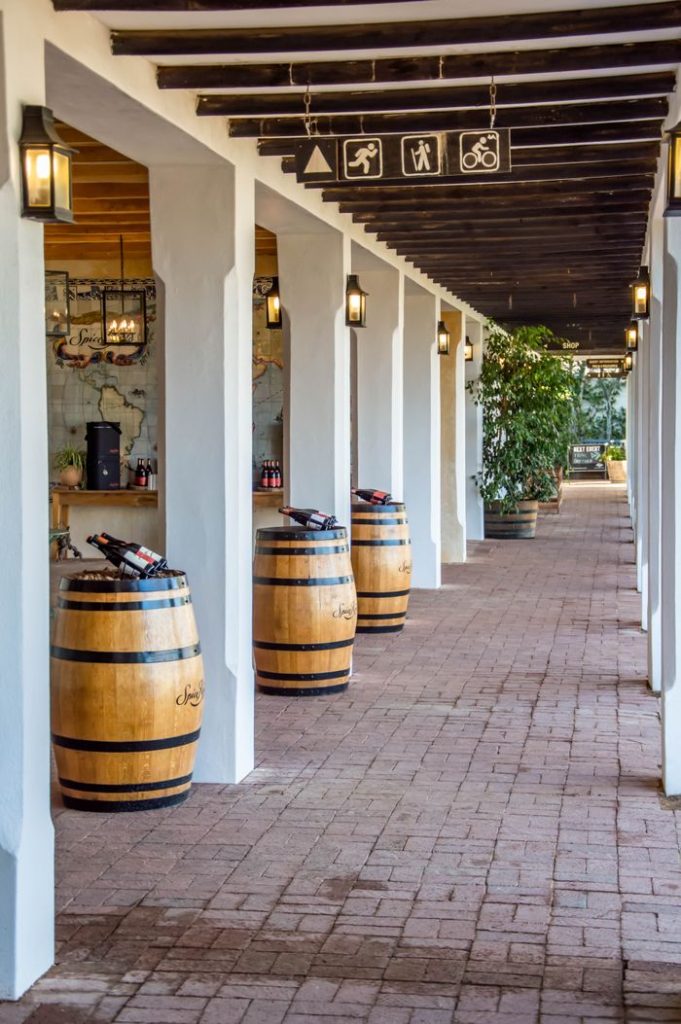
The best finger lakes wineries for a weekend trip are Dr. Konstantin Frank, Hermann J. Wiemer, Atwater Vineyards, Red Tail Ridge, Hosmer, and Buttonwood Grove. Each one earns its spot for a different reason, and together they cover every lake, every style, and every kind of tasting experience you’re looking for.
Affiliate Disclosure: Some links on Fine Wine World are affiliate links, meaning we may earn a paid commission if you click through and make a purchase — at no extra cost to you. Affiliate programs use cookies to track commissions, which may collect personal data. You can read more about how we handle your data in our Privacy Policy and Affiliate Disclosure. We only recommend products we genuinely trust.
Here’s the quick shortlist with a one-line verdict for each:
- Dr. Konstantin Frank (Keuka Lake) — The region’s founding estate; go here for award-winning Riesling and traditional-method sparkling wines
- Hermann J. Wiemer Vineyard (Seneca Lake) — Mosel-inspired precision; the benchmark for estate Riesling in New York
- Atwater Vineyards (Seneca Lake) — Low-intervention, event-driven tastings with pied de cuve winemaking and great deck views
- Red Tail Ridge (Seneca Lake) — Best for varietal range: Gewurztraminer, Blaufränkisch, and experimental European styles
- Hosmer Winery (Cayuga Lake) — Sustainability-focused with conservation awards and approachable Rieslings
- Buttonwood Grove (Cayuga Lake) — Surprisingly bold Cabernet Sauvignon and French oak-aged Chardonnay
- Element Winery (Seneca Lake) — Chef-led, food-pairing-first approach from a noted local restaurateur
- Kemmeter Wines (Seneca Lake) — Small-lot Pinot Blanc and intimate tastings
- Bloomer Creek Vineyard (Seneca Lake) — Scenic lake views and steady terroir-driven whites
- Bright Leaf Vineyards (Cayuga Lake) — Limestone-soil Chardonnay and a lovely lawn setting
- Barnstormer Winery (Seneca Lake) — Historic farmhouse, guided tastings, approachable reds
- Hickory Hollow Wine Cellars / Nathan K. Wines — Boutique, hand-crafted single-vineyard bottles with warm hospitality
Pro Tip: Pick one lake per day. Seneca, Cayuga, and Keuka each have enough strong stops to fill a full day without rushing. Trying to cross lakes adds 45–60 minutes of driving and cuts your tasting time in half.
Table of Contents
- What you need to know about tasting logistics
- How to choose which wineries fit your trip
- Sustainability and certifications: what to look for
- Suggested routes by lake and the best seasons to visit
- Food and lodging near the wineries
- Getting around safely: shuttles, bikes, and driving tips
- Buying wine and shipping it home
- Tasting room etiquette worth knowing
- Why the Finger Lakes deserve more credit than they get
- Fine-wine-world makes trip planning easier
- Sources
What you need to know about tasting logistics
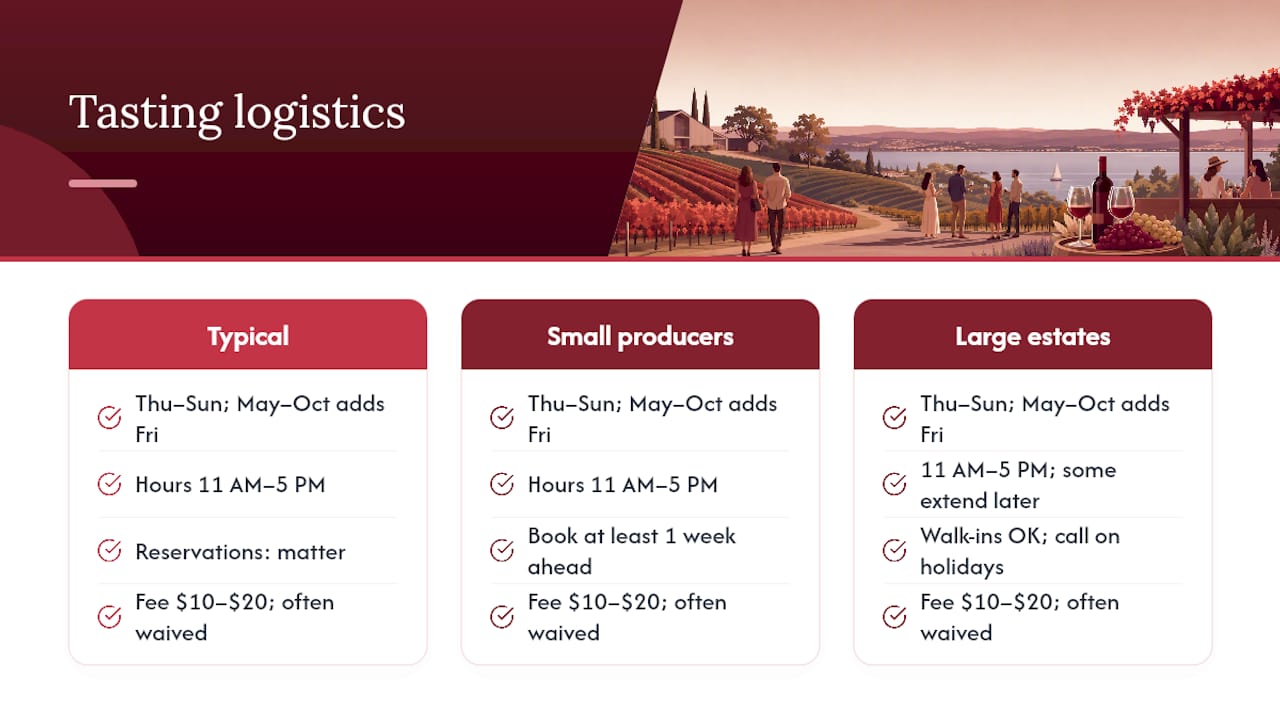
Most Finger Lakes tasting rooms are open Thursday through Sunday, with some adding Friday hours in peak season (May through October). Hours typically run 11 AM to 5 PM, though larger estates like Dr. Konstantin Frank extend later on weekends. Tasting fees generally run $10–$20 per person for a flight of four to six wines, and many estates waive the fee with a bottle purchase.
Reservations matter more than you’d expect. Smaller producers like Kemmeter and Element fill up fast on summer weekends. Book at least a week ahead for those. Larger estates such as Atwater and Hosmer usually accommodate walk-ins, but calling ahead on holiday weekends is smart. The Visit Finger Lakes regional directory is the most reliable place to confirm current hours, tour schedules, and event calendars before you go.
Parking is generally easy, with gravel lots at most estates. Accessibility varies: some tasting rooms are ground-level and wheelchair-accessible, while others involve gravel paths or steps. Call ahead if mobility is a concern.
How to choose which wineries fit your trip
Start with your style preference, not the map. If Riesling is your thing, anchor on Keuka (Dr. Konstantin Frank) or Seneca (Wiemer, Kemmeter). Prefer reds? Buttonwood Grove’s Cabernet Sauvignon and Hosmer’s Cabernet Franc are the strongest bets in a cool-climate region that genuinely surprises red-wine lovers.
Setting matters too. Bright Leaf’s lawn overlooking Cayuga Lake and Bloomer Creek’s waterside location suit a relaxed picnic-style afternoon. Barnstormer’s historic farmhouse is cozy for cooler days. If food is central to your visit, Element’s chef-led approach and the on-site dining at estates like Fox Run Vineyards on Seneca Lake make those stops feel like a full meal, not just a tasting.
Traveling with kids or dogs? Many Finger Lakes estates welcome both on their outdoor grounds, but confirm before you go. Hosmer and Atwater both have open outdoor spaces that tend to be relaxed about four-legged visitors.
Sustainability and certifications: what to look for
The New York Sustainable Winegrower program is the region’s most recognized trustmark. Keuka Lake Vineyards was among its early adopters, and Hosmer Winery has earned conservation awards for its low-intervention viticulture. When you see “New York Winegrower Certified” on a label or tasting-room sign, it signals science-based practices covering soil health, water use, and pesticide reduction.
Atwater Vineyards takes a different but complementary route: their use of pied de cuve (a natural yeast starter) and minimal-intervention cellar work reflects a philosophy you can taste in the wines’ freshness and site character. Sustainability at Finger Lakes estates isn’t a marketing badge; it’s woven into how the vineyards actually farm.
Suggested routes by lake and the best seasons to visit
Seneca Lake is the largest and most winery-dense route. A solid day covers Wiemer, Atwater, Red Tail Ridge, Element, and Bloomer Creek, all on the western shore. The Food & Wine roundup of best Finger Lakes wineries consistently highlights Seneca’s depth and varietal range.
Cayuga Lake suits a slower pace. Hosmer, Buttonwood Grove, and Bright Leaf are spaced comfortably along the western shore and pair well with a lakeside lunch stop in Ithaca.
Keuka Lake is smaller and more intimate. Dr. Konstantin Frank anchors the route, and the Y-shaped lake makes for scenic drives between stops.
Seasonally, harvest (September through October) is the most atmospheric time to visit: you may catch crush activity, and many estates run harvest events. Ice wine season runs January through February when temperatures drop enough to freeze grapes on the vine, producing intensely sweet dessert wines. If dessert wine pairings are your thing, a winter visit is worth planning around.
Food and lodging near the wineries
Most tasting rooms offer charcuterie boards or small bites, but for a full meal, the towns of Watkins Glen (Seneca), Geneva, and Ithaca (Cayuga) have solid restaurant options within 15–20 minutes of the wine trails. Ithaca in particular has a strong farm-to-table scene that pairs naturally with the region’s whites. For pairing Finger Lakes whites with local fish, lakeside spots serving fresh perch or trout are a natural match.
Lodging ranges from B&Bs on the lake to vineyard guesthouses. Fox Run Vineyards offers a vineyard house for overnight stays, making it easy to extend a tasting day into a full weekend without driving far. Booking two to three months ahead for summer weekends is standard practice.
Getting around safely: shuttles, bikes, and driving tips
Do not drive between multiple tasting stops without a plan. The most practical options are dedicated wine-trail shuttle services, which operate on Seneca and Cayuga lakes seasonally, and private car services out of Ithaca, Geneva, and Watkins Glen. Several local companies offer half-day and full-day wine tour packages that handle routing and timing for you.
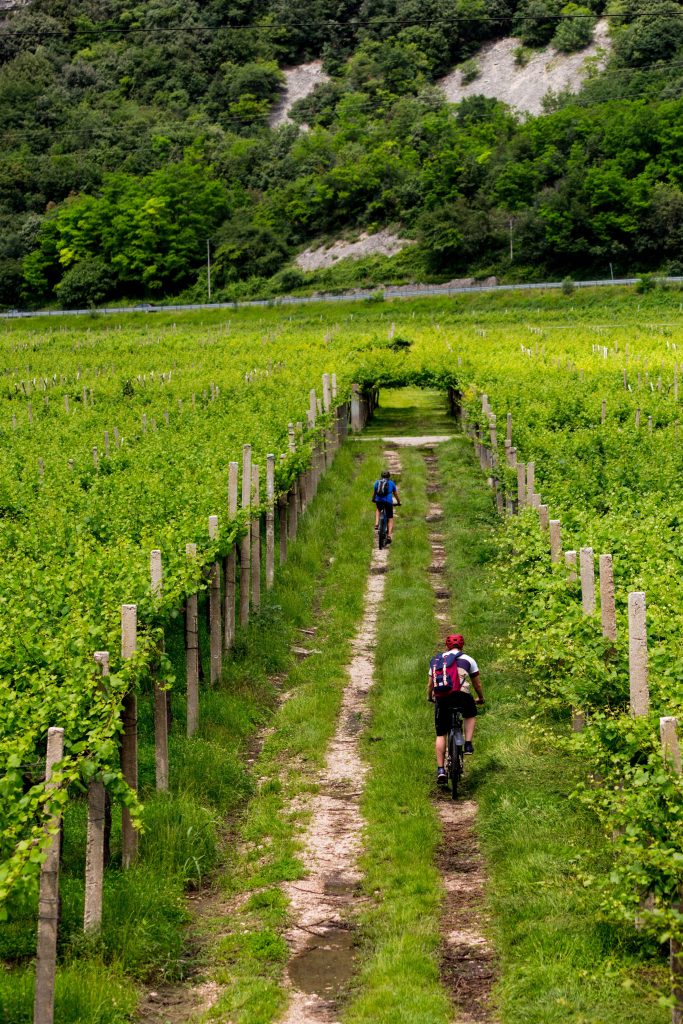
Biking is genuinely viable on Cayuga Lake’s flatter western shore trail, especially for two or three stops spaced within a few miles. Seneca’s terrain is hillier and better suited to a car or shuttle. If you’re driving yourself, designate a driver or limit tastings to one or two stops per person.
For private tasting events or group visits, some estates offer guided experiences that include transport coordination, which simplifies the logistics considerably.
Buying wine and shipping it home
Most Finger Lakes wineries ship directly to consumers in states that permit it. New York allows direct-to-consumer shipping, and many estates ship to 30–40 states. Check each winery’s website for their current shipping list, as state laws change. Wine clubs are a practical way to receive regular shipments after your visit; many estates offer member discounts and priority access to small-batch releases. Fine-wine-world’s wine clubs guide explains how to evaluate membership perks before signing up.
Buying in the tasting room is always an option, and most estates pack bottles securely for travel. If you’re flying home, check your airline’s policy on checked wine before you pack.
Tasting room etiquette worth knowing
Arrive on time for reservations. Tasting rooms at smaller producers like Kemmeter and Hickory Hollow run on tight schedules, and a late arrival cuts into your experience. Spit buckets are there for a reason; use them if you’re doing multiple stops. It’s fine to ask questions about the wines, the farming, or the winemaker’s background. Most Finger Lakes producers genuinely enjoy talking about their work.
Buying a bottle after a tasting is courteous, especially at small estates where the tasting fee barely covers costs. You don’t have to buy everything, but walking out empty-handed after a complimentary or low-fee tasting at a family-run producer is noticed.
Why the Finger Lakes deserve more credit than they get
The Finger Lakes are one of the most genuinely exciting wine regions in the United States, and not only because of Riesling. Dr. Konstantin Frank’s work introducing European vinifera varieties to the region in the 1960s proved that serious wine could be made here, and the estates that followed built on that foundation with real ambition.
The lakes themselves are the reason the wines work. Their depth moderates temperature, keeping winters survivable for vinifera vines and summers cool enough to preserve acidity. That’s why Finger Lakes Rieslings have that electric, citrus-driven freshness, and why cool-climate reds like Cabernet Franc and Blaufränkisch can reach genuine complexity here.
What I find most compelling about this region is how many producers are doing serious work without the fanfare. Kemmeter’s Pinot Blanc, Red Tail Ridge’s European-varietal experiments, Element’s food-first philosophy: these are wines made by people who care deeply about place. The sustainability movement here, anchored by programs like the New York Sustainable Winegrower certification, adds another layer of integrity that you can taste in the wines’ precision and freshness.
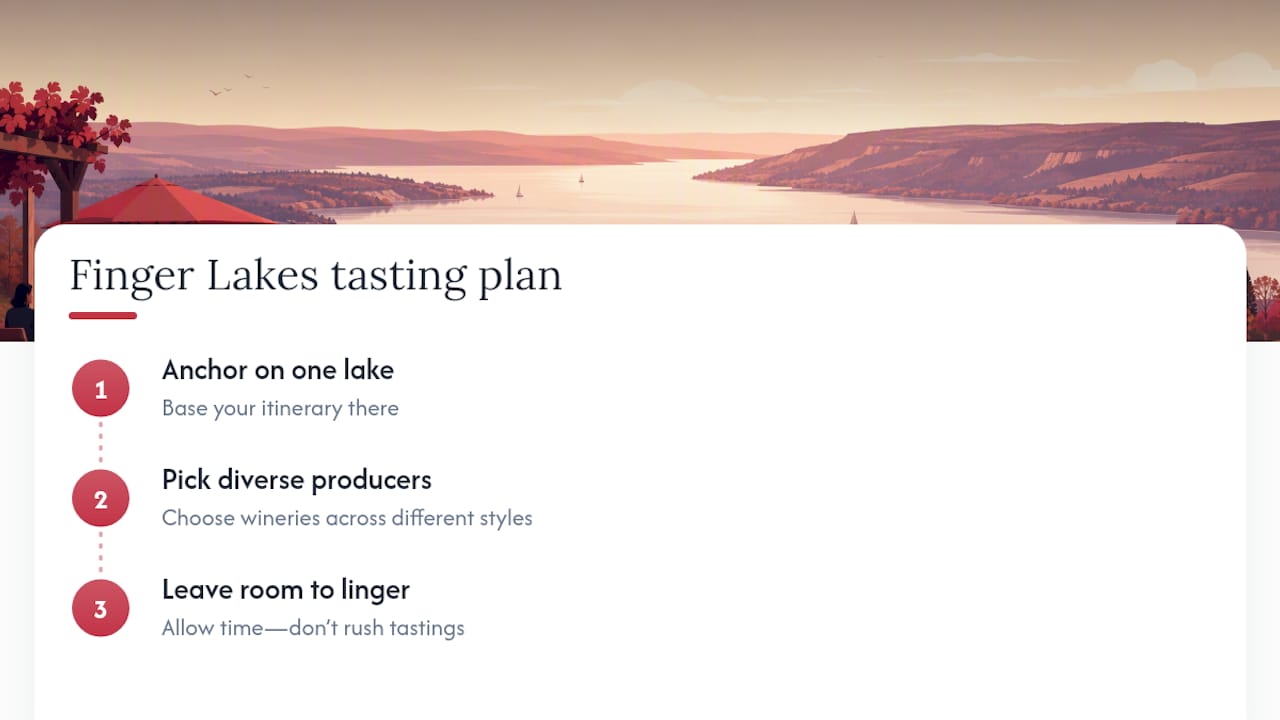
If you’re building your first Finger Lakes itinerary, anchor it on one lake, pick producers across different styles, and leave room to linger. The best tasting experiences here aren’t rushed.
Key Takeaways
Pick one lake per day and plan two to four stops: that single rule makes the difference between a relaxed, memorable Finger Lakes tasting trip and an exhausting drive.
| Point | Details |
|---|---|
| One lake per day | Focus on Seneca, Cayuga, or Keuka; crossing lakes adds 45–60 minutes of driving. |
| Book small producers early | Kemmeter, Element, and Hickory Hollow fill fast on summer weekends; reserve a week ahead. |
| Spot sustainability trustmarks | Look for New York Winegrower Certified on labels or tasting-room signage for verified practices. |
| Plan transport before you go | Shuttle services on Seneca and Cayuga lakes let everyone taste freely without a designated driver. |
| Fine-wine-world trip planning | Use Fine-wine-world’s step-by-step tasting trip guide to build your itinerary and pairing notes before you leave. |
Fine-wine-world makes trip planning easier
Planning a Finger Lakes trip means juggling routes, tasting styles, food stops, and shipping rules all at once. Fine-wine-world cuts through that with beginner-friendly wine travel guides, honest pairing tips, and a step-by-step tasting trip planner that helps you build a real itinerary before you leave home.
Whether you want to understand what makes a Finger Lakes Riesling different from an Alsatian one, or you need a quick guide to food and wine pairing before your first tasting room visit, Fine-wine-world has the resources to make you feel confident walking in. Head to Fine-wine-world to start planning your trip today.
Sources
The Visit Finger Lakes winery directory is the single most reliable starting point: it lists current hours, tour schedules, and event calendars across the region. For curated editorial picks, the Food & Wine roundup and The Grape Pursuit’s top Finger Lakes wineries list both compile visitor favorites with tasting notes. Individual winery websites are the best source for last-minute changes to fees, reservation policies, and wine club or shipping details.
- Best Finger Lakes Wineries to Visit
- Finger Lakes Wineries, Wine Tours, Vineyards & Tastings | Visit Finger Lakes
- The Finger Lakes Pioneer | Dr. Konstantin Frank Winery
- Fox Run Vineyards | Exceptional Finger Lakes Wines on Seneca Lake
- Fine Dry Wines | Keuka Lake Vineyards | Finger Lakes, NY
- Winery & Vineyard | Atwater Vineyards | Seneca Lake