
Organic vs Biodynamic Wine:
What's the Difference
You've probably seen “organic” and “biodynamic” on wine labels and wondered what sets them apart. Both represent eco-friendly approaches to winemaking, but they're not the same thing. This guide is for wine lovers who want to understand what makes these wines different and decide which might be right for their taste and values.
Organic wine vs biodynamic wine comes down to farming philosophy and production methods. Organic wine explained simply: it's made from grapes grown without synthetic pesticides or fertilizers. Biodynamic wine takes this further, treating the vineyard as a complete ecosystem and following lunar cycles for farming activities.
You'll discover how organic and biodynamic production standards actually work in vineyards, from what's allowed (and banned) to the certification processes. We'll break down the key differences in farming methods that create distinct taste profiles you can notice in your glass. You'll also get practical guidance on cost differences and how to choose between organic, biodynamic, and conventional wines based on your preferences and budget.

Understanding Organic Wine Production Standards

Legal Certification Requirements and Governing Bodies
When you're shopping for certified organic wine, you're looking at bottles that have met strict regulatory standards. In the United States, the USDA National Organic Program oversees organic wine certification, while the European Union follows its own organic regulations. Your wine must contain at least 95% organically produced ingredients to earn the “organic” label.
The certification process involves rigorous inspections of your vineyard operations, from soil management to bottling procedures. Third-party certifying agencies examine your farming practices, review detailed records, and conduct annual inspections to ensure ongoing compliance. You'll find certified organic wine clearly marked with official seals that guarantee authenticity.
Each country maintains its own governing body – Canada has the Canadian Food Inspection Agency, while Australia relies on Australian Certified Organic. These organizations work together to create mutual recognition agreements, making it easier for you to trust organic wine labels regardless of where your bottle originated.
Prohibited Synthetic Chemicals and Pesticides
Your organic wine comes from grapes grown without synthetic pesticides, herbicides, fungicides, or fertilizers. This means no glyphosate, no synthetic insecticides like imidacloprid, and no chemical fungicides such as metalaxyl that conventional vineyards often rely on for disease control.
Instead of reaching for synthetic solutions, organic vintners use:
-
Copper sulfate and sulfur for fungal disease prevention
-
Beneficial insects like ladybugs and lacewings for pest control
-
Organic compost and cover crops for soil nutrition
-
Mechanical cultivation instead of herbicides for weed management
You won't find residues from systemic chemicals that can penetrate grape skins and potentially affect wine flavor. This clean approach requires more labor and attention, but it protects both your health and the vineyard ecosystem.

Natural Farming Methods and Soil Health Practices
Organic wine production puts soil health at the center of everything. You're supporting vineyards that treat soil as a living ecosystem rather than just a growing medium. These farms focus on building soil biodiversity through composting, cover cropping, and crop rotation.
Your organic wine grapes grow in soil enriched by:
-
Compost made from grape pomace and other organic materials
-
Cover crops like clover and mustard that fix nitrogen naturally
-
Beneficial microorganisms that help vines absorb nutrients
-
Reduced tillage practices that preserve soil structure
This approach creates stronger, more resilient vines that can better withstand weather stress and disease pressure. The result is grapes with more concentrated flavors and better mineral expression – qualities that translate directly into your wine glass.
Sulfite Limitations and Additive Restrictions
Your organic wine contains significantly lower sulfite levels than conventional wines. While traditional winemaking might add up to 350 parts per million of sulfites, organic wines are limited to 100 ppm in the US and 150 ppm in the EU. Many organic producers use even less, relying on careful sanitation and temperature control instead.
Beyond sulfites, organic wine production restricts many common additives. You won't find:
-
Synthetic acids for pH adjustment
-
Artificial flavoring compounds
-
Chemical clarifying agents like polyvinylpolypyrrolidone
-
Synthetic yeasts with genetic modifications
This minimal intervention approach means your organic wine expresses more authentic grape and terroir characteristics. Some organic wines carry “no added sulfites” labels, though naturally occurring sulfites from fermentation will still be present in trace amounts.

Exploring Biodynamic Wine Philosophy and Methods
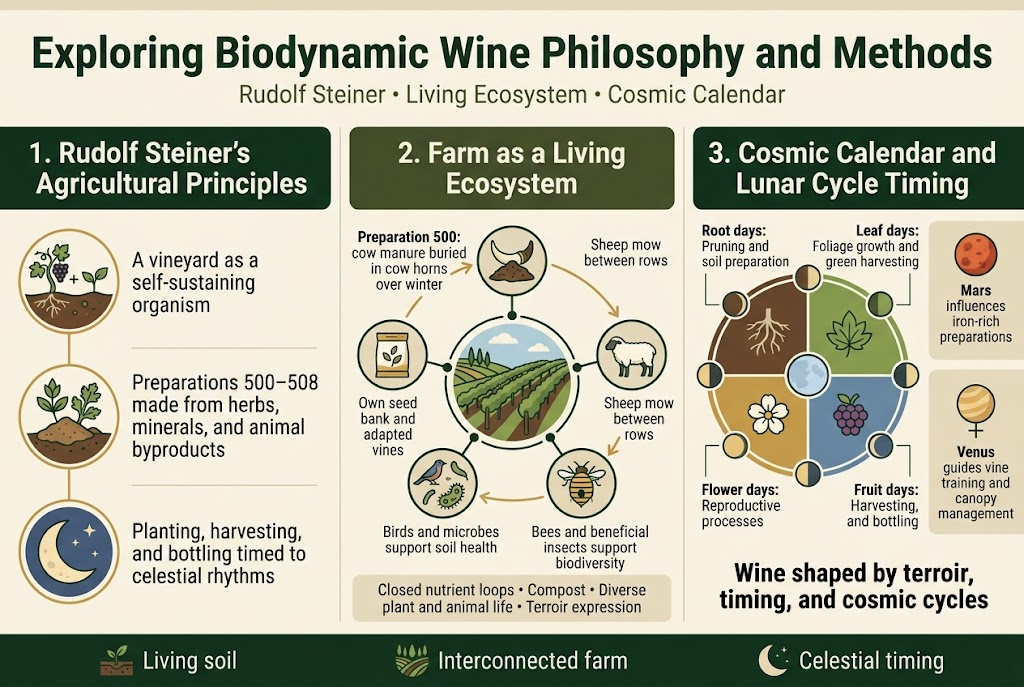
Rudolf Steiner's Agricultural Principles
When you're exploring biodynamic wine, you're stepping into a world shaped by Rudolf Steiner's revolutionary thinking from the 1920s. This Austrian philosopher and scientist created a farming approach that goes way beyond what you'll find in conventional or even organic agriculture. Steiner believed that your vineyard should operate as a self-sustaining organism, where every element works together in perfect harmony.
You'll discover that biodynamic farming treats your soil as a living entity rather than just dirt to hold plants. Steiner's principles focus on building soil health through homeopathic preparations made from herbs, minerals, and animal byproducts. These preparations, numbered 500-508, get applied in tiny amounts to energize your soil and plants. Think of them as vitamins for your vineyard's ecosystem.
What makes this approach unique is how it views your farm as interconnected with cosmic forces. Steiner taught that plants respond to celestial rhythms just like ocean tides respond to the moon. Your biodynamic winemaker carefully times planting, harvesting, and even wine bottling according to these natural cycles.
Farm as a Living Ecosystem Approach
Your biodynamic vineyard operates as a complete, self-contained organism where every component supports the whole. Unlike conventional farming that relies on external inputs, you're looking at a system that generates its own fertility and maintains its own balance. This means your winemaker creates their own compost, maintains diverse plant and animal life, and works to close all nutrient loops within the property.
You'll find that biodiversity becomes your vineyard's secret weapon. Your biodynamic producer encourages beneficial insects, birds, and microorganisms to thrive alongside the vines. They might keep sheep to naturally mow between rows or maintain beehives to support pollination. This creates a web of relationships where each organism contributes to the vineyard's health.
The soil receives special attention through biodynamic preparations that you won't encounter in organic farming. Preparation 500, made from cow manure buried in cow horns over winter, gets diluted and stirred in specific patterns before application. These preparations aim to enhance soil structure and root development in ways that go beyond standard organic practices.
Your biodynamic vineyard also maintains its own seed bank and propagates its own plants whenever possible. This creates grape vines that are perfectly adapted to their specific terroir, resulting in wines that truly express their unique place of origin.

Cosmic Calendar and Lunar Cycle Timing
Your biodynamic winemaker follows a cosmic calendar that might seem mystical at first, but it's based on observable patterns in nature. Just as gardeners have long known that certain moon phases affect plant growth, biodynamic wineproduction takes this ancient wisdom to sophisticated levels. You'll find that every major vineyard activity gets timed according to celestial movements.
The lunar calendar divides days into four categories that guide your winemaker's decisions. Root days favor underground work like pruning and soil preparation. Leaf days focus on foliage growth and green harvesting. Flower days support reproductive processes, while fruit days are ideal for harvesting and tasting. Your biodynamic producer plans their entire year around these rhythms.
You'll also discover that planetary positions influence timing decisions. When Mars is in certain positions, your winemaker might focus on iron-rich preparations. Venus influences might guide decisions about vine training and canopy management. This cosmic approach extends into your cellar work too – many biodynamic producers only bottle their wines during fruit days when lunar forces support flavor concentration.
The result is wine that advocates believe captures not just the terroir of your vineyard, but also the cosmic influences present during its creation. Whether you're a believer in these forces or not, you can taste the difference in the careful attention and timing that goes into every bottle of biodynamic wine.
Key Production Differences That Impact Your Wine
Vineyard Management and Soil Treatment Variations
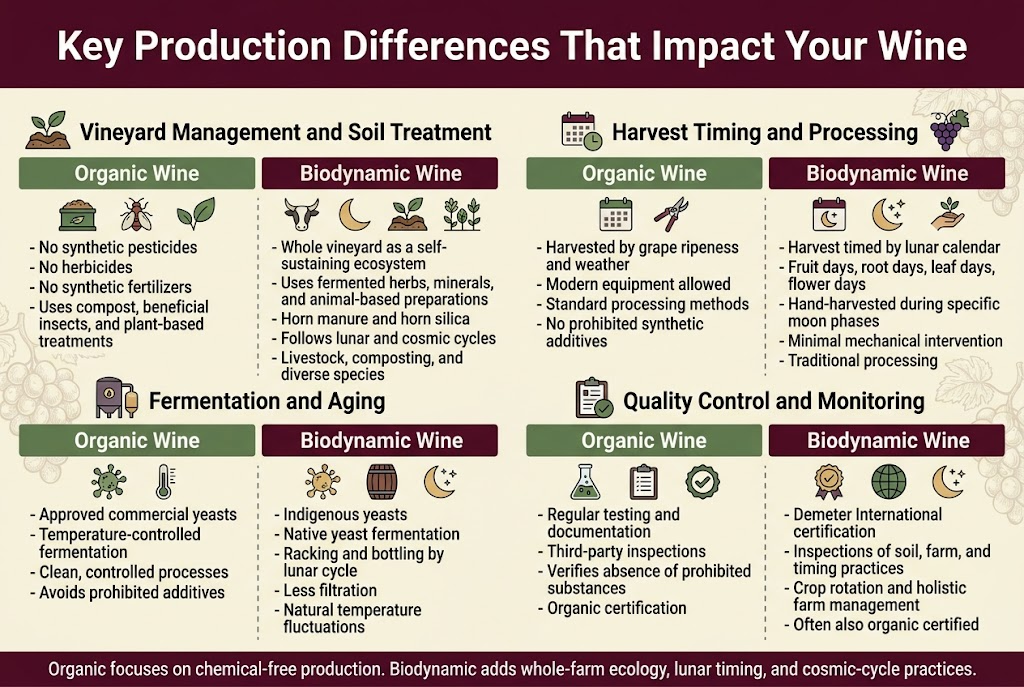
Your wine's character starts in the soil, and this is where you'll notice the first major difference between organic and biodynamic wine production. When you choose organic wine, you're supporting vineyards that eliminate synthetic pesticides, herbicides, and fertilizers. Instead, these producers rely on natural alternatives like compost, beneficial insects, and plant-based treatments to maintain healthy vines.
Biodynamic wine takes this approach much further. You'll find that biodynamic farmers view their vineyard as a complete, self-sustaining ecosystem. They create their own preparations using fermented herbs, minerals, and even animal organs, which they apply according to lunar and cosmic cycles. Your biodynamic wine comes from vines treated with preparations like horn manure (buried cow horns filled with manure) and horn silica, which supporters believe enhance soil vitality and plant health.
The soil treatment differences are striking. Organic vineyards focus on removing harmful chemicals, while biodynamic producers actively work to energize their soil through specific preparations and timing. You'll often find biodynamic vineyards incorporating livestock, composting systems, and diverse plant species to create what they consider a living, breathing farm organism.
Harvest Timing and Processing Methods
Your harvest experience differs significantly between these two approaches. Organic wine producers follow traditional harvest timing based on grape ripeness, weather conditions, and practical considerations. They're free to use modern equipment and standard processing methods, as long as they avoid prohibited synthetic additives.
Biodynamic wine harvest operates on an entirely different calendar. You'll find these producers consulting lunar calendars and planetary positions to determine optimal harvest dates. They believe that fruit days, root days, leaf days, and flower days each offer different energetic qualities that affect your final wine. Many biodynamic producers prefer hand-harvesting during specific moon phases, believing this creates better energy flow in your wine.
Processing methods also vary considerably. While organic wine allows for modern winemaking equipment and techniques, biodynamic producers often choose more traditional approaches. You might find them using native yeasts exclusively, minimal mechanical intervention, and processing methods that align with biodynamic principles of minimal manipulation.
Fermentation and Aging Technique Differences
Your fermentation process reveals another key distinction between organic and biodynamic wine. Organic winemakers can use approved commercial yeasts and standard temperature-controlled fermentation, following conventional techniques while avoiding prohibited additives. You'll find their approach focuses primarily on clean, controlled processes without synthetic chemicals.
Biodynamic fermentation takes a more hands-off approach that directly impacts your wine's character. These producers typically rely on indigenous yeasts found naturally on grape skins and in their cellars. You'll taste the difference this makes – native yeast fermentation often creates more complex, sometimes unpredictable flavor profiles compared to commercial yeast strains.
During aging, biodynamic producers continue following lunar cycles for key decisions. You might find them racking wine only during specific moon phases or timing bottling according to biodynamic calendars. Some producers believe these practices reduce the need for filtration and create more stable, expressive wines.
Temperature control also differs. While organic producers use standard cooling and heating systems, many biodynamic cellars rely more on natural temperature fluctuations and underground aging environments that work with natural rhythms rather than against them.
Quality Control and Monitoring Approaches
Your quality assurance varies significantly between these production methods. Organic wine certification requires regular testing and documentation to verify the absence of prohibited substances. You can trust that certified organic wine has undergone laboratory analysis and third-party inspections to confirm compliance with organic standards.
Biodynamic wine certification through Demeter International involves even more rigorous monitoring. You're getting wine from farms that undergo extensive inspections covering everything from soil management to cosmic timing practices. These producers must demonstrate they're following biodynamic preparations, crop rotation, and holistic farm management principles.
The monitoring philosophy differs fundamentally. Organic certification focuses on what's not in your wine – no synthetic chemicals, pesticides, or prohibited additives. Biodynamic certification examines what is being added – specific preparations, timing practices, and whole-farm ecosystem health.
You'll find that many biodynamic producers also maintain organic certification, giving you double assurance about chemical-free production. However, some choose only biodynamic certification, believing it represents a higher standard that encompasses organic principles while adding energetic and cosmic considerations that they feel create superior wine quality.
Taste Profile Distinctions You Can Experience
When you taste organic wine versus biodynamic wine, you'll notice some fascinating differences in how the flavors unfold on your palate. Biodynamic wines often showcase a more pronounced sense of place – that magical concept winemakers call terroir. You're tasting the soil, the climate, and the unique ecosystem where those grapes grew. This happens because biodynamic farming creates a more vibrant, living vineyard environment that translates directly into your glass.
Your organic wine will typically offer clean, pure fruit flavors without any chemical interference. You'll experience the grape variety's natural characteristics without worrying about synthetic pesticide residues affecting the taste. However, biodynamic wines take this a step further. You might discover unexpected layers of mineral notes, earthy undertones, and complex aromatics that seem to tell the complete story of the vineyard.
The flavor intensity in biodynamic wines often feels more concentrated and authentic. You're getting grapes that grew in soil teeming with beneficial microorganisms, creating a more complex foundation for flavor development. Many wine enthusiasts describe biodynamic wines as having a certain “aliveness” – flavors that seem to evolve and change as you drink them.
Texture and Mouthfeel Characteristics
Your experience with texture sets organic and biodynamic wines apart in remarkable ways. When you swirl biodynamic wine in your mouth, you'll often notice a more substantial, almost creamy texture that coats your palate differently than conventional wines. This comes from the enhanced soil health and vine vitality that biodynamic practices promote.
The tannin structure in biodynamic red wines tends to feel more integrated and smooth. You won't get that harsh, astringent bite that sometimes occurs in conventionally produced wines. Instead, you'll experience tannins that feel natural and well-balanced, supporting the fruit flavors rather than overwhelming them.
Organic wines generally offer a cleaner mouthfeel without any chemical aftertaste that might linger from synthetic treatments. You'll appreciate how the wine feels pure and unobstructed as it moves across your tongue. The acidity levels in both organic and biodynamic wines often feel more balanced and natural, giving you a refreshing finish that doesn't feel artificially manipulated.
Biodynamic wines frequently display what experts call “energy” – a vibrant, almost electric quality that makes your mouth water and keeps you coming back for another sip. You might notice this particularly in white biodynamic wines, where the texture feels both crisp and substantial simultaneously.
Aging Potential and Wine Longevity
Your investment in organic or biodynamic wine becomes even more worthwhile when you consider their aging potential. These wines often develop more gracefully in your cellar compared to conventionally produced bottles. The absence of synthetic chemicals means the wine's natural preservation compounds can work more effectively over time.
Biodynamic wines, in particular, show exceptional aging characteristics. You'll find that these bottles often improve dramatically after several years of proper storage. The complex microbiology from biodynamic vineyard practices creates wines with better natural stability, allowing them to evolve and develop new flavor dimensions as they age.
When you open an aged organic wine, you'll typically discover that the fruit flavors have mellowed beautifully while maintaining their essential character. The wine won't show signs of premature oxidation or off-flavors that sometimes plague conventionally made wines with chemical interventions.
Your biodynamic wines often age with remarkable elegance, developing secondary and tertiary flavors that surprise even experienced wine drinkers. These might include notes of leather, tobacco, forest floor, or dried fruits that weren't present in the young wine. The natural farming methods create grapes with better phenolic development, giving you wines that can age gracefully for decades when properly stored.
Both organic and biodynamic wines tend to maintain their vibrancy longer than you might expect, making them excellent choices for your long-term wine collection.
Making the Right Choice for Your Preferences

Your wine preferences should guide your choice between organic wine vs biodynamic wine. If you prioritize clean, pure flavors without chemical interference, organic wine offers a straightforward approach to natural winemaking. You'll taste the grape variety and terroir without synthetic additives masking the authentic character.
When you're curious about what is biodynamic wine and enjoy wines with unique, distinctive profiles, biodynamic options often deliver more complex and sometimes unpredictable flavors. These wines can showcase remarkable depth and character variations from vintage to vintage, making each bottle an adventure.
Consider your drinking goals:
-
Casual enjoyment: Both organic and biodynamic wines work well for everyday drinking
-
Special occasions: Biodynamic wines often offer conversation-starting uniqueness
-
Wine collecting: Biodynamic bottles frequently age with interesting complexity
-
Health consciousness: Both options minimize chemical exposure compared to conventional wines
Your budget matters too. Organic wines typically cost 15-30% more than conventional bottles, while biodynamic wines can command premium prices due to their intensive production methods. Start with certified organic wine if you're new to natural wines, then explore biodynamic options once you've developed your palate for low intervention wine styles. If you want a hassle-free way to discover independent producers making wines with minimal intervention, a service like Naked Wines connects you directly with small winemakers who often follow organic or biodynamic practices.
Environmental Impact Considerations
Your choice between organic and biodynamic wine directly impacts environmental sustainability. When you choose organic wine, you support farming practices that eliminate synthetic pesticides, herbicides, and fertilizers from vineyard ecosystems. This protects soil health, groundwater quality, and beneficial insects like bees and butterflies.
Biodynamic farming wine takes environmental stewardship even deeper. You're supporting agricultural systems that treat vineyards as complete ecosystems, incorporating livestock, composting, and biodiversity enhancement. Biodynamic vineyards often become carbon-neutral or even carbon-negative, actively removing CO2 from the atmosphere.
Your environmental priorities might include:
-
Water conservation: Both methods reduce chemical runoff into water systems
-
Soil health: Biodynamic practices typically build more robust soil biology
-
Biodiversity: Biodynamic vineyards support more wildlife species
-
Carbon footprint: Many biodynamic producers achieve lower overall emissions
-
Chemical reduction: Organic standards eliminate most synthetic inputs
Sustainable wine guide principles suggest considering the complete production cycle. Some organic wineries use renewable energy, lightweight bottles, and local distribution networks. Biodynamic producers often incorporate holistic sustainability practices throughout their operations.
Research your chosen wineries' broader environmental commitments. Look for additional certifications like LEED buildings, solar power usage, or carbon-neutral shipping. Your purchasing decisions signal market demand for environmentally responsible wine production methods.
Occasion-Specific Selection Guidelines
Different occasions call for strategic wine selection between organic and biodynamic options. For dinner parties with wine-curious friends, biodynamic wines create excellent conversation starters. Your guests will appreciate learning about biodynamic wine for beginners while experiencing unique flavor profiles that spark discussion.
Organic wine explained concepts work well for health-conscious gatherings or when serving guests with chemical sensitivities. You can confidently serve organic wines knowing they contain minimal additives and sulfites, making them suitable for most dietary preferences.
Consider these occasion-specific guidelines:
Intimate dinners: Biodynamic wines often pair beautifully with farm-to-table cuisine, creating thematic harmony between sustainable food and wine choices.
Large celebrations: Organic wines offer reliability and broader appeal, ensuring most guests enjoy familiar yet elevated drinking experiences.
Business entertaining: Eco friendly wine guide principles suggest organic wines demonstrate environmental consciousness without overwhelming clients with unfamiliar concepts.
Gift giving: Biodynamic wines make thoughtful presents for wine enthusiasts, while organic options suit health-conscious recipients.
Your natural vs organic vs biodynamic wine selection should match the event's formality level. Casual barbecues work well with approachable organic bottles, while special anniversaries might warrant premium biodynamic selections. Consider your guests' wine knowledge and openness to trying new styles when making your final choice.

Organic and biodynamic wines each offer unique approaches to winemaking that can transform your drinking experience. Organic wines focus on eliminating synthetic chemicals and pesticides, giving you cleaner, more natural flavors. Biodynamic wines take this a step further with holistic farming practices that treat the vineyard as a complete ecosystem, often resulting in wines with more complex, expressive characteristics. You'll notice these differences in your glass – organic wines tend to showcase pure fruit flavors, while biodynamic wines often display deeper mineral notes and distinctive terroir.
Your choice between organic and biodynamic wines comes down to what matters most to you. If you prioritize environmental responsibility and want to avoid synthetic additives, organic wines are an excellent starting point. If you're curious about wines that reflect a deeper connection to their land and don't mind paying a bit more for unique flavors, biodynamic options might be your perfect match. Start by trying both styles from the same region or grape variety to discover which approach speaks to your palate and values.
f you'd like to explore independent producers making organically and biodynamically farmed wines without having to hunt for them in a shop, our Naked Wines review covers a service that funds small winemakers directly — many of whom work with exactly the farming philosophies covered in this guide.
Taking Your Natural Wine Journey Further
Organic and biodynamic wines represent one end of the winemaking spectrum — but understanding where they sit relative to conventional wine makes the differences much more meaningful. Our complete guide to natural wine covers the broader natural wine movement, including how it overlaps with organic and biodynamic practices and what to look for when buying. If the terroir concept resonated with you — the idea that soil, climate, and location shape a wine's character — our wine regions of the world guide shows exactly how geography translates into flavour across every major wine-producing country. And when you're ready to taste these differences in your glass, our wine tasting guide gives you the Five S's method to identify the mineral notes, earthy complexity, and textural qualities that make organic and biodynamic wines so distinctive. For independent certification standards and a directory of biodynamic producers worldwide, Demeter International's producer search is the most authoritative free resource available. The more you know about how your wine was made, the more you'll taste in every glass.