
A Guide to Vermouth: What Every Wine Lover Should Know
Affiliate Disclosure: Some links on Fine Wine World are affiliate links, meaning we may earn a paid commission if you click through and make a purchase — at no extra cost to you. Affiliate programs use cookies to track commissions, which may collect personal data. You can read more about how we handle your data in our Privacy Policy and Affiliate Disclosure. We only recommend products we genuinely trust.
Vermouth is a fortified, aromatized wine infused with a blend of botanicals that gives it a flavor no ordinary wine can match. At its core, it starts with a base of neutral grape wine (primarily composed of grape wine), gets a boost of neutral spirit to reach a typical 16%–18% ABV, and then takes on its character from a proprietary mix of herbs, roots, spices, and flowers. The result sits comfortably between wine and spirits in terms of strength, which is a big part of why it works so well in cocktails and in the kitchen.
Here is a quick snapshot of what makes vermouth distinct:
- Base: Neutral grape wine, making up at least 75% of the blend
- Fortification: Neutral grape spirit added to stabilize and raise alcohol content
- Signature botanical: Wormwood (Artemisia absinthium), the herb that gives vermouth its characteristic bittersweet edge
- Other botanicals: Orange peel, juniper, cinchona bark, chamomile, cardamom, and dozens more depending on the producer
- Main styles: Dry (French-style), sweet (Italian-style), bianco, rosé, and chinato
- ABV: Typically 16%–18%, placing it above wine but below most spirits
- Uses: Classic cocktails like the Martini, Negroni, and Manhattan; sipped as an aperitif; used as a cooking wine substitute
Table of Contents
- Where did vermouth come from?
- How vermouth is made and what goes into it
- How people use vermouth today, from cocktails to the kitchen
- Notable vermouth brands you can find in the US
- What are the different types of vermouth beyond sweet and dry?
- How to taste and properly serve vermouth
- Vermouth trends and regional tastes across the US
- Key Takeaways
Where did vermouth come from?
Vermouth’s story begins in 18th-century Turin, Italy, and its name tells you almost everything about its defining ingredient. The word “vermouth” comes directly from the German Wermut, meaning wormwood, the bitter herb that gave the drink its identity. That linguistic trail from German to Italian to French to English reflects just how widely the drink traveled once it caught on.
Here is how vermouth evolved from a medicinal curiosity to a cocktail staple:
- Ancient roots: Wormwood-infused wines date back to ancient Greece and Rome, where they were used as tonics and digestive aids. The botanical wine concept was never truly new; Turin simply refined and commercialized it.
- 18th-century Turin: The modern version of vermouth was first produced in the mid-to-late 1700s in Turin. Antonio Benedetto Carpano is widely credited with creating a recognizable commercial vermouth around 1786, blending local Moscato wine with an array of botanicals.
- Medicinal era: Early vermouth was sold in apothecaries as a stomach remedy. Wormwood was believed to stimulate digestion and ease gastric discomfort, which is why the drink was consumed before meals.
- Rise of the aperitif: By the early 19th century, fashionable cafés in Turin were serving vermouth to guests throughout the day. It shed its purely medicinal image and became a social drink, a ritual before dinner.
- French adoption: French producers, particularly in the Chambéry and Marseille regions, developed their own drier, more delicate style. This French dry vermouth became the foundation of the classic Martini as we know it today.
- Cocktail revolution: By the late 19th century, bartenders in the United States and Europe had embraced vermouth as a key cocktail ingredient. The Martini, Manhattan, Rob Roy, and Negroni all owe their structure to it.
- 20th-century decline and revival: Mid-century American drinking culture shifted toward drier, spirit-forward cocktails, and vermouth fell out of favor for a time. The craft cocktail movement of the 2000s and 2010s brought it roaring back, with bartenders rediscovering its complexity.
How vermouth is made and what goes into it
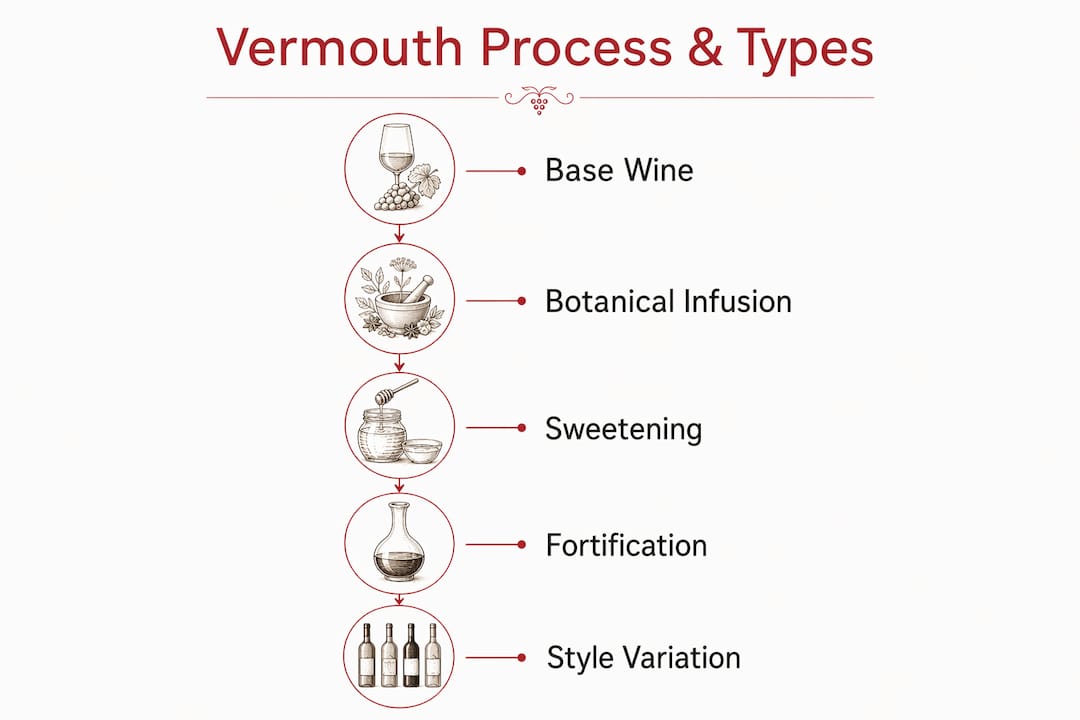
The production process is where vermouth gets interesting, and it is more hands-on than most people expect, as detailed on Vinoperte’s insights on fortification and botanical infusion methods. Every producer guards their botanical recipe closely, which is why two vermouths can taste completely different even when they share the same basic structure.
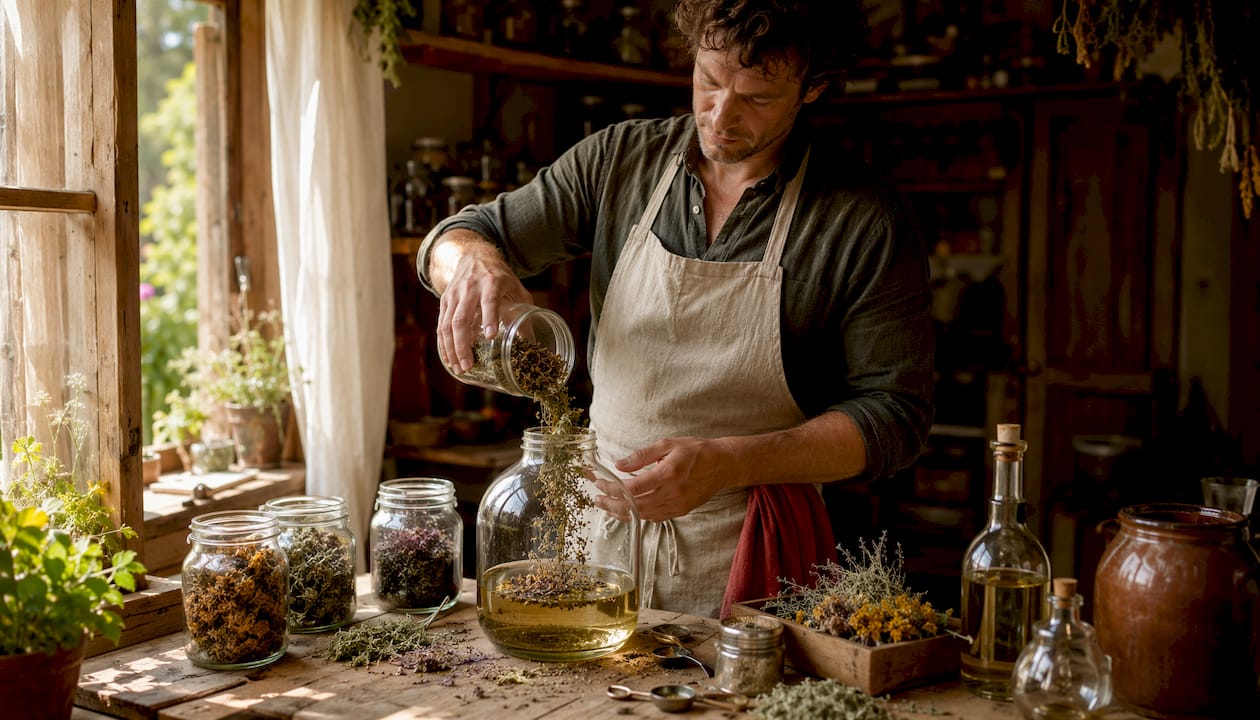
The base wine is typically a neutral, dry white wine chosen for its low aromatic profile. Producers want a blank canvas, not a wine that competes with the botanicals. Some Italian producers use Trebbiano or Catarratto; French producers often favor wines from the Languedoc region.
Fortification comes next. Grape brandy is added to the base wine, which does two things: it raises the alcohol level to the 16%–18% range and halts any remaining fermentation, giving the producer more control over the final sweetness and flavor. This step is what makes vermouth shelf-stable longer than an ordinary wine.
Botanical infusion is the heart of the process. Producers macerate or distill a proprietary blend of dry ingredients, including herbs, roots, barks, seeds, and flowers, then add that extract to the fortified wine. The exact combination varies by house, but some botanicals appear across nearly every recipe:
- Wormwood (Artemisia absinthium or A. pontica): the legal and flavor cornerstone of vermouth
- Orange peel: adds citrus brightness and a touch of bitterness
- Juniper berries: contribute a piney, resinous note
- Cinchona bark: brings quinine-like bitterness and depth
- Chamomile: softens the blend with floral sweetness
- Cardamom and cloves: add warmth and spice
- Gentian root: another bitter botanical that supports the digestive quality
- Elderflower: used in some bianco and rosé styles for aromatic lift
Sweetening follows infusion. Cane sugar or caramelized sugar is added depending on the style, which is why sweet vermouth tastes so different from dry. The final product is then rested, filtered, and bottled.
| Production Stage | What Happens | Key Ingredient |
|---|---|---|
| Base wine selection | Neutral dry white wine chosen | Trebbiano, Catarratto, or similar |
| Fortification | Grape brandy added; fermentation halted | Neutral grape spirit |
| Botanical infusion | Herbs, roots, spices macerated or distilled | Wormwood (required), plus proprietary blend |
| Sweetening | Sugar added to define style | Cane sugar or caramelized sugar |
| Resting and filtration | Blend stabilized and clarified | N/A |
Regional character matters here too. Italian vermouths tend toward richer, more complex botanical blends with pronounced sweetness in the rosso style. French vermouths lean drier and more delicate. Spanish producers, particularly in Catalonia, have developed a bold, oxidative style that is gaining fans in the US market. You can explore how wine flavor profiles work more broadly to understand why these regional differences feel so distinct in the glass.
How people use vermouth today, from cocktails to the kitchen
Vermouth is one of those rare ingredients that earns its place in two completely different settings: the bar and the stove. Most people encounter it first in a cocktail, but once you understand what it brings to a dish, you will want a bottle in your pantry too.
In cocktails, vermouth is indispensable. The classic Martini calls for dry vermouth alongside gin or vodka, where it adds herbal complexity and softens the spirit’s edge. The Negroni pairs sweet vermouth with gin and Campari for a bittersweet, deeply satisfying drink. The Manhattan uses sweet vermouth with rye or bourbon whiskey, and the Rob Roy does the same with Scotch. In each case, vermouth is not just a modifier; it is the ingredient that ties the drink together.
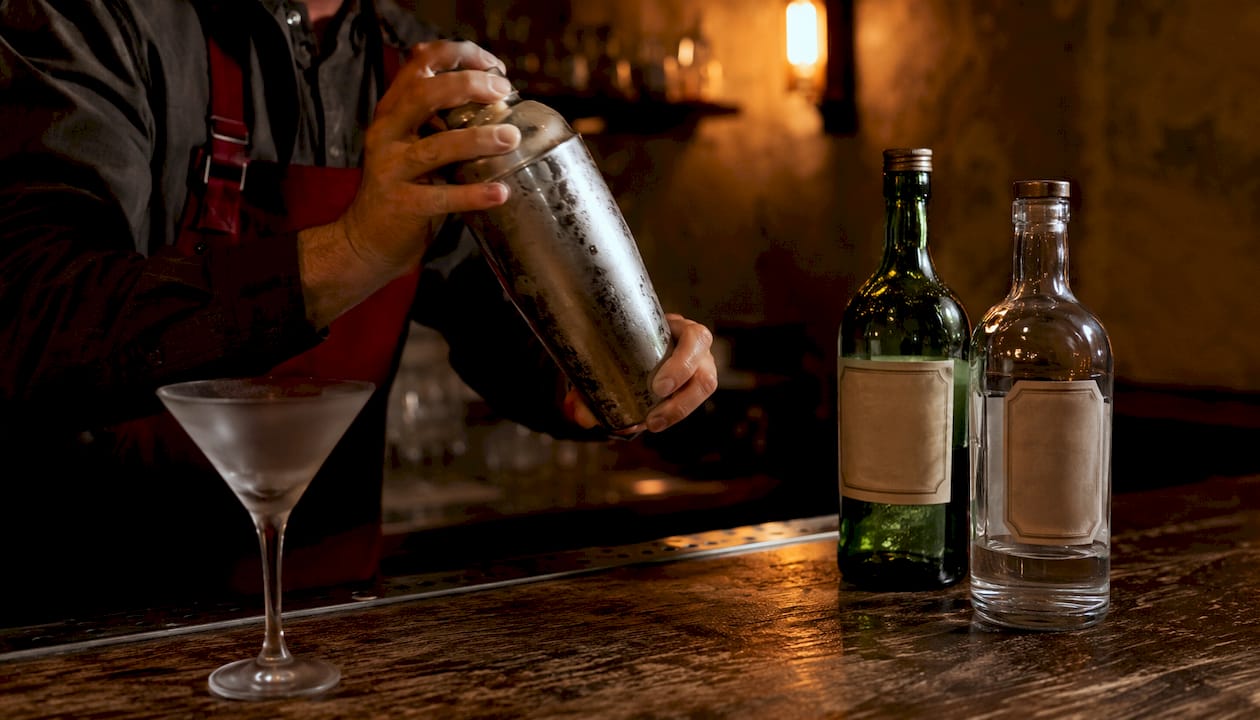
Beyond the classics, vermouth is increasingly popular in low-ABV cocktails, often served over ice with a splash of soda water and a citrus twist. This style is sometimes called a “vermouth spritz” and has become a go-to for drinkers who want something interesting without the full punch of a spirit-forward drink. If you are curious about the broader world of lower-alcohol options, Fine-wine-world’s guide to low-ABV wines and drinks covers the trend in depth.
As an aperitif, vermouth is traditionally served neat or over ice, sometimes with an olive or a twist of lemon or orange peel. In Spain and Italy, this is still a deeply embedded ritual before lunch or dinner. The bittersweet botanical quality genuinely stimulates appetite, which is the whole point of an aperitif.
In the kitchen, vermouth is a genuinely useful substitute for white wine. It replaces white wine 1:1 in pan sauces, seafood broths, risotto, and stews, adding herbal complexity that plain white wine simply cannot match. Because vermouth is already fortified and flavored, a small amount goes a long way. It works especially well with shellfish, chicken, and cream-based sauces. For ideas on pairing vermouth-enhanced dishes with the right wine at the table, Fine-wine-world’s guide to Mediterranean cuisine pairings is worth a read.
Storage matters more than most people realize. Once you open a bottle, vermouth oxidizes quickly at room temperature. The fix is simple:
- Refrigerate immediately after opening
- Use within approximately one month for the best flavor
- Keep the cap tight to minimize air exposure
- Treat it more like an open bottle of wine than a bottle of spirits
Pro Tip: Buy vermouth in smaller bottles (375 ml) if you do not use it regularly. A fresh half-bottle beats a stale full one every time, and the flavor difference in a Martini is immediately obvious.
Notable vermouth brands you can find in the US
Walk into any well-stocked liquor store in the US and you will find a solid range of vermouth options. Here are the brands worth knowing:
- Martini & Rossi: The most widely distributed Italian vermouth brand in the US. Their Rosso (sweet) and Bianco styles are reliable, affordable, and available practically everywhere, from grocery stores to big-box retailers.
- Noilly Prat: The benchmark French dry vermouth. Made in Marseillan, France, it has a slightly oxidative, nutty character that sets it apart from Italian dry styles. Bartenders often reach for it when making a classic Martini.
- Dolin: A French producer from Chambéry with a lighter, more delicate profile than Noilly Prat. Their Blanc (bianco) is particularly popular with mixologists who want floral sweetness without heaviness.
- Carpano Antica Formula: An Italian sweet vermouth with a rich, complex vanilla and spice profile. It is the go-to for a premium Manhattan and is widely available at specialty liquor stores across the US.
- Punt e Mes: Another Italian classic, this one leans bitter thanks to a higher proportion of quinine. It splits the difference between sweet vermouth and an amaro, making it a great choice for adventurous cocktail drinkers.
- Cinzano: A historic Turin brand offering both Rosso and Extra Dry styles. Widely available and competitively priced, it is a solid everyday option.
- Mancino: A smaller Italian producer gaining traction in US craft cocktail bars. Their Secco (dry) and Rosso Amaranto styles show what a more artisanal approach to botanical blending looks like.
- Vya: A California-made vermouth from Quady Winery, using California wine as the base. Their Extra Dry and Sweet styles are made with American botanicals and offer a genuinely different flavor profile from European imports.
What are the different types of vermouth beyond sweet and dry?
Most people know vermouth comes in sweet and dry, but the full picture is richer than that. The EU regulations that define vermouth styles set clear sugar thresholds: sweet vermouth must contain at least 130 grams of sugar per liter, dry vermouth less than 50 grams, and extra dry is capped at 30 grams. Those numbers translate directly into the flavor differences you taste in the glass.
Beyond sugar content, distinct styles like bianco, rosé, and chinato each bring their own botanical personality to the table.
| Style | Sugar Level | Flavor Profile | Best Cocktail Use |
|---|---|---|---|
| Dry (French) | Under 50 g/L | Crisp, herbal, slightly bitter | Classic Martini, Tuxedo |
| Extra Dry | Under 30 g/L | Very lean, almost austere | Ultra-dry Martini |
| Sweet (Rosso) | 130+ g/L | Rich, caramel, vanilla, spice | Manhattan, Negroni, Americano |
| Bianco (Blanc) | 130 g/L | Floral, vanilla, lighter than rosso | Bianco Martini, Bamboo variation |
| Rosé | — | Fruity, light bitterness, delicate | Spritz, light aperitif cocktails |
| Chinato | High | Bitter, medicinal, complex | Digestif, sipped neat after dinner |
Bianco (or Blanc) is made with white wine and sweetened to a similar level as rosso, but the botanical blend skews floral and vanilla-forward rather than spiced and caramelized. It is lighter in color and gentler in flavor, which makes it a great entry point for people who find dry vermouth too austere but sweet rosso too heavy.
Rosé vermouth sits between dry and sweet in terms of sugar and takes on a pink hue from the addition of red wine or grape skins. The flavor is fruity and delicate, with a light bitter finish. It works beautifully in a simple spritz over ice.
Chinato is a category unto itself. Made with Barolo wine and a heavy dose of cinchona bark (quinine), it is intensely bitter and complex, closer to an amaro than a standard vermouth. Carpano Antica is sometimes grouped near this style, though true chinato is typically consumed as a digestif rather than a cocktail ingredient.
How to taste and properly serve vermouth
Vermouth deserves the same attention you would give a good wine, not just a splash in a cocktail shaker. Tasting it on its own first is the best way to understand what it brings to a drink.
Pour about two ounces into a wine glass (not a shot glass). The wider bowl lets the aromatics open up. Swirl gently and nose it before you sip. You should pick up the dominant botanicals right away: wormwood’s bitterness, citrus from orange peel, perhaps a floral note or a hint of spice. On the palate, pay attention to where the sweetness lands relative to the bitterness. That balance is the producer’s signature.
Serving temperature makes a real difference. Dry vermouth is best served cold, either straight from the fridge or over a single large ice cube. Sweet vermouth can handle room temperature, but it also shines over ice with a twist of orange peel. In Spain, vermouth is almost always served over ice with a green olive and a splash of soda, a combination that highlights the savory, herbal side of the drink.
For cocktails, always measure your vermouth. One of the most common mistakes home bartenders make is treating vermouth as an afterthought, a quick pour rather than a precise ingredient. A classic Martini uses a 5:1 or 6:1 ratio of gin to dry vermouth; a Manhattan typically calls for a 2:1 ratio of whiskey to sweet vermouth. Getting those ratios right is what separates a good cocktail from a great one.
Vermouth trends and regional tastes across the US
The American relationship with vermouth has changed significantly over the past decade. The craft cocktail revival that took hold in cities like New York, San Francisco, and Portland brought vermouth back to the forefront, with bartenders treating it as a serious ingredient rather than a dusty bottle on the back shelf.
One of the clearest trends is the growth of the vermouth spritz. Served over ice with soda water and a citrus garnish, it fits neatly into the broader shift toward lower-alcohol drinking that has reshaped bar menus across the country. Younger drinkers in particular are drawn to the complexity vermouth offers without the intensity of a full spirit-forward cocktail. Fine-wine-world covers this shift in detail in the guide to food and wine pairing, where vermouth’s versatility at the table gets its due.
Regional preferences show up in interesting ways. On the West Coast, there is strong interest in domestic vermouths like Vya from California, which use local wine and American botanicals to create something distinctly different from European imports. The farm-to-bar ethos that drives craft spirits in that region has extended naturally to vermouth. In the Northeast and major urban markets, Spanish-style vermouth has found a loyal following, particularly the bold, oxidative styles from Catalonia that are served in the traditional way: over ice with an olive and a splash of soda.
Nationally, sweet vermouth consumption has grown alongside the Negroni’s rise as one of the most ordered cocktails in the US. The Negroni’s equal-parts simplicity makes it easy to make at home, which has driven more Americans to keep a bottle of sweet vermouth on hand. That shift has also pushed consumers to trade up, reaching for Carpano Antica Formula or Punt e Mes instead of the most basic options on the shelf.
Key Takeaways
Vermouth is a fortified, aromatized wine defined by its botanical infusion, with wormwood as the required signature ingredient, and it serves equally well in cocktails, as an aperitif, and as a cooking wine substitute.
| Point | Details |
|---|---|
| What vermouth is | A fortified wine with at least 75% grape wine base, botanical infusion, and 16%–18% ABV. |
| Signature ingredient | Wormwood is legally required and gives vermouth its characteristic bittersweet flavor. |
| Refrigerate after opening | Once opened, vermouth keeps fresh for about one month when refrigerated. |
| More than sweet and dry | Bianco, rosé, extra dry, and chinato styles each offer distinct flavor profiles and cocktail uses. |
| Kitchen staple | Vermouth replaces white wine 1:1 in cooking, adding herbal depth to sauces, seafood, and stews. |
Vermouth is one of those ingredients that rewards curiosity. Once you understand what it is and how it works, you will start noticing it everywhere: in the cocktails you order, in the dishes you cook, and in the bottles lining the shelves of every good bar. If you are ready to keep exploring the world of wine and fortified drinks, Fine-wine-world’s beginner’s guide to wine regions is a great next step. There is a lot of delicious territory to cover.