
Wine and Health:
What the Research Actually Says

This guide breaks down what the science actually says about wine and health research. It's for anyone who enjoys wine but wants straight facts without the marketing hype or scare tactics.
We'll examine the cardiovascular health claims and whether red wine really protects your heart. You'll learn what moderate wine drinking actually means and how it affects your sleep quality. Plus, we'll compare red versus white wine health benefits and give you the honest verdict on what this research means for your drinking habits.
Understanding the Science Behind Wine's Health Claims

You've probably heard of the French Paradox – the observation that French people seemed to have lower rates of heart disease despite consuming rich foods and plenty of red wine. This sparked decades of research into whether wine might actually be good for your health. The paradox emerged in the 1990s when scientists noticed that despite eating cheese, butter, and other saturated fats regularly, the French had surprisingly low cardiovascular disease rates compared to Americans.
The initial excitement around this discovery led to a surge in wine sales and countless headlines claiming red wine could protect your heart. But here's what you need to know: the French Paradox is more complex than it first appeared. French lifestyle factors beyond wine consumption – like smaller portion sizes, more walking, less processed food, and different eating patterns – likely played significant roles in their health outcomes.
What the Research Landscape Actually Looks Like
When you dig into the wine and health research, you'll find a mixed bag of studies with varying quality and conclusions. Many early studies were observational, meaning researchers looked at people's drinking habits and health outcomes over time without controlling for other lifestyle factors. These studies often showed correlations between moderate wine consumption and better health, but correlation doesn't prove causation.
The challenge you face as someone trying to understand wine's health effects is that much of the research has limitations:
-
Study design issues: Many studies rely on self-reported alcohol consumption, which people often underestimate
-
Selection bias: Wine drinkers, particularly moderate ones, tend to have higher incomes and better overall health habits
-
Industry funding: Some research has been funded by alcohol industry groups, creating potential conflicts of interest
-
Cultural confounders: Wine drinking patterns vary dramatically across cultures, making it hard to isolate wine's specific effects
The Reality of Moderate Drinking Research
Your understanding of moderate drinking research needs to account for how “moderate” gets defined. Different studies use different definitions, ranging from one drink per week to two drinks per day. This inconsistency makes comparing study results challenging and can lead to conflicting headlines about wine's health benefits.
Recent large-scale studies and meta-analyses paint a more nuanced picture than early research suggested. Some show potential cardiovascular benefits from light to moderate drinking, while others find no safe level of alcohol consumption when considering cancer risks and other health impacts.
The concept of the “J-curve” became popular in wine health research – the idea that light drinkers might have better health outcomes than both heavy drinkers and complete abstainers. However, newer research questions whether this curve exists or if it's an artifact of study design problems.
Independent Research vs Industry-Funded Studies
You should know that wine health research exists on a spectrum of independence and quality. Independent research, particularly large population studies not funded by alcohol companies, tends to be more conservative about wine's health benefits. These studies often focus on the risks of alcohol consumption and are less likely to make bold claims about protective effects.
Industry-funded research isn't necessarily wrong, but you need to read it with extra caution. The wine and alcohol industries have invested heavily in research that highlights potential benefits while downplaying risks. This doesn't mean all industry research is biased, but the funding source can influence study design, interpretation, and which results get published.
The Antioxidant Story
Much of the excitement around wine's health benefits centers on antioxidants, particularly compounds like resveratrol and other polyphenols found in red wine. These compounds do have antioxidant properties in laboratory settings, leading to speculation about their protective effects in your body.
However, the reality is more complicated than the initial enthusiasm suggested. The amounts of these compounds you get from drinking wine are relatively small, and your body's ability to absorb and use them effectively remains unclear. Many of the dramatic antioxidant effects seen in lab studies used concentrations far higher than what you'd get from moderate wine consumption.
Your body also has its own sophisticated antioxidant systems, and whether adding more through wine consumption provides meaningful additional protection is still being studied. The antioxidants in wine might contribute to some health effects, but they're probably not the magic bullets they were once thought to be.
Resveratrol: the compound everyone talks about — what it
actually does

You've probably heard about resveratrol being the “miracle compound” in red wine, but what exactly is this substance everyone keeps talking about? Resveratrol is a natural polyphenol that plants produce as a defense mechanism against stress, disease, and environmental threats. Think of it as nature's protective shield that plants create when they're under attack from fungi, bacteria, or UV radiation.
In grapes, resveratrol concentrates primarily in the skin, which explains why red wine contains significantly higher levels than white wine. During red wine production, the grape skins stay in contact with the juice for extended periods, allowing resveratrol to leach into the wine. White wine production typically involves removing the skins early in the process, resulting in much lower resveratrol content.
Your typical glass of red wine contains anywhere from 0.2 to 5.8 milligrams of resveratrol, depending on the grape variety, growing conditions, and winemaking process. Pinot Noir grapes tend to have the highest concentrations, while Cabernet Sauvignon and Merlot contain moderate amounts.
The Laboratory Studies That Started the Hype
Most of what you've heard about resveratrol's health benefits stems from laboratory studies conducted on cells in petri dishes and experiments with mice. These studies showed some impressive results: resveratrol appeared to activate certain longevity genes, reduce inflammation, and protect against various diseases.
The famous mouse studies showed that high doses of resveratrol could extend lifespan and prevent age-related diseases. In laboratory settings, resveratrol demonstrated antioxidant properties and seemed to protect cells from damage. These findings sparked widespread excitement and led to headlines claiming red wine could be a fountain of youth.
However, there's a significant gap between what happens in a laboratory and what occurs in your body when you drink wine. The controlled environment of a lab doesn't account for how your digestive system processes resveratrol or how much actually reaches your bloodstream in an active form.
Why Your Body Struggles to Use Resveratrol from Wine
Here's where the story gets complicated. When you drink red wine, your body doesn't efficiently absorb or utilize the resveratrol it contains. Your liver quickly metabolizes most of the resveratrol, converting it into compounds that don't have the same biological activity as the original molecule.
Studies measuring resveratrol levels in human blood after wine consumption show remarkably low concentrations. Even after drinking several glasses of red wine, the amount of active resveratrol in your bloodstream remains far below the levels used in those promising laboratory studies.
Your digestive system also plays a role in reducing resveratrol's effectiveness. The compound has poor bioavailability, meaning your body can't easily absorb and use it. Much of the resveratrol you consume gets eliminated before it can provide any potential benefits.
The Dose Reality Check
To get the same amount of resveratrol used in the successful mouse studies, you'd need to drink hundreds of bottles of red wine daily. Obviously, this isn't realistic or safe. The therapeutic doses used in research are typically 100 to 1000 times higher than what you'd get from moderate wine consumption.
This dosage disconnect means that even if resveratrol does provide health benefits, drinking wine isn't an effective way to obtain them. You're more likely to experience negative effects from the alcohol long before you could consume enough resveratrol to see any potential positive effects.
What About Resveratrol Supplements?
Given wine's limitations as a resveratrol source, you might wonder about taking concentrated supplements. Resveratrol supplements can deliver much higher doses than wine, but research on their effectiveness in humans remains limited and mixed.
Some studies suggest that resveratrol supplements might provide modest benefits for blood sugar control and inflammation, but the evidence isn't strong enough to make definitive health claims. The supplement industry isn't tightly regulated, so the quality and actual resveratrol content can vary significantly between products.
Your best approach if you're interested in resveratrol's potential benefits is to focus on whole foods that naturally contain it, such as grapes, blueberries, and peanuts, rather than relying on wine or supplements as primary sources.

The Copenhagen Heart Study followed 13,000 people for over a decade and found that moderate wine drinkers had a 40% lower risk of dying from heart disease compared to non-drinkers. Beer and spirits showed some protection too, but wine came out ahead. However, before you celebrate with a bottle, remember that these studies can't prove wine causes the protection – they only show associations.
Your genetics play a huge role here. Some people metabolize alcohol differently due to variations in their ADH1B and ALDH2 genes. If you're someone who gets flushed and feels awful after drinking small amounts, your body might be telling you that alcohol isn't protective for you personally.
The timing of when you drink also matters. Research suggests that having wine with meals, particularly dinner, provides more cardiovascular benefits than drinking on an empty stomach. The polyphenols in red wine work better when consumed alongside food, and this pattern mimics traditional Mediterranean drinking habits.
Effects on blood pressure and cholesterol levels
Wine's relationship with your blood pressure is tricky. Small amounts might help, but the line between helpful and harmful is razor-thin. When you drink moderate amounts of red wine, the resveratrol and other polyphenols can help your blood vessels relax and widen, potentially lowering your blood pressure slightly.
However, if you're already taking blood pressure medication, adding wine to the mix can be dangerous. Alcohol can amplify the effects of certain medications, causing your blood pressure to drop too low. Always check with your doctor if you're on any heart medications.
Your cholesterol profile tells an interesting story with moderate wine consumption. Red wine appears to raise your HDL cholesterol (the “good” kind) while potentially preventing the oxidation of LDL cholesterol (the “bad” kind). When LDL cholesterol gets oxidized, it becomes much more likely to stick to your artery walls and cause problems.
The antioxidants in red wine, particularly from grape skins, seem to provide this protective effect. White wine has some benefits too, but red wine consistently shows stronger results in studies. The darker the wine, the more polyphenols it typically contains.
If you already have high cholesterol, don't expect wine to replace proper treatment. The effects are modest at best – you're talking about improvements of 5-15% in some markers, not dramatic changes that would eliminate your need for statins or lifestyle modifications.
Impact on blood clotting and circulation
Your blood's ability to clot properly is crucial – too little clotting and you'll bleed excessively from minor cuts, too much and you risk dangerous clots that can cause heart attacks or strokes. Moderate wine consumption appears to help maintain this delicate balance.
The alcohol in wine has mild blood-thinning properties, similar to taking a low-dose aspirin. This can reduce your risk of forming dangerous clots in your arteries. The polyphenols in red wine add another layer of protection by improving the flexibility of your blood vessels and reducing inflammation in artery walls.
Research shows that moderate wine drinkers have better circulation overall. Their blood vessels respond more effectively to changes in blood flow, and they show less arterial stiffness as they age. This improved circulation can benefit everything from your heart to your brain function.
But here's the catch – if you're already taking blood thinners like warfarin or even daily aspirin, adding wine can increase your bleeding risk. What seems like a small amount of additional blood thinning can actually be significant when combined with medication.
The type of wine matters for circulation benefits. Red wines from certain regions, particularly those with thicker grape skins like Cabernet Sauvignon or Tannat, contain higher levels of beneficial compounds. The traditional winemaking process, which includes extended contact with grape skins, maximizes these benefits.
Your individual response to wine's circulation effects depends partly on your baseline health. If you already have excellent circulation and no cardiovascular risk factors, the benefits might be minimal. But if you have early signs of arterial stiffness or mild circulation issues, moderate wine consumption might provide meaningful support as part of a broader healthy lifestyle.
Wine and sleep: why that evening glass may affect your rest

You probably reach for that glass of wine after a long day thinking it'll help you unwind and drift off peacefully. While wine might make you feel drowsy initially, the research reveals a surprising truth: even moderate amounts of alcohol significantly disrupt your sleep quality, particularly your REM sleep cycles.
The REM Sleep Disruption You Don't Feel
Your brain cycles through different sleep stages throughout the night, and REM (Rapid Eye Movement) sleep is when your most restorative rest happens. This is when your brain processes memories, regulates emotions, and essentially “cleans house” from the day's activities. When you drink wine before bed, alcohol acts as a sedative that might knock you out faster, but it dramatically reduces the amount of quality REM sleep you get.
Studies show that even one or two glasses of wine can reduce your REM sleep by up to 39%. You might sleep for eight hours and still wake up feeling groggy, unfocused, or emotionally off-balance because your brain didn't get the deep, restorative sleep it desperately needs.
What Happens in Your Body After That Evening Glass
When you drink wine, your liver immediately gets to work metabolizing the alcohol. This process creates acetaldehyde, a toxic compound that your body needs to break down. While you're sleeping, your liver is working overtime, which can cause your blood sugar to fluctuate and your body temperature to rise and fall irregularly.
These metabolic changes trigger micro-awakenings throughout the night that you probably don't even remember. Your sleep tracker might show you slept through the night, but your brain was actually jolted awake multiple times, preventing you from reaching those deeper, more restful sleep stages.
The Rebound Effect That Ruins Your Second Half
Here's where it gets particularly disruptive: alcohol has what researchers call a “rebound effect.” During the first half of your sleep, alcohol suppresses REM sleep. But as your body metabolizes the alcohol (usually 3-4 hours after your last sip), your brain tries to make up for lost REM time by flooding you with intense REM sleep during the second half of the night.
This rebound REM sleep is often accompanied by vivid, sometimes disturbing dreams, frequent wake-ups, and that restless feeling where you're tossing and turning. You might find yourself wide awake at 3 AM, your mind racing despite feeling physically tired.
Sleep Quality vs Sleep Quantity
The most frustrating part is that wine disrupts sleep quality without necessarily affecting how long you sleep. You might still get your full eight hours, which makes it harder to connect your daytime fatigue and brain fog to that seemingly innocent evening glass of wine.
Research consistently shows that people who drink regularly, even in moderation, report lower sleep quality scores, more daytime fatigue, and decreased cognitive performance the following day. Your sleep might look fine on paper, but the actual restorative value is significantly compromised.
Breaking the Evening Wine Habit for Better Rest
If you've been using wine as a sleep aid, you're not alone—but you're also not getting the quality rest you think you are. The good news is that your sleep quality can improve dramatically within just a few days of cutting out evening alcohol. Your REM cycles will start returning to normal, and you'll likely notice better energy, mood, and mental clarity during the day.
How much wine is considered moderate drinking?

What the Guidelines Actually Say
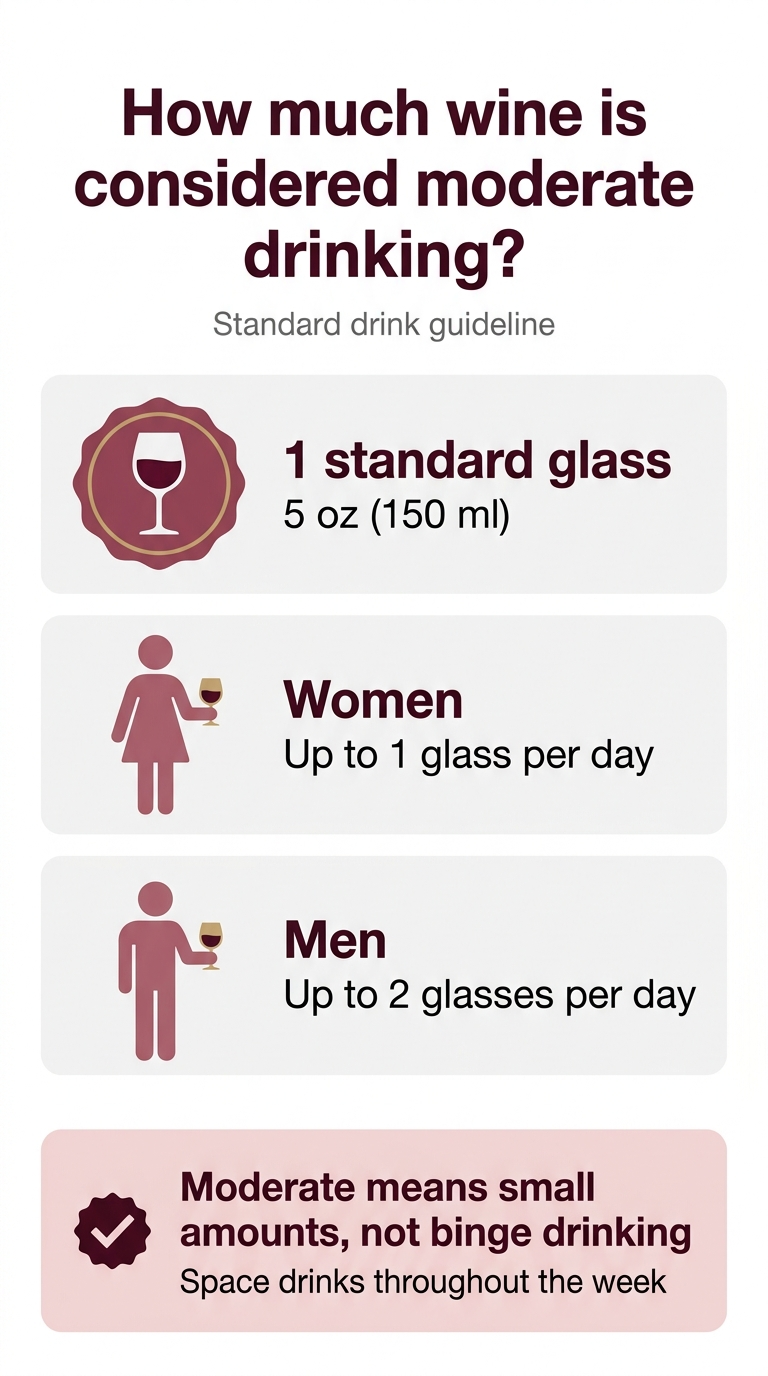
When you ask health professionals what is moderate wine drinking, you'll get surprisingly specific numbers. The World Health Organization defines moderate alcohol consumption as no more than two standard drinks per day for men and one standard drink per day for women. In the United States, the Dietary Guidelines for Americans echo these recommendations almost exactly.
But here's where it gets tricky for wine lovers: a “standard drink” contains about 14 grams of pure alcohol. For wine, that translates to roughly 5 ounces – which is smaller than most people think. When you pour yourself a glass at home, you're probably pouring 6-8 ounces without realizing it.
How many units in a glass of wine depends on both the serving size and alcohol content. A typical 5-ounce glass of wine with 12% alcohol contains approximately 1.4 units. If you're drinking a bold Cabernet at 15% alcohol, that same glass jumps to 1.8 units. These numbers add up faster than you might expect.
The Reality Check on Serving Sizes
Your wine glass matters more than you think. Those large, bowl-shaped glasses that restaurants use can easily hold 8-10 ounces when filled to what looks like a normal level. This means your “one glass” might actually count as 1.5-2 standard drinks according to official guidelines.
Units of alcohol in wine explained becomes even more important when you consider a full bottle. A standard 750ml bottle of 12% wine contains about 9 units of alcohol. Split that between two people over dinner, and you've each consumed 4.5 units – well above the daily recommended limit.
Beyond the Numbers: What Moderate Really Means
The guidelines for moderate wine drinking benefits come with several important caveats that health organizations emphasize. First, these recommendations assume you're not drinking every single day. The WHO suggests having at least two alcohol-free days per week to give your liver time to process and recover.
Recommended alcohol intake wine guidelines also specify that you shouldn't “save up” your weekly allowance for weekend binges. Drinking seven glasses of wine on Saturday doesn't count as moderate consumption, even if you abstain the rest of the week.
The Honest Context Around These Numbers
Here's what health officials won't always tell you upfront: these moderate drinking guidelines aren't based on finding the “sweet spot” for health benefits. Instead, they represent the upper limit of what researchers consider relatively low-risk consumption.
Recent studies have challenged even these conservative numbers. A major 2018 study published in The Lancet analyzed data from nearly 600,000 drinkers and suggested that any amount of alcohol carries some health risk. The researchers concluded that the safest level of drinking is zero.
Individual Factors That Change Everything
Your personal definition of how much wine is safe to drink depends on factors the general guidelines can't account for. Your body weight, metabolism, medications, family history of alcoholism, and overall health status all influence how alcohol affects you.
Women generally process alcohol differently than men due to differences in body composition and enzyme levels. This explains why the recommendations are lower for women – it's not about body size alone, but about how efficiently your body can metabolize alcohol.
Making Sense of the Mixed Messages
The research on moderate wine consumption often seems contradictory because studies measure different outcomes over different timeframes. Some focus on immediate effects like sleep quality or blood pressure, while others track long-term disease risk over decades.
When you see headlines about wine's health benefits, they're usually referencing observational studies that can't prove cause and effect. People who drink moderate amounts of wine might have other healthy lifestyle habits that actually account for any observed benefits.
The bottom line: if you currently don't drink, no health organization recommends starting for health reasons. If you do enjoy wine, staying within the established guidelines gives you the best chance of minimizing risks while still enjoying the social and cultural aspects of wine.
When you drink wine regularly, you're facing some sobering statistics about cancer risk. Large-scale studies consistently show that alcohol consumption, including wine, increases your risk of several types of cancer. The research is particularly clear about breast cancer in women – even moderate wine consumption raises your risk by about 7-12% per drink per day.
Your liver processes alcohol into acetaldehyde, a compound that directly damages DNA and proteins in your cells. This process happens every time you drink wine, regardless of whether you're enjoying a premium Bordeaux or a budget bottle. The World Health Organization's cancer research arm has classified alcohol as a Group 1 carcinogen – the same category as tobacco and asbestos.
The cancer risks extend beyond breast cancer. Regular wine drinking increases your chances of developing:
-
Head and neck cancers
-
Esophageal cancer
-
Liver cancer
-
Colorectal cancer
-
Stomach cancer
What's particularly concerning is that these risks start accumulating even at low consumption levels. You don't need to be a heavy drinker to face increased cancer risk – the research shows no “safe” threshold.
Liver Health Impact
Your liver bears the brunt of processing every glass of wine you consume. Even moderate drinking creates oxidative stress in your liver cells, leading to inflammation and potential scarring over time. Regular wine consumption can progress through several stages of liver damage, starting with fatty liver disease.
Fatty liver affects up to 90% of people who drink regularly, even those consuming what's considered “moderate” amounts. Your liver becomes less efficient at processing fats and toxins, which can progress to alcoholic hepatitis and eventually cirrhosis if drinking continues.
The concerning part? Liver damage often occurs silently. You might not notice symptoms until significant damage has already happened. Early signs include:
-
Fatigue and weakness
-
Abdominal discomfort
-
Loss of appetite
-
Nausea
Your liver can regenerate to some extent, but chronic alcohol exposure overwhelms this natural repair process. Each drink creates additional work for your liver, and over time, this cumulative stress takes its toll.
Sleep Disruption Effects
That glass of wine might seem like it helps you fall asleep faster, but the research reveals a different story about your sleep quality. Wine disrupts your natural sleep cycles, particularly your REM sleep – the restorative phase crucial for memory consolidation and emotional processing.
Alcohol acts as a sedative initially, but as your body metabolizes it throughout the night, you experience a rebound effect. This leads to:
-
More frequent awakenings
-
Lighter sleep in the second half of the night
-
Reduced REM sleep duration
-
Increased sleep fragmentation
Studies using sleep monitoring technology show that even one drink can measurably reduce your sleep quality. Your deep sleep stages become shorter and less restorative, leaving you feeling less refreshed despite spending adequate time in bed.
The timing matters too. Drinking wine close to bedtime disrupts your circadian rhythms more severely than earlier consumption. Your body temperature regulation becomes impaired, and you're more likely to experience night sweats and dehydration-related awakenings.
Dependency and Tolerance Development
Regular wine consumption gradually changes your brain chemistry, making you more vulnerable to developing alcohol dependency. Your brain adapts to the presence of alcohol by reducing its natural production of feel-good neurotransmitters like dopamine and GABA.
This adaptation process means you need increasing amounts of wine to achieve the same relaxing or mood-enhancing effects you initially experienced. What starts as one glass with dinner can gradually become two, then three, as your tolerance builds.
The transition to dependency often happens so gradually that you might not recognize the warning signs:
-
Feeling anxious or irritable when you can't have your usual wine
-
Drinking wine to cope with stress or negative emotions
-
Finding it difficult to enjoy social situations without alcohol
-
Continuing to drink despite experiencing negative consequences
Research shows that women develop alcohol dependency faster than men due to differences in body composition and metabolism. Your risk increases if you have a family history of alcoholism or use wine as your primary stress management tool.
The physical withdrawal symptoms from regular wine consumption can include headaches, anxiety, sleep disturbances, and mood swings – even when stopping what you consider moderate consumption. These symptoms often drive people back to drinking, creating a cycle that becomes increasingly difficult to break.
Is red wine healthier than white wine?

The Truth About Red vs White Wine Health Benefits
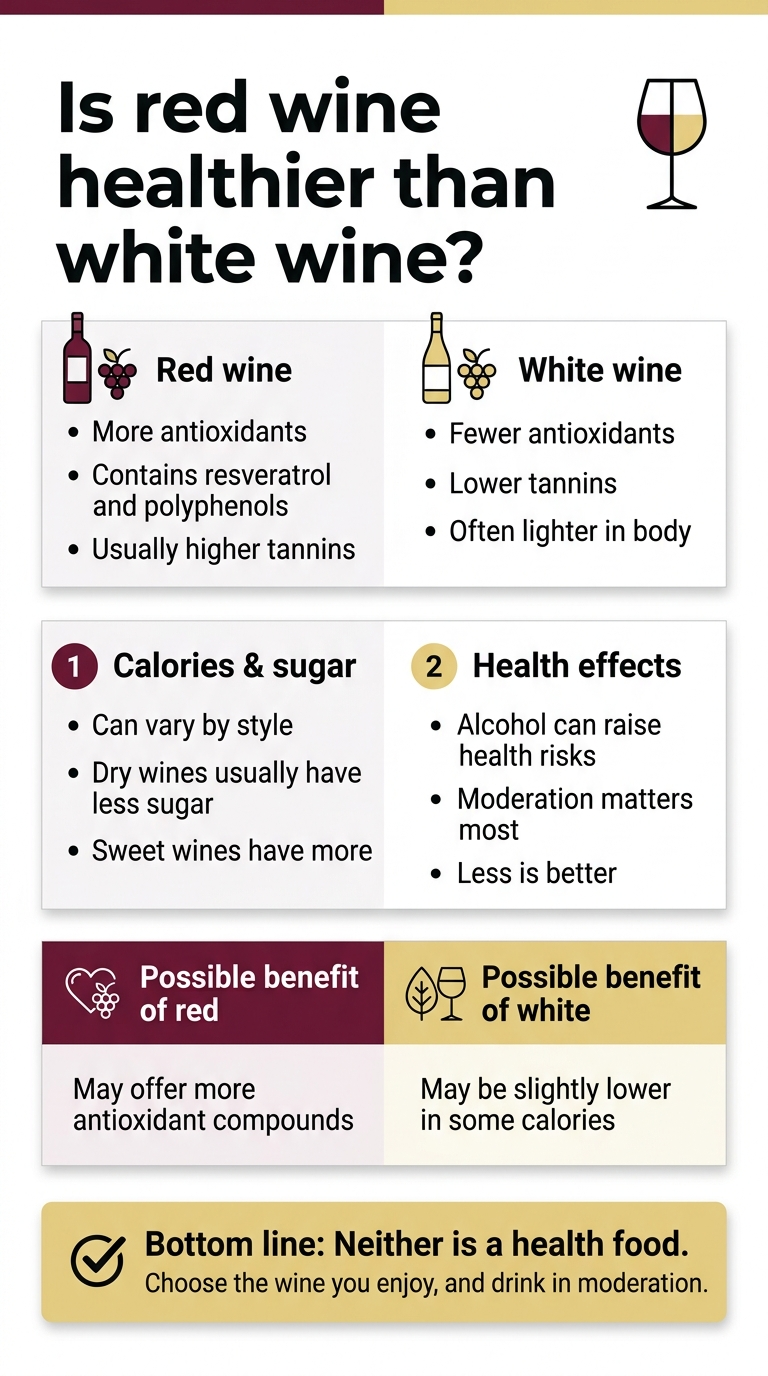
When you're standing in the wine aisle wondering whether to grab that Cabernet Sauvignon or Chardonnay, you've probably heard that red wine is better for you than white wine. The short answer? Yes, but the difference is much smaller than the hype suggests.
The main reason red wine edges ahead comes down to one word: resveratrol. This antioxidant compound lives in grape skins, and since red wine ferments with the skins while white wine doesn't, red varieties contain significantly more resveratrol. You'll find about 0.2-5.8 mg per liter in red wine compared to virtually none in most white wines.
But here's where things get interesting – and where the marketing often oversells the science. While resveratrol in red wine does show promise in laboratory studies, the amounts you're getting from your evening glass are pretty modest. To match the doses used in animal studies showing dramatic health benefits, you'd need to drink hundreds of bottles per day. Not exactly a practical health strategy.
Antioxidants: More Than Just Resveratrol
Red wine's health advantage extends beyond resveratrol to include other polyphenols in wine that contribute to antioxidants explained. These compounds include:
-
Anthocyanins – responsible for red wine's color and linked to anti-inflammatory effects
-
Tannins – provide structure and may offer cardiovascular benefits
-
Quercetin – another antioxidant with potential heart-protective properties
-
Catechins – similar to those found in green tea
White wine isn't completely lacking in antioxidants, but it contains roughly 10 times fewer polyphenols than red wine. The removal of grape skins during white wine production strips away most of these beneficial compounds.
What This Means for Your Heart Health
The research on red wine and cholesterol shows some promising trends. Studies suggest that moderate red wine consumption may help raise your HDL (good) cholesterol levels and provide some protection against LDL (bad) cholesterol oxidation. The antioxidants in red wine might also support healthy blood vessel function and reduce inflammation markers.
However, white wine isn't necessarily bad for your cardiovascular system. Some research indicates that any type of alcohol, when consumed moderately, can offer similar benefits for wine and heart health. The alcohol itself may contribute to increased HDL cholesterol and improved insulin sensitivity.
The Overstated Difference Problem
Here's the reality check: while red wine does have a nutritional edge, you shouldn't base your wine choice solely on health considerations. The difference between red and white wine's health impacts is often exaggerated in popular media. Both types of wine carry the same alcohol-related risks, and neither should be considered a health supplement.
If you genuinely prefer white wine, don't feel pressured to switch to red for health reasons. The potential benefits of the extra antioxidants in red wine are relatively small compared to other lifestyle factors like regular exercise, a balanced diet, and not smoking.
Rosé: The Middle Ground
Is rosé wine healthy compared to red and white? Rosé falls somewhere in between, containing more antioxidants than white wine but less than red. Since rosé has limited skin contact during production, it retains some polyphenols while maintaining the lighter flavor profile many people prefer.
The Bottom Line on Color Choice
Your wine choice should primarily be about what you enjoy drinking. If you love red wine, great – you're getting a few extra antioxidants. If you're a white wine enthusiast, you're not missing out on life-changing health benefits. The most important factor for wine and health research remains moderation, regardless of whether you choose red, white, or rosé.
The honest verdict: what this means for your drinking habits
Making Your Own Decision About Wine and Health
The research paints a complex picture, and you're probably wondering what this all means for your evening glass of wine. Here's the reality: moderate wine drinking might offer some benefits, but it's not the health elixir many people hope for. The cardiovascular advantages appear real but modest, while the risks become clearer as consumption increases.
Your individual health profile matters enormously in this equation. If you have a family history of alcoholism, breast cancer, or liver disease, the risk-benefit calculation shifts significantly. Your age, gender, overall diet, and lifestyle habits all play into whether that nightly glass works for or against your health goals.
Understanding Your Personal Risk Profile
Before making any decisions about wine consumption, consider your unique circumstances. Women face different risks than men, particularly regarding breast cancer and alcohol metabolism. If you're taking medications, even moderate drinking can interfere with their effectiveness. Your sleep patterns, stress levels, and existing health conditions all factor into the equation.
The latest wine health research consistently shows that any potential benefits plateau quickly. Having more than one drink daily for women or two for men doesn't provide additional advantages – it just increases your risk profile. Your body processes alcohol the same way whether it's expensive vintage or grocery store wine.
Practical Guidelines for Wine Lovers
If you choose to drink wine, these strategies can help you maximize any potential benefits while minimizing risks:
-
Time your consumption: Avoid drinking within three hours of bedtime to protect your sleep quality
-
Food pairing: Always drink with meals to slow alcohol absorption
-
Hydration: Match each glass of wine with a glass of water
-
Quality over quantity: Choose wines with higher antioxidant content like Pinot Noir or Cabernet Sauvignon
-
Take wine-free days: Give your liver regular breaks with at least two alcohol-free days weekly
Exploring Low-Alcohol Alternatives
Low alcohol wine options are becoming increasingly sophisticated and worth considering. These wines (typically 0.5-8.5% alcohol) can provide some of the flavor experience and social benefits without the metabolic burden. Many retain beneficial compounds like resveratrol and polyphenols while dramatically reducing alcohol-related risks.
Dealcoholized wines undergo fermentation but have alcohol removed afterward, preserving many antioxidant compounds. Some studies suggest these alternatives might offer cardiovascular benefits without the sleep disruption, cancer risk, or calorie load of traditional wine.
The Bottom Line for Your Health
You don't need wine to be healthy. The Mediterranean diet's benefits come primarily from olive oil, fish, vegetables, and whole grains – not alcohol. If you don't currently drink, there's no compelling health reason to start. The French paradox likely has more to do with overall lifestyle patterns than wine consumption alone.
If you enjoy wine and drink responsibly, continuing with moderate wine drinking probably won't harm you and might provide small benefits. But if you're drinking primarily for health reasons, you're better off focusing on proven strategies: regular exercise, stress management, quality sleep, and a nutrient-dense diet.
The choice is ultimately yours, armed with honest information about what the science actually shows. Whether you choose traditional wine, low-alcohol alternatives, or no alcohol at all, your decision can fit into a healthy lifestyle when made thoughtfully and with full awareness of the trade-offs involved.
Conclusion
You've probably heard countless stories about wine being good for your heart, but the reality is more nuanced than those headlines suggest. While some studies do show potential cardiovascular benefits from moderate wine consumption, the key word here is moderate – we're talking about one glass per day for women and two for men. The famous resveratol compound that gets all the attention does have antioxidant properties, but you'd need to drink massive amounts of wine to get therapeutic levels, which would obviously cause more harm than good.
When you really look at the research, red wine does edge out white wine in terms of beneficial compounds, but that evening glass might be sabotaging your sleep quality more than you realize. The honest truth is that any potential health benefits need to be weighed against real risks like increased cancer risk, liver damage, and dependency issues that come with regular alcohol consumption. If you're already drinking wine occasionally and enjoy it, you don't need to stop – just be realistic about what you're getting from it. Your health would benefit more from eating grapes, exercising regularly, and getting good sleep than from banking on wine as a health strategy.
Make Informed Choices — Then Enjoy Your Wine
Understanding the research is the first step — making practical decisions that work for your lifestyle is the next one. If the health concerns here have you thinking about cutting back on alcohol without giving up wine entirely, our low and alcohol-free wine guide reviews the best options available in 2026 — many of which retain beneficial polyphenols while eliminating alcohol-related risks. And if you're interested in wines with minimal intervention and fewer additives, our complete guide to natural wine and organic vs biodynamic wine guide explain the growing movement toward cleaner winemaking. For the most authoritative independent overview of alcohol and health, the NHS alcohol advice page and Cancer Research UK's alcohol page provide evidence-based guidance free from industry influence. Drink thoughtfully, live well, and enjoy every glass for what it is. 🍷