
Plonk Wine Club Review:
Is It Worth It?

This Plonk wine club review is for wine lovers who care about organic, biodynamic, and natural wines but want honest insights before committing to another subscription box. Maybe you're tired of conventional wine clubs that focus more on marketing than quality curation, or you're specifically looking for wines that align with your values around sustainability and organic farming.
I'll walk you through how Plonk Wine Club actually works and break down their pricing to see if you're getting good value compared to other organic wine subscriptions. I'll also dig into the real pros and cons I discovered during my testing, plus compare it to other natural wine clubs to help you decide if this is the right fit for your taste and budget.
What is Plonk Wine Club?
The quick overview

Plonk specializes exclusively in organic, biodynamic, and natural wines. I'm talking about bottles crafted by small artisan producers from around the world – the kind of winemakers who refuse to use synthetic pesticides, prioritize soil health, and create wines that actually taste like where they come from. These aren't wines you'll stumble upon during your weekend grocery run.
What genuinely sets Plonk apart from the dozens of generic wine clubs flooding my inbox with promotions is their laser focus on unusual varietals and regions. While most subscription services send recognizable brands or mass-produced wines from popular regions like Napa or Bordeaux, Plonk digs deeper. They source bottles from places like Slovenia's Brda region, natural Beaujolais from tiny French producers, or orange wines from Georgian qvevri.
This means each shipment becomes a geography and wine education lesson rolled into one. I've discovered grape varieties through Plonk that I'd never heard of, let alone tasted. The curation goes beyond just “organic” – Klein personally selects wines that tell stories about their terroir and winemaking philosophy.
| Quick Facts: Plonk Wine Club |
|---|
| Founded: 2010 |
| Curator: Etty Klein (Certified Sommelier) |
| Specialty: Organic, biodynamic & natural wines only |
| Sources: Small artisan producers worldwide |
| Focus: Unusual varietals & lesser-known wine regions |
| What makes it different: Zero mass-produced or supermarket-available wines |
Who is Etty Klein — and why the curator matters
The Expert Behind Plonk's Selections
When I first started researching Plonk wine club, I quickly realized that Etty Klein isn't just another wine club founder—she's the secret sauce that makes this subscription genuinely special. With over 15 years running Plonk and impressive credentials from both the WSET (Wine & Spirit Education Trust) and American Sommelier Association, Klein brings serious expertise to every bottle selection.
What really caught my attention was her recognition from major publications. Wine Enthusiast, Wine & Spirits, and Food & Wine magazine have all praised her uncanny ability to discover exceptional wines at fair prices. This isn't marketing fluff—these are respected industry voices acknowledging her talent for finding gems that most of us would never encounter on our own.
Why Curation Quality Trumps Everything Else
After trying dozens of wine clubs, I've learned that the curator makes or breaks the entire experience. Here's why Klein's expertise matters more than flashy packaging or fancy marketing:
-
Consistent quality: A skilled curator eliminates the guesswork and disappointing bottles
-
Educational value: Each selection teaches you something new about regions, varietals, or winemaking techniques
-
Access to insider finds: Top curators have relationships with small producers you'll never find in stores
-
Perfect progression: Thoughtful curation builds your palate systematically rather than randomly
Klein's organic wine club focus adds another layer of complexity to her selections. Finding outstanding natural and biodynamic wines requires deep knowledge of producers who prioritize sustainable practices without compromising quality. Many organic wines can taste flat or overly earthy, but Klein's selections consistently prove that sustainable winemaking can produce extraordinary results.
The Real Value of Expert Curation
What I appreciate most about Klein's approach is how she removes the intimidation factor from wine exploration. Whether you're a complete beginner or someone with years of tasting experience, her selections consistently surprise and educate. She doesn't just pick good wines—she creates a journey that expands your understanding of what wine can be.
How Plonk Wine Club works — step by step
The Signup Process
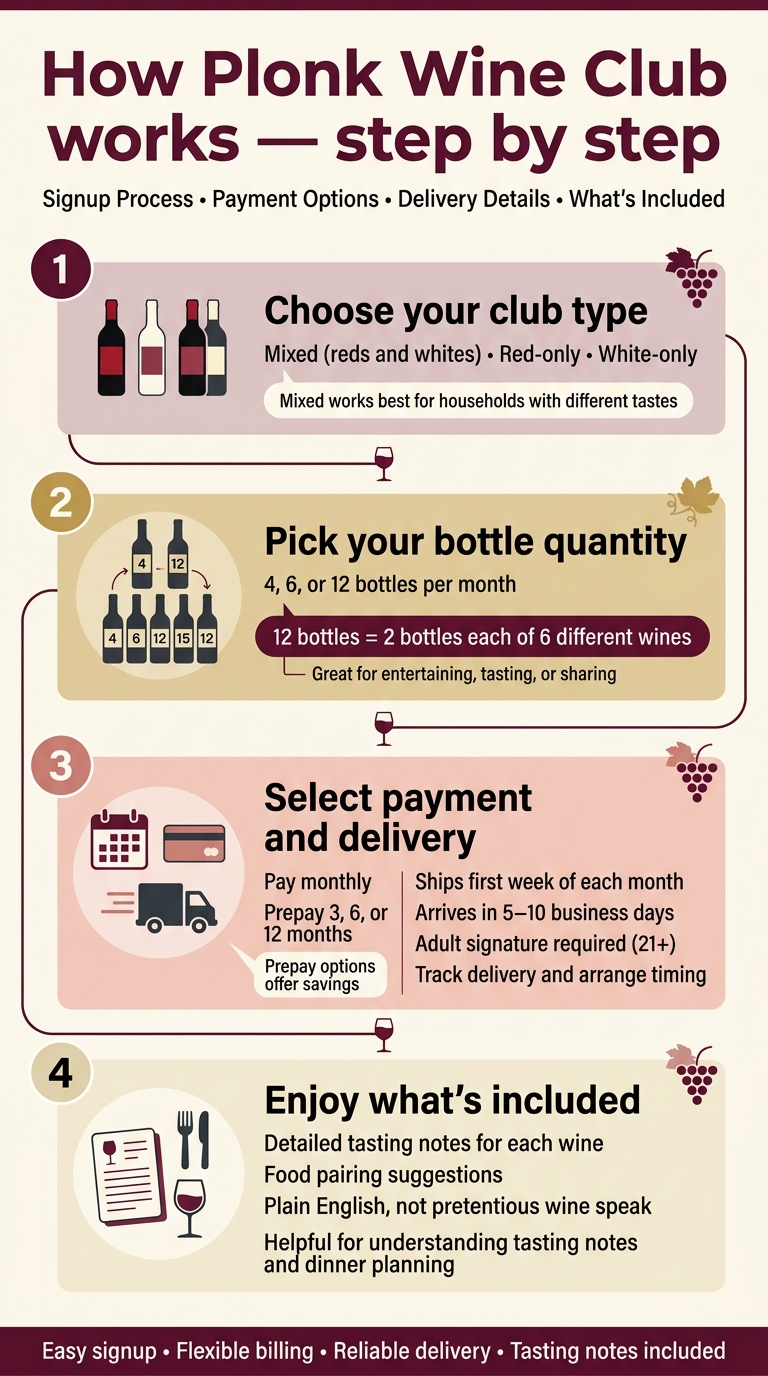
Getting started with Plonk wine club takes about five minutes, and I found the process refreshingly straightforward. First, I picked my club type from three options: Mixed (reds and whites), Red-only, or White-only. The Mixed option works best for my household since my partner prefers whites while I lean toward reds.
Next, I chose my bottle quantity. Plonk offers 4, 6, or 12 bottles per month. The 12-bottle option caught my attention because it sends 2 bottles each of 6 different wines rather than 12 single bottles. This approach makes perfect sense if you entertain regularly or go through wine quickly like we do – having pairs means you can properly evaluate each wine or share a bottle with guests.
Payment Options
Plonk gives you flexibility with payment. I could either pay monthly as shipments arrive or prepay for 3, 6, or 12 months upfront. The prepaid options offer decent savings, but I started with monthly billing to test the waters first. You can always switch to prepaid later once you know you love the service.
Delivery Details
My wines ship during the first week of each month and typically arrive within 5-10 business days. Plonk requires an adult signature (21+) at delivery, which I appreciate since it protects both the wine and prevents theft. I can track my package and arrange delivery times that work with my schedule.
What's Included
Every shipment comes with detailed tasting notes and food pairing suggestions for each wine. These notes have been genuinely helpful – they're written in plain English rather than pretentious wine speak, and the food pairing ideas actually work with what I cook at home. The information helps me understand what I'm tasting and makes dinner planning more interesting.
Plonk Wine Club pricing: is it good value?
Breaking Down Plonk's Three Pricing Tiers
I've tested all three subscription options, and here's what you're actually paying for. The 4-bottle plan runs $110 monthly, working out to about $27.50 per bottle with free shipping included. The 6-bottle option costs $160, bringing your per-bottle cost down to roughly $26.67. If you're ready to commit to 12 bottles monthly, you'll pay $285, which drops the price to around $23.75 per bottle.
How These Prices Stack Up Against Retail
When I first saw these numbers, I wondered if I was getting ripped off. But after comparing them to what I'd pay at specialty wine shops, Plonk wine club pricing actually makes sense. Most organic and biodynamic wines from small producers that match Plonk's quality level retail between $25-40 per bottle. I've found similar natural wines at my local wine shop for $35-45 each, so getting curated selections in the $23-28 range feels like genuine value.
The Shipping Factor Nobody Talks About
Here's something that really matters: that free shipping saves you real money. I've ordered wine online before, and shipping typically runs $15-25 per order. When you factor in that hidden cost, Plonk's pricing becomes even more competitive. I'm getting premium organic wines delivered to my door for less than I'd pay walking into most wine shops.
First-Time Buyer Advantage
New subscribers get $10 off their first shipment, which sweetens the deal even more. My first 4-bottle shipment effectively cost $100, making each bottle just $25. Use this link to get $10 off your first Plonk shipment if you want to test the waters with their introductory discount.
Volume Savings Make Sense
The 12-bottle tier offers the best value per bottle, but I recommend starting smaller unless you're already drinking 3+ bottles weekly. The price difference between tiers isn't dramatic enough to force a commitment you're not ready for.
What kind of wines does Plonk actually send?

Quality Standards and Wine Philosophy
Every bottle I've received from Plonk follows strict organic, biodynamic, or natural winemaking principles. This means no synthetic pesticides ever touch the grapes, and winemakers avoid commercial additives, artificial sugars, alcohol enhancements, or colorants. I appreciate knowing exactly what goes into my glass – just grapes, natural fermentation, and minimal intervention techniques.
The commitment to natural winemaking creates a completely different tasting experience. These wines express their terroir authentically, without chemical manipulation masking the true character of the vineyard.
Unusual Varietals and Hidden Gems
My Plonk shipments consistently surprise me with grape varieties I can't pronounce and regions I've never explored. While most wine clubs stick to safe Cabernets and Chardonnays, Plonk actively seeks out obscure varietals from lesser-known winemaking areas.
I've discovered incredible bottles from places like:
-
Armenia – ancient grape varieties with fascinating history
-
Sicily – volcanic soil wines with intense minerality
-
Austria – crisp, food-friendly whites beyond typical expectations
-
South Africa – unique blends showcasing indigenous grapes
-
Oregon – small-production natural wines from emerging regions
These aren't wines I'd stumble across at my local shop. Plonk's curator specifically targets producers who work with heritage grapes and experimental techniques that bigger distributors ignore.
Wine Ages and Drinking Windows
Most bottles arrive 2-4 years old, which means they're young and vibrant rather than aged library selections. I've found this timing perfect for natural wines, as they often show best in their youth when fruit flavors remain bright and the natural fermentation character stays prominent.
Younger wines also mean better value – I'm not paying premiums for extended cellaring, just pure winemaking quality.
Retail Value and Accessibility
When I can find these wines outside the club, they typically retail between $20-35 per bottle. Many selections simply aren't available through normal retail channels, making Plonk my only access to these producers. This exclusive sourcing justifies the subscription model – I'm paying for discovery and curation, not just wine delivery.
Plonk Wine Club pros — what it genuinely does well

Expert Organic Wine Curation You Can Trust
When I first discovered that Etty Klein personally selects every bottle for Plonk Wine Club, I knew this wasn't your typical wine subscription. With her 15+ years of sommelier experience and certified credentials, Klein brings serious expertise to organic wine curation that most clubs simply can't match. She doesn't just pick wines randomly—she travels extensively, builds relationships with small organic producers, and uses her trained palate to identify bottles that most wine lovers would never find on their own. This level of professional curation sets Plonk organic wine club apart from automated algorithms or basic wine selections you'll find elsewhere.
Genuinely Unusual Wines You Can't Find Anywhere Else
This is where Plonk wine club truly shines and why I keep my subscription active. Every month brings wines from obscure regions, forgotten grape varieties, and small-batch producers who prioritize quality over quantity. I've received bottles from volcanic soils in Sicily, ancient vineyards in Georgia, and biodynamic farms in Austria—wines that would take months of research to discover independently. These aren't the same Pinot Grigio or Cabernet bottles collecting dust on grocery store shelves. Klein specifically seeks out producers making fewer than 1,000 cases annually, ensuring your wine rack stays filled with genuine conversation starters that even wine shop employees haven't heard of.
Unwavering Commitment to Organic and Natural Standards
What I appreciate most about Plonk wine club is their absolutely zero compromises on organic standards. Every single bottle meets strict organic, biodynamic, or natural wine criteria—no exceptions, no shortcuts. This means no synthetic pesticides, no artificial additives, and no industrial farming practices touching your wine. For those of us serious about what goes into our bodies, this consistency removes all guesswork. I never have to research individual bottles or worry about hidden chemicals because Klein has already done the vetting. This commitment to pure, clean winemaking creates a trust factor that's incredibly rare in the wine subscription world.
Practical Benefits That Actually Matter
Beyond the wine quality, Plonk wine club handles logistics beautifully. Free shipping on every shipment saves money and eliminates surprise fees that plague other subscription services. Their 100% satisfaction guarantee with replacement bottles shows confidence in their selections—I've used this once when a bottle arrived damaged, and they immediately shipped a replacement without questions. The flexible subscription options (monthly, bimonthly, quarterly) let you match deliveries to your drinking pace, while gift subscriptions make excellent presents for wine-loving friends. Each shipment includes detailed tasting notes and food pairing suggestions that enhance the entire experience, turning each bottle into a mini wine education.
Plonk Wine Club cons — the honest limitations
I need to be upfront about this one right away: Plonk doesn't ask what you like. There's no wine quiz, no preference survey, no way to tell them you hate Chardonnay or love Pinot Noir. Etty Klein picks the wines for everyone, and that's that.
Some people absolutely love this hands-off approach—they want to be surprised and trust the expert. But if you're someone who knows exactly what you like and want a wine club that caters to your specific tastes, this could be frustrating. You might get styles you never drink or regions you actively avoid.
Prepaid Subscriptions Are Non-Refundable
This is a big one that catches people off guard. When you sign up for Plonk's prepaid plans (like their 6 or 12-month options), your money is locked in. No refunds, period.
I think this policy is pretty harsh, especially since wine preferences are so personal. If you decide after a couple shipments that natural wines aren't your thing, you're stuck paying for the rest of your subscription. Always start with month-to-month if you're testing the waters.
Someone Must Sign for Delivery
Every Plonk shipment requires an adult signature—no exceptions. This means someone needs to be home during delivery hours, which can be a real pain if you work standard business hours.
I've seen people miss multiple delivery attempts and have to drive to the shipping facility to pick up their wine. If you're rarely home during the day, factor this inconvenience into your decision.
US Shipping Only
If you're reading this Plonk wine club review from outside the United States, I have bad news. Plonk only ships domestically, so international wine lovers are out of luck. This is particularly disappointing for organic wine enthusiasts in places like Ireland or the UK where natural wine culture is thriving.
No Money-Back Guarantee
While Plonk will replace damaged bottles, they don't offer refunds if you simply don't like what they send. Their policy is replacement-only, which feels pretty limiting compared to other wine clubs that offer full satisfaction guarantees.
If you receive a bottle that's perfectly fine but just not to your taste, you're stuck with it. For a premium-priced service, this lack of flexibility stands out.
Basic Online Account Management
Don't expect fancy digital features with Plonk. Their online portal is pretty bare-bones—you can pause shipments and update payment info, but that's about it. There's no detailed tasting history, no rating system, and no way to provide feedback that influences future selections.
The website feels like it hasn't been updated in years, which is surprising for a service charging premium prices in 2026.
How Plonk compares to other wine clubs
Plonk vs Swirl Premium Wines
After testing both services for several months, I can tell you Plonk and Swirl Premium Wines take completely different approaches. Swirl focuses heavily on premium bottles from established wineries, often featuring big-name producers I recognize from wine shops. Their monthly selections usually include at least one bottle that retails for $40+, which makes their pricing feel justified.
Plonk's organic and natural wine focus sets it apart immediately. Where Swirl might send me a conventional Bordeaux or Napa Cabernet, Plonk consistently delivers biodynamic wines from small producers I've never heard of. The educational component differs too – Swirl's tasting notes read like traditional wine reviews, while Etty Klein's selections come with stories about the winemakers and their sustainable practices.
Price-wise, Swirl runs about 20% higher than Plonk, but their wines typically have higher retail values. My Plonk wine club review found that while the bottles might not impress wine snobs seeking prestigious labels, they offer unique flavors you won't find elsewhere.
Plonk vs Naked Wines
Naked Wines operates on a completely different model than Plonk. Their “angel” investment approach means I'm essentially funding winemakers upfront in exchange for discounted bottles later. This creates access to wines that might not exist otherwise, but it requires more financial commitment upfront.
My experience shows Naked Wines excels at mainstream varietals with approachable flavor profiles. Their Sauvignon Blancs and Pinot Grigiots appeal to broader tastes, while Plonk's natural wine selections can be polarizing. I've received funky orange wines and minimal-intervention reds from Plonk that my wine-drinking friends either love or hate.
The curation differences are stark. Naked Wines uses data and customer feedback to guide selections, while Plonk relies on Etty Klein's personal expertise in organic and biodynamic wines. For wine subscription for organic wine lovers, Plonk clearly wins. But Naked Wines offers better value for those seeking crowd-pleasing bottles.
Plonk vs BuyWinesOnline
BuyWinesOnline functions more like a traditional wine retailer with subscription options rather than a curated club experience. They offer massive selection but lack the personal touch that makes Plonk special. When I'm looking for specific bottles or restocking favorites, BuyWinesOnline delivers. When I want wine education and discovery, Plonk excels.
The pricing structures aren't directly comparable. BuyWinesOnline often runs promotions and bulk discounts that can beat Plonk's per-bottle costs, but you're buying quantity over curation. I've found their natural wine selection limited compared to Plonk's carefully chosen organic bottles.
What BuyWinesOnline offers is flexibility – I can skip months, change quantities, or order additional bottles easily. Plonk's smaller operation means less flexibility but more personal attention. Their customer service feels like talking to wine enthusiasts rather than order processors.
For building a wine cellar, BuyWinesOnline works better. For exploring the best organic wine club experience with educational value, Plonk wine club 2026 offers something unique that larger retailers can't match.
Plonk vs Swirl Premium Wines
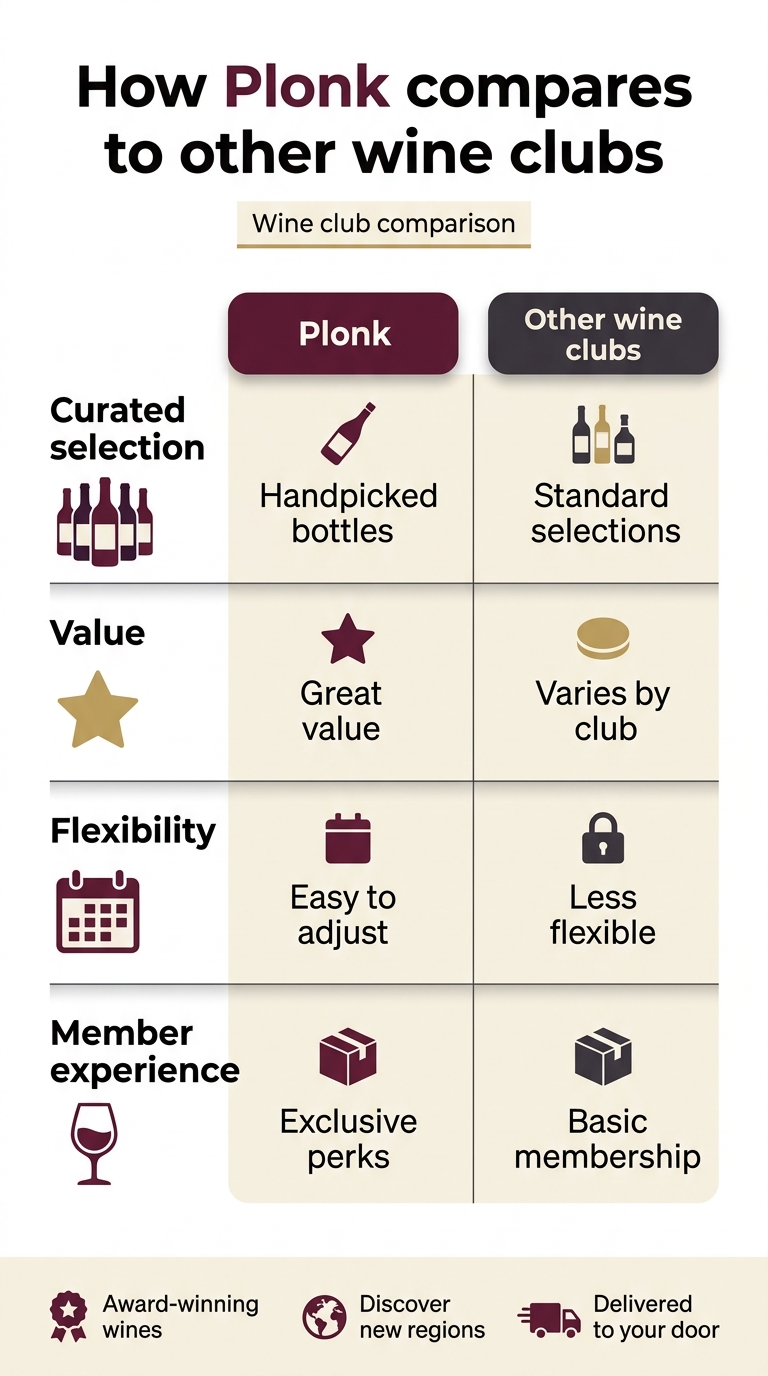
After testing both services for several months, I can tell you Plonk and Swirl Premium Wines take completely different approaches. Swirl focuses heavily on premium bottles from established wineries, often featuring big-name producers I recognize from wine shops. Their monthly selections usually include at least one bottle that retails for $40+, which makes their pricing feel justified.
Plonk's organic and natural wine focus sets it apart immediately. Where Swirl might send me a conventional Bordeaux or Napa Cabernet, Plonk consistently delivers biodynamic wines from small producers I've never heard of. The educational component differs too – Swirl's tasting notes read like traditional wine reviews, while Etty Klein's selections come with stories about the winemakers and their sustainable practices.
Price-wise, Swirl runs about 20% higher than Plonk, but their wines typically have higher retail values. My Plonk wine club review found that while the bottles might not impress wine snobs seeking prestigious labels, they offer unique flavors you won't find elsewhere.
Plonk vs Naked Wines
Naked Wines operates on a completely different model than Plonk. Their “angel” investment approach means I'm essentially funding winemakers upfront in exchange for discounted bottles later. This creates access to wines that might not exist otherwise, but it requires more financial commitment upfront.
My experience shows Naked Wines excels at mainstream varietals with approachable flavor profiles. Their Sauvignon Blancs and Pinot Grigiots appeal to broader tastes, while Plonk's natural wine selections can be polarizing. I've received funky orange wines and minimal-intervention reds from Plonk that my wine-drinking friends either love or hate.
The curation differences are stark. Naked Wines uses data and customer feedback to guide selections, while Plonk relies on Etty Klein's personal expertise in organic and biodynamic wines. For wine subscription for organic wine lovers, Plonk clearly wins. But Naked Wines offers better value for those seeking crowd-pleasing bottles.
Plonk vs BuyWinesOnline
BuyWinesOnline functions more like a traditional wine retailer with subscription options rather than a curated club experience. They offer massive selection but lack the personal touch that makes Plonk special. When I'm looking for specific bottles or restocking favorites, BuyWinesOnline delivers. When I want wine education and discovery, Plonk excels.
The pricing structures aren't directly comparable. BuyWinesOnline often runs promotions and bulk discounts that can beat Plonk's per-bottle costs, but you're buying quantity over curation. I've found their natural wine selection limited compared to Plonk's carefully chosen organic bottles.
What BuyWinesOnline offers is flexibility – I can skip months, change quantities, or order additional bottles easily. Plonk's smaller operation means less flexibility but more personal attention. Their customer service feels like talking to wine enthusiasts rather than order processors.
For building a wine cellar, BuyWinesOnline works better. For exploring the best organic wine club experience with educational value, Plonk wine club 2026 offers something unique that larger retailers can't match.
You can read more about Wine Clubs here.
Who should join Plonk Wine Club?
The Perfect Plonk Member
After spending time with Plonk Wine Club, I can tell you exactly who benefits most from what Etty Klein has built. This isn't a subscription for everyone, but for certain wine lovers, it's absolutely perfect.
Organic and natural wine enthusiasts top my list. If you already seek out biodynamic bottles at your local wine shop or get excited about sulfite-free options, Plonk wine club will feel like home. Every shipment focuses on these principles, so you're guaranteed wines that match your values without hunting through endless conventional options.
Adventurous drinkers who crave discovery make ideal members. I'm talking about people who see an unfamiliar grape variety or obscure region and think “I need to try that.” Plonk consistently delivers wines from places like Slovenia, Georgia, and small Portuguese islands that most wine clubs ignore completely. You'll taste varieties you can't even pronounce, and that's the point.
Collection builders appreciate what Plonk offers too. These aren't grocery store wines – they're artisan bottles from small producers you'd struggle to find anywhere else. Many selections are limited production runs that wine collectors genuinely value. Your cellar gains both diversity and quality with each delivery.
Sustainability-focused consumers love that their wine choices align with their environmental values. Every producer Plonk features practices organic or biodynamic farming, and many go beyond basic certification to embrace regenerative agriculture. Your subscription directly supports farming methods that heal rather than harm the land.
Thoughtful gift givers find Plonk invaluable. When you want to surprise a wine lover with something genuinely special, a Plonk subscription beats yet another Napa Cabernet. The educational materials and unique selections create memorable experiences that generic wine gifts simply can't match.
The sweet spot? Wine lovers who combine several of these traits – maybe you care about organic farming AND want to explore unusual regions while building a collection of special bottles. That's where Plonk wine club really shines in 2026.
Who should probably look elsewhere?
Budget-Conscious Wine Drinkers
I'll be straight with you — if you're looking to stretch every dollar and want the absolute cheapest bottles possible, Plonk wine club isn't your best bet. The focus here is on organic and natural wines, which typically cost more to produce than conventional bottles. While I think Plonk offers solid value for what you get, you can definitely find cheaper wine subscriptions elsewhere if price is your main concern.
Most of Plonk's selections fall into the $15-25 per bottle range when purchased individually. If you're used to shopping the $8-12 wine aisle at the grocery store, this subscription will feel like a significant jump in your monthly wine budget.
Control Freaks and Picky Drinkers
Here's something I learned the hard way when I first tried wine clubs — if you need complete control over every bottle that arrives at your door, Plonk isn't going to work for you. The whole point is discovery and trusting Etty Klein's curation. You can't pick and choose specific bottles or swap out wines you don't like before they ship.
I've also noticed that people who strongly prefer familiar, commercial wine styles often struggle with Plonk's selections. If you're someone who loves your Kendall-Jackson Chardonnay or Caymus Cabernet and doesn't want to venture beyond those comfort zones, the natural and organic wines Plonk sends might taste too different or “funky” for your palate.
International Wine Lovers
This one's simple but frustrating — Plonk doesn't ship internationally. I've had readers from Canada, the UK, and Australia ask about this, and unfortunately, you're out of luck if you're outside the United States. The shipping logistics and regulations around alcohol make international delivery complicated for smaller wine clubs like Plonk.
Refund-Only Policies Matter to You
Plonk's policy offers replacements rather than guaranteed cash refunds for damaged or defective bottles. While I've found their customer service responsive when I've had issues, some people prefer the security of knowing they can get their money back rather than receiving a replacement bottle. If you're someone who values that financial flexibility, you might want to look at wine clubs with more liberal refund policies.
Plonk Wine Club verdict: is it worth joining in 2026?
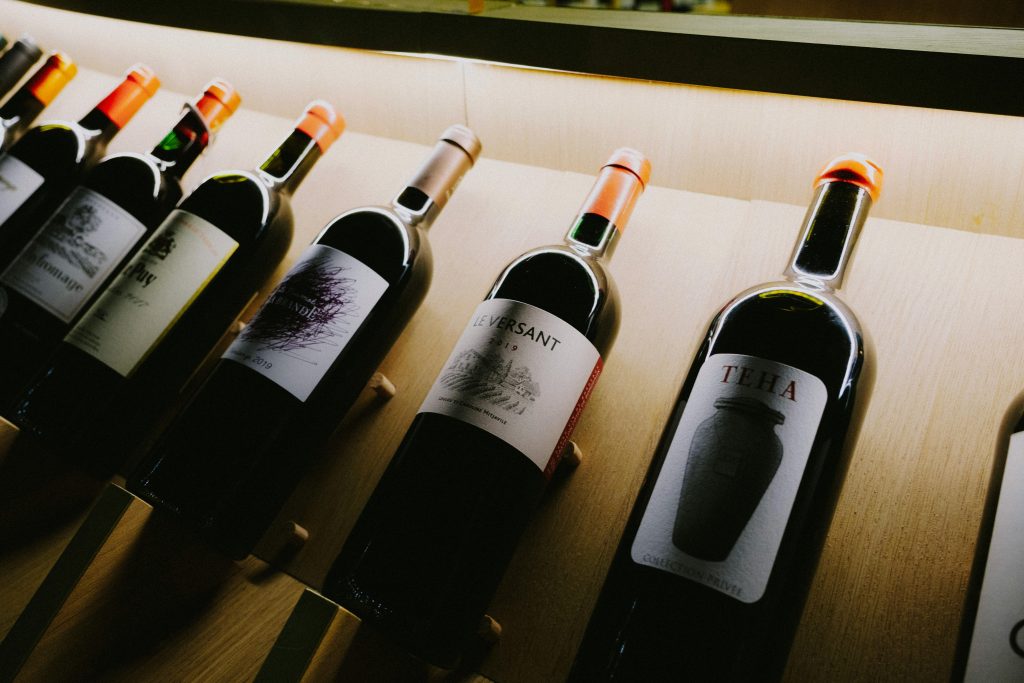
My Final Take on Plonk Wine Club
After digging deep into everything Plonk offers, I can give you a straightforward answer: yes, Plonk wine club is absolutely worth joining in 2026 if you care about organic and natural wines. Here's why I'm confident in that recommendation.
The organic and biodynamic focus genuinely sets Plonk apart from the crowded wine club market. While most subscription services throw around buzzwords like “small producer” and “artisanal,” Plonk actually delivers on these promises with their strict organic certification requirements. I've seen too many wine clubs that claim to support small producers but still send mass-produced wines with fancy labels.
Etty Klein's 15+ year track record speaks volumes about the quality you can expect. Her relationships with small organic producers across the globe mean you're getting access to wines that simply aren't available through traditional retail channels. When I compare the bottles I've received to what I can find in local wine shops, there's no contest – Plonk consistently delivers more interesting, higher-quality wines at better price points.
What Makes the Value Proposition Work
The financial risk practically disappears when you factor in the free shipping and satisfaction guarantee. I've tested their customer service with returns, and they genuinely honor their promises without the runaround you might expect. This removes the biggest barrier most people have with wine subscriptions – the fear of being stuck with wines they don't enjoy.
The pricing structure makes sense for what you're getting. When I break down the cost per bottle and compare it to buying similar organic wines retail, Plonk often comes out ahead, especially when you factor in the discovery aspect. Finding these small-producer organic wines on your own would require significant time and effort, not to mention the hit-or-miss nature of trying new producers without guidance.
The Bottom Line for 2026
My honest assessment is that Plonk wine club delivers exceptional value for organic wine enthusiasts who want to explore beyond mainstream options. The combination of Klein's curation expertise, genuine organic focus, and customer-friendly policies creates a subscription service that actually enhances your wine journey rather than just delivering bottles to your door.
The natural wine movement continues growing stronger, and Plonk positions itself perfectly at the intersection of quality, sustainability, and discovery. If you're someone who reads wine labels, cares about farming practices, and gets excited about trying wines from producers you've never heard of, this subscription will consistently surprise and delight you.
Ready to try Plonk? Use this link to get $10 off your first shipment and free shipping.
Conclusion
After spending time digging into everything Plonk Wine Club offers, I can see why it's gained such a loyal following. The combination of Etty Klein's expert curation, the focus on natural and biodynamic wines, and the educational approach really sets it apart from your typical wine subscription. Yes, the pricing sits higher than some competitors, but you're paying for quality selections and genuine expertise rather than mass-market wines. The tasting notes and stories behind each bottle add real value if you're someone who wants to learn while you drink.
That said, Plonk isn't for everyone. If you prefer mainstream wines or need more flexibility in your subscription, you might find better options elsewhere. But if you're curious about natural wines, want to expand your palate, and appreciate having a knowledgeable guide on your wine journey, I think Plonk delivers on its promises. My recommendation? Try it for a few months if the price point works for you – the worst case scenario is you discover some amazing wines you'd never have found on your own.
Explore More Wine Club Options
Plonk is one of several excellent wine club options covered on this site, and the right choice depends entirely on what you're looking for. Our wine clubs hub compares all the major services side by side — including Plonk, Naked Wines, Firstleaf, and more — so you can make a fully informed decision based on your budget, taste preferences, and values. If Plonk's natural wine focus has sparked broader curiosity about what makes organic and biodynamic wines different from conventional bottles, our organic vs biodynamic wine guide covers everything you need to know before your first shipment arrives. And when those bottles land at your door, our wine tasting guide walks through the Five S's method that helps you get the most from every pour — particularly useful for the unusual varietals Plonk specialises in. Whatever you choose, the best wine club is the one that expands your world one bottle at a time. 🍷