
Calories in Wine: A Complete, No-Nonsense Guide by Type
So you're enjoying a glass of Pinot Noir on a Friday evening, and somewhere between the first sip and the second pour, a thought creeps in — how many calories am I actually drinking right now? You're not alone. Millions of wine drinkers have this exact moment every week, and yet finding a clear, straightforward answer feels surprisingly difficult. Most resources either give you vague ranges or bury the numbers in a pile of confusing nutritional science.
This guide cuts through all of that. Whether you're counting calories, tracking macros, following a keto diet, or just genuinely curious about what's in your glass, you'll find clear, usable numbers here — organized by wine type, with real context so you can make choices that actually work for your lifestyle. No lectures, no guilt trips. Just the information you came for.
Why Wine Has Calories in the First Place
Before getting into the numbers, it helps to understand where wine calories actually come from. Wine is made from fermented grapes, and during fermentation, yeast converts the natural sugars in those grapes into alcohol. The two main sources of calories in wine are:
- Alcohol — This is the biggest contributor. Alcohol contains 7 calories per gram, which is nearly double what carbohydrates provide (4 calories per gram).
- Residual sugar — Any sugar that wasn't converted during fermentation stays in the wine as residual sugar. Sweeter wines naturally have more of it, and more sugar means more calories.
The drier the wine, the less sugar is left over — and generally, the fewer the calories. But alcohol content plays an even bigger role than most people realize.
This is why two wines can look similar on a label but have very different calorie counts. A wine with 14% ABV (alcohol by volume) will have noticeably more calories than one at 11% ABV, even if everything else is identical. Keep this in mind as we go through the numbers.
How Many Calories in a Glass of Wine?
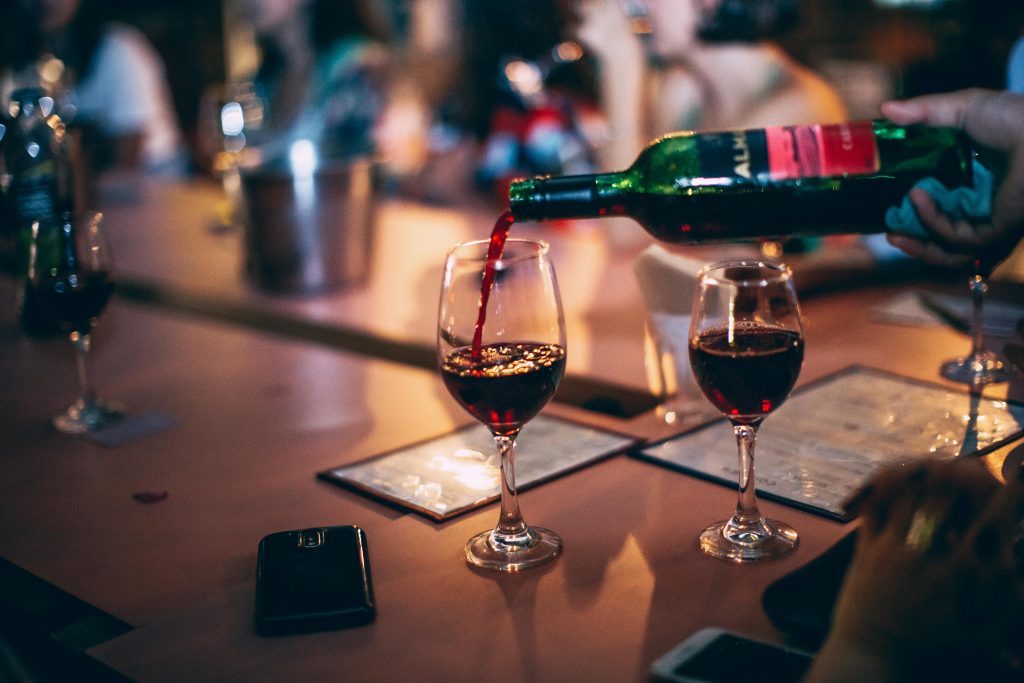
The standard serving size for wine is 5 fluid ounces (about 148ml). Using that as the baseline, here's a general snapshot before we go type by type:
- Dry white wine — approximately 120–125 calories per glass
- Dry red wine — approximately 125–130 calories per glass
- Rosé wine — approximately 120–130 calories per glass
- Sparkling wine / Champagne — approximately 90–120 calories per glass
- Sweet white wine (like Riesling or Moscato) — approximately 130–165 calories per glass
- Dessert wine (like Port or Sherry) — approximately 165–220+ calories per glass (though served in smaller 3oz pours)
These are honest averages. The exact numbers shift based on the specific wine, the producer, and the ABV. Now let's go deeper by type.
Calories in Red Wine
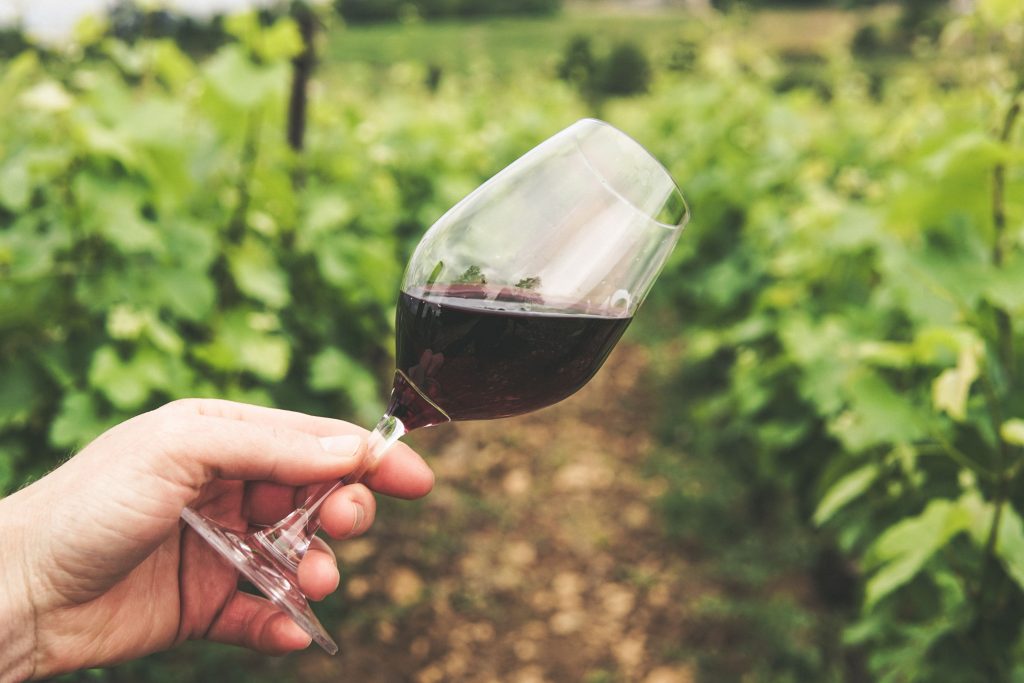
Red wine tends to get a reputation for being rich and heavy, and calorie-wise, it is slightly higher than many white wines — but not by as much as people think.
Cabernet Sauvignon
This is one of the most popular red wines in the world, and it typically clocks in at around 122–130 calories per 5oz glass. Cabernet tends to be dry with minimal residual sugar, so most of those calories come from its relatively high alcohol content, which usually sits between 13–14.5% ABV.
Pinot Noir
Pinot Noir is often considered one of the lower-calorie red wine options. A standard glass usually has around 120–125 calories. It tends to have a lower ABV (11–13.5%) compared to bolder reds, which is what keeps the numbers a little friendlier.
Merlot
Merlot falls in a very similar range to Cabernet — around 120–125 calories per glass. It's dry, medium-bodied, and not particularly sweet, so it's a reasonable choice if you're watching your intake but still want something full-flavored.
Syrah / Shiraz
These bold, spicy reds tend to run a little higher due to higher alcohol content — often 14–15% ABV. Expect around 125–135 calories per glass.
Zinfandel
Zinfandel can be surprisingly high in calories because it often comes in at 14–16% ABV. A glass can easily hit 135–145 calories, sometimes more. If you're tracking carefully, this is one to watch.
Quick rule for red wine: The darker, bolder, and higher the ABV on the label, the more calories you're likely looking at. Lighter reds like Pinot Noir are generally your best bet for fewer calories.
Calories in White Wine
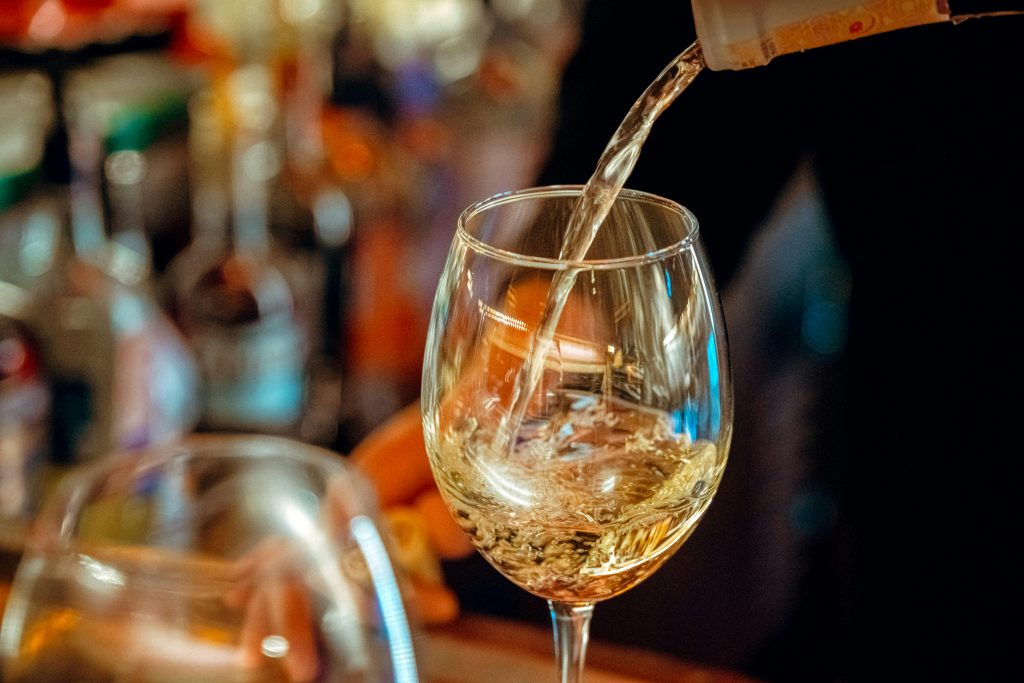
White wines cover a huge range — from bone-dry to very sweet — so the calorie spread is wider here than with reds.
Sauvignon Blanc
This is one of the most calorie-friendly white wines available. A 5oz glass typically has around 119–122 calories. It's dry, crisp, and usually lower in alcohol (11.5–13% ABV). Great option if you want something light without sacrificing flavor.
Pinot Grigio
Similar to Sauvignon Blanc, Pinot Grigio is dry and light. Most versions land around 120–122 calories per glass. Italian-style Pinot Grigios in particular tend to be on the lower end of the ABV scale.
Chardonnay
This is where things get variable. A dry, unoaked Chardonnay might be around 123 calories, but a heavily oaked, fuller-bodied California Chardonnay with higher alcohol can push up to 130+ calories per glass. The style matters as much as the grape.
Riesling
Here's where the sugar factor starts showing up. A dry Riesling is perfectly reasonable at around 118–120 calories, but a semi-sweet or late harvest Riesling can jump to 150–165 calories or more. Always check whether the label says “dry,” “off-dry,” or “sweet.”
Moscato
Moscato is naturally sweet and lower in alcohol (typically 5–7% ABV), but that sweetness means more residual sugar. A glass usually runs 127–135 calories, with some sweeter versions going higher. The low alcohol partially offsets the sugar, which is why it's not as high as you might expect.
Calories in Rosé Wine

Rosé sits comfortably between red and white in most ways, including calories. A standard 5oz glass of dry rosé typically has 120–130 calories. The key word is dry — rosé can range from very dry (Provence-style) to quite sweet (White Zinfandel), and the calorie difference is real.
- Dry Provençal rosé — around 120–125 calories
- White Zinfandel (sweet rosé) — around 130–140 calories
If you're a rosé fan who's calorie-conscious, sticking to dry European-style rosés is your best move.
Calories in Sparkling Wine

Good news for bubbly fans — sparkling wine is generally one of the lowest-calorie options available.
Champagne and Brut Sparkling Wine
Brut-style sparkling wines (which means they're dry) are often around 90–100 calories per 5oz glass. The carbonation and lower residual sugar content make these some of the most calorie-efficient wines you can drink. Extra Brut and Brut Nature (zero dosage) styles are even lower.
Prosecco
Prosecco tends to be slightly fruitier and may have a touch more residual sugar than Champagne, putting it at around 98–110 calories per glass. Still very reasonable.
Sweeter Sparkling Wines (Demi-Sec, Doux)
If you go for sweeter sparkling styles, the sugar content climbs, and so do the calories — potentially reaching 130–150 calories per glass.
Takeaway: If low-calorie drinking is your goal, a glass of extra-brut sparkling wine is genuinely one of the smartest choices you can make. You also tend to sip it more slowly, which is an added bonus.
Calories in Sweet Wine and Dessert Wine

Sweet wines are the category where calories can really stack up — but also where serving sizes are typically smaller, which helps balance things out.
- Port wine (3oz serving) — around 165–185 calories
- Sherry (sweet) (3oz serving) — around 150–165 calories
- Ice wine (2oz serving) — around 100–110 calories (tiny pours, very concentrated)
- Sauternes (3oz serving) — around 160–180 calories
Since you're usually pouring 2–3oz of dessert wine rather than 5oz, the per-glass number is manageable — but it's worth being aware of, especially if you're having dessert wine on top of a full dinner with other wine.
Calories in a Bottle of Wine
Sometimes it's useful to see the whole picture — especially if you're sharing a bottle and want to know the full count.
A standard bottle of wine is 750ml, which works out to roughly five 5oz glasses. So:
- Dry white or light red wine — approximately 600–625 calories per bottle
- Full-bodied red wine — approximately 635–650 calories per bottle
- Sweet wine — approximately 700–800+ calories per bottle
- Brut Champagne — approximately 450–500 calories per bottle
If you're splitting a bottle of Sauvignon Blanc between two people, you're each looking at roughly 300 calories from wine. That's useful context.
Wine Calories vs. Beer Calories

This comparison comes up a lot, and the honest answer is: it depends on what you're comparing.
- A standard 12oz beer (5% ABV) has around 150 calories
- A 5oz glass of dry white wine has around 120 calories
- A 5oz glass of full-bodied red wine has around 125–130 calories
- A light beer (12oz) has around 95–110 calories
Wine generally has fewer calories per serving than regular beer, but light beer can be competitive. Craft beers and IPAs, which often hit 6–8% ABV, can reach 200–250 calories per pint — much higher than a glass of wine.
How to Drink Wine With Fewer Calories (Without Changing Much)
You don't have to overhaul your habits to bring the calorie count down. A few small shifts go a long way:
- Choose wines with lower ABV — Look for bottles labeled 11–12.5% ABV. The difference between a 12% and 14.5% wine in the same pour is about 15–20 calories per glass. Over an evening, that adds up.
- Go drier, not sweeter — Residual sugar adds calories. Dry wines are almost always lower than off-dry or sweet versions of the same grape.
- Use a proper 5oz pour — Most people pour closer to 6–7oz without realizing it. That “small” overpour can add 20–30 calories per glass.
- Try sparkling wine more often — Brut Champagne or Cava are genuinely some of the lowest-calorie options in any wine category.
- Alternate with water — Not for calorie reasons specifically, but it slows your pace naturally, meaning you drink less overall.
- Check the label for specific wines — Some producers now print calorie information, and many countries are moving toward mandatory disclosure. When in doubt, look it up by the specific bottle.
The Bottom Line
Wine and calorie-tracking can absolutely coexist. Once you understand that alcohol content is the biggest driver of calories, and that drier wines generally mean fewer calories, you have a reliable framework for making smarter choices without needing to look up every single bottle.
If you want the shortest version of this entire guide: pour Brut sparkling wine, Sauvignon Blanc, Pinot Grigio, or Pinot Noir, watch your ABV percentage, keep your pour to 5oz, and enjoy your glass without the anxiety. Wine is one of life's genuine pleasures — and now you have exactly the information you need to enjoy it on your own terms.