
Upgrade Your Wine Serving Ritual: A Practical Guide
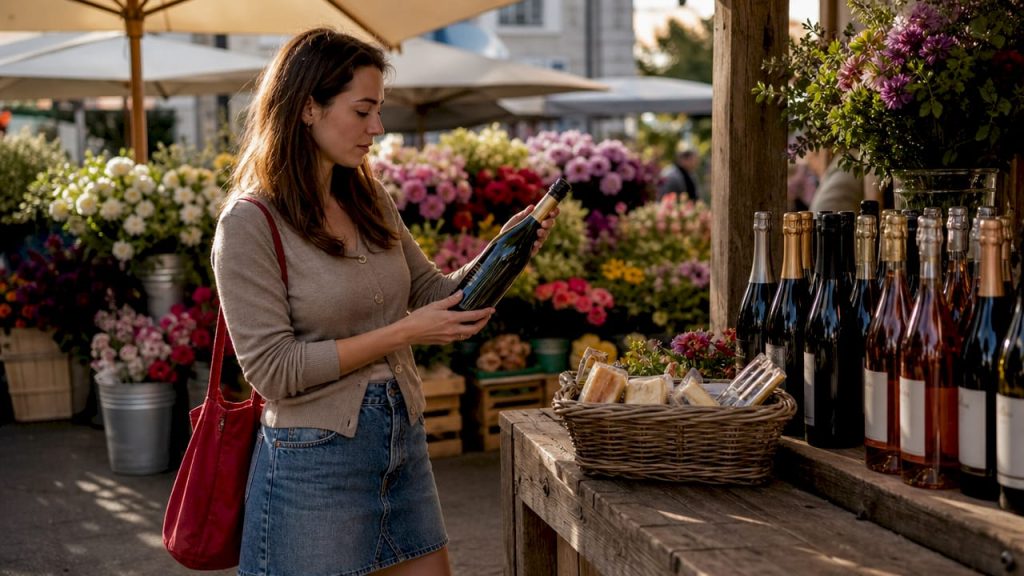
The single biggest upgrade you can make to your wine serving ritual costs nothing: serve every bottle at the right temperature, in the right glass, with a moment of attention before you pour. Get those three things right, and every other detail falls into place naturally. Whether you’re hosting friends for dinner or simply unwinding with a glass after work, these practical steps will sharpen your experience from the first pour to the last sip.
Here’s a quick snapshot of what makes the biggest difference:
- Temperature first. Reds served too warm taste alcoholic and flat; whites served too cold taste muted and thin. The 20-minute rule is your fastest fix.
- Check before you pour. Inspect the cork, examine the color, and take one small sniff to catch any faults early.
- Decant with purpose. Young tannic reds need oxygen; older bottles need gentle sediment separation. These are two different jobs.
- Match the glass to the wine. A wide-bowled glass for a bold red, a tulip-shaped flute for sparkling. Shape genuinely changes what you smell and taste.
- Pour with intention. Fill glasses no more than two-thirds full, follow a tasting ritual, and serve wines in a logical order.
Affiliate Disclosure: Some links on Fine Wine World are affiliate links, meaning we may earn a paid commission if you click through and make a purchase — at no extra cost to you. Affiliate programs use cookies to track commissions, which may collect personal data. You can read more about how we handle your data in our Privacy Policy and Affiliate Disclosure. We only recommend products we genuinely trust.
Table of Contents
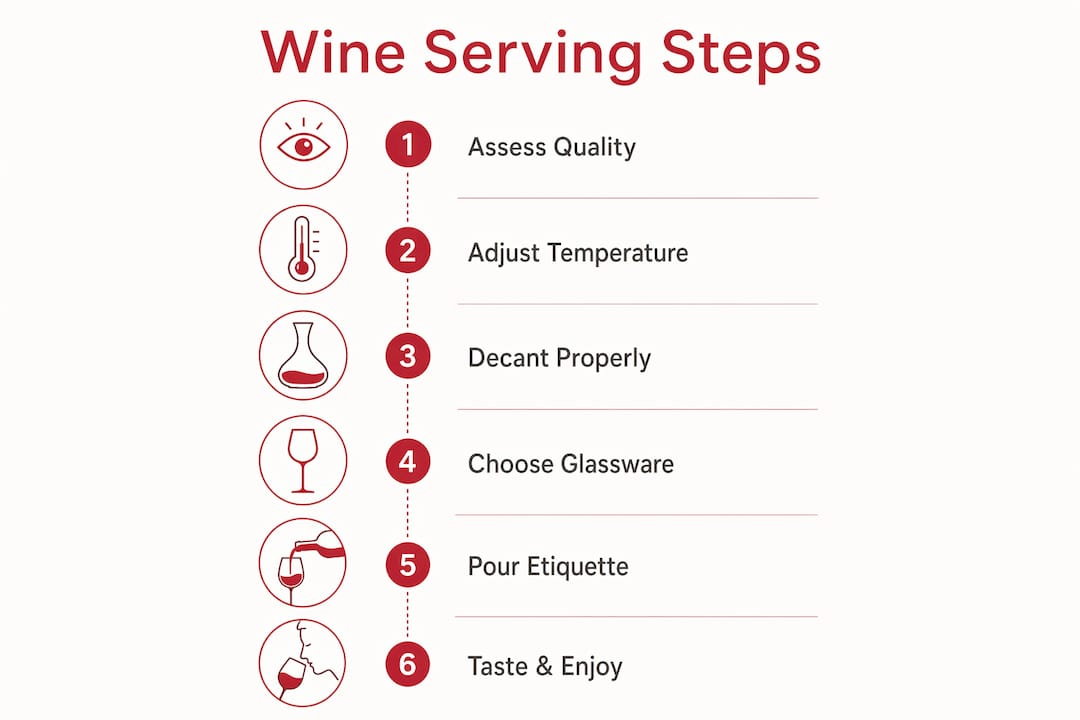
- How to assess wine quality and readiness before serving
- Mastering wine temperature, timing, and the practical 20-minute rule
- When and how to decant and aerate wines properly
- Selecting and using proper glassware to enhance wine presentation and tasting
- Proper wine service etiquette for pouring and tasting rituals
- Enhance your palate with sensory training and practical tasting tips
- Storage considerations prior to serving
- Ready to explore more?
- Key Takeaways
How to assess wine quality and readiness before serving
Before a single drop hits the glass, a quick quality check protects everyone at the table from an unpleasant surprise. This takes less than two minutes and becomes second nature fast.
- Check the label and vintage. Confirm the bottle is what you intended to open. Look for signs of poor storage: faded labels, sticky residue around the capsule, or a pushed-up cork can all signal heat damage.
- Inspect the cork. After pulling it, look for cracks, excessive dryness, or wine seeping up the sides. A cork that crumbles or smells strongly musty may indicate cork taint (TCA), which gives wine a wet cardboard smell.
- Examine the wine’s color and clarity. Pour a small amount and hold it against a white background. Unexpected cloudiness in a young wine, or a brown tinge in a white that should be pale gold, are worth noting.
- Smell carefully before serving broadly. A quick sniff of the glass tells you a lot. Off-aromas like vinegar, nail polish remover, or wet dog point to specific faults: acetic acid, ethyl acetate, or Brettanomyces.
- Take a small taste. If the wine smells fine, taste a sip. Flat, oxidized flavors or a harsh chemical edge are your signal to reconsider serving it to guests.
This pre-service ritual is part of what structured wine tasting is all about. Catching a flawed bottle before it reaches everyone’s glass is a quiet act of hospitality.
Mastering wine temperature, timing, and the practical 20-minute rule
Temperature is the single most powerful lever you have when serving wine. Get it wrong, and even a great bottle underperforms. Get it right, and an ordinary bottle can surprise you.
Optimal serving temperatures range roughly from 43–48°F for sparkling wines, 45–54°F for whites, and 54–63°F for reds. Most home refrigerators run around 37–40°F, and most rooms sit closer to 70°F. Neither extreme is ideal for any wine style.
- Sparkling wines (Champagne, Cava, Prosecco): serve at 43–48°F. Keep the bottle in an ice bucket at the table to maintain temperature.
- Whites (all styles): serve at 45–54°F. A few minutes out of the fridge lets richer whites open up, but both crisp and full-bodied whites are best within this temperature range.
- Reds (all styles): serve at 54–63°F. Brief chilling of lighter reds helps bring them into range; fuller reds served at the warmer end of the range.
These ranges keep all wine styles within their optimal serving window.
The 20-minute rule is a practical shortcut rather than an exact formula: red wine can be briefly chilled if too warm, and white wine warmed slightly if too cold, to help approach balanced serving temperatures. The rule works because most serving mistakes come from temperature extremes, and a short correction brings the wine closer to balance without any special equipment.
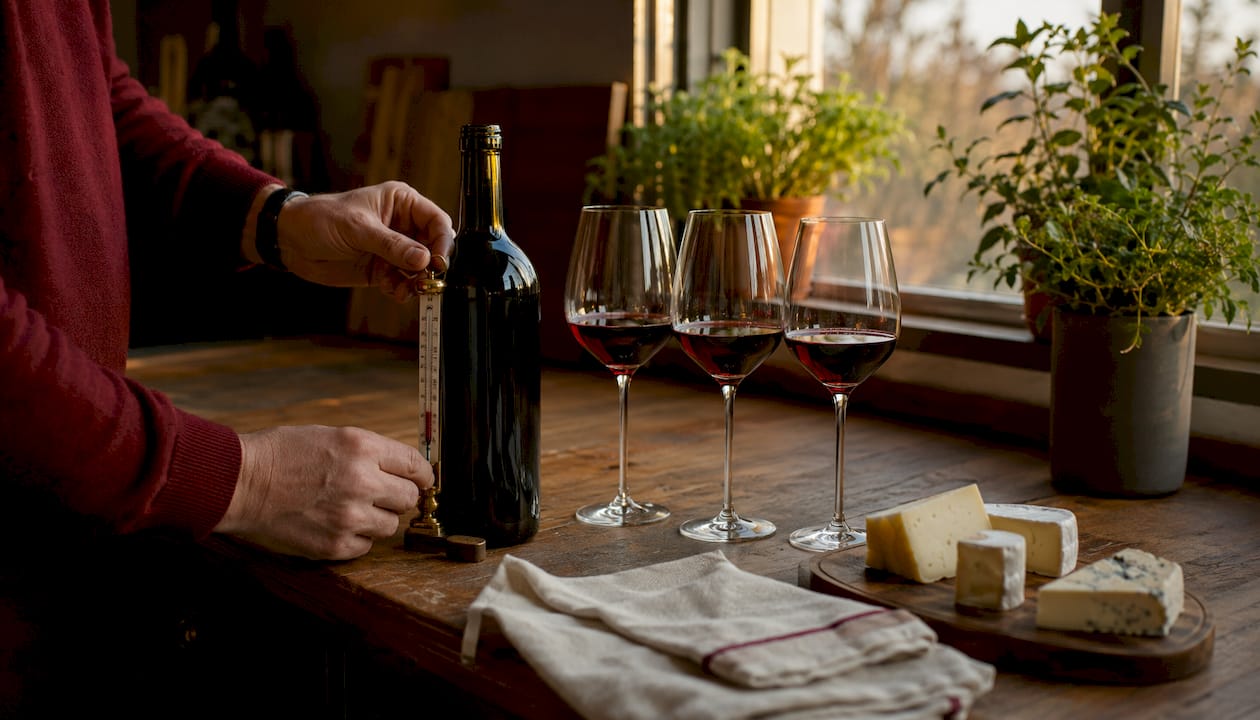
Pro Tip: Pour a small test glass after your temperature adjustment and taste it after five minutes. If the fruit feels lively and the alcohol doesn’t sting, you’re in the right zone. Re-taste rather than relying on a fixed timer.
When and how to decant and aerate wines properly
Decanting does two completely different things, and mixing them up is one of the most common serving mistakes. Aeration opens up young, tannic wines. Sediment separation protects fragile old ones. Applying the wrong approach to the wrong bottle can actually harm the wine.
- Young, tannic reds (a Napa Cabernet, a Barolo in its first decade): these benefit from vigorous aeration in a wide-bottomed decanter for 30–90 minutes. The broad surface area lets oxygen soften tannins and coax out fruit and spice that would otherwise stay locked in.
- Older wines with sediment (reds with ten or more years of bottle age): stand the bottle upright for 24–48 hours before opening so sediment settles. Pour slowly over a candle or flashlight in one continuous motion, stopping the instant you see sediment creep toward the shoulder. The goal here is clarity, not oxygen.
- Season your decanter first. Before pouring the wine in, swirl a small amount (about two fingers’ worth) around the inside of the decanter and discard it. This removes residual aromas from dust or storage that the crystal may have absorbed.
- Most whites don’t need decanting. A brief swirl in the glass is usually enough. Exception: a reductive, tightly wound white (some natural wines or aged white Burgundy) can benefit from a few minutes in a narrow, pre-chilled decanter.
- Re-taste at intervals. Fixed decanting times are less reliable than tasting the wine every 15–20 minutes after opening to find the window where aromas and tannins feel most integrated.
Pro Tip: If you’re unsure whether a wine needs decanting, taste it immediately after opening. If aromas are closed or the palate feels angular and harsh, decant. If it already tastes open and expressive, just pour.
Selecting and using proper glassware to enhance wine presentation and tasting
Glass shape is not just an aesthetic choice. It physically changes how aromas reach your nose and how the wine lands on your palate. The right glass makes a real, measurable difference in what you experience.
Large, wide-bowled glasses support complex reds and full-bodied whites by allowing more swirling and concentrating aromatics at the narrow rim. Narrow tulip-shaped glasses preserve carbonation in sparkling wines and direct the pour toward the center of the palate. Thin-walled crystal transmits temperature and color more accurately than thick glass, which is why high-end stems use walls under 1mm.
- Bold reds (Cabernet, Syrah, Malbec): use a large Bordeaux-style bowl. The wide opening lets tannins soften as the wine breathes in the glass.
- Lighter reds (Pinot Noir, Burgundy): a slightly narrower, taller bowl concentrates delicate aromatics without overwhelming them.
- Full-bodied whites (Chardonnay, Viognier): a medium-to-large bowl works well, similar to a white Burgundy glass.
- Crisp whites and rosé: a smaller, narrower bowl keeps the wine cooler longer and preserves freshness.
- Sparkling wines: a tulip-shaped flute or a white wine bowl. The traditional flat coupe loses carbonation quickly and concentrates nothing toward the nose.
Fill glasses enough to allow swirling and aroma collection, generally less than full to the brim. That space lets you swirl without splashing and gives aromas room to collect before they reach you. Stemmed glasses keep your hand away from the bowl, which matters most for lighter whites that warm quickly from body heat. For more on matching glass shape to wine style, Fine-wine-world’s glassware guide covers the details clearly.
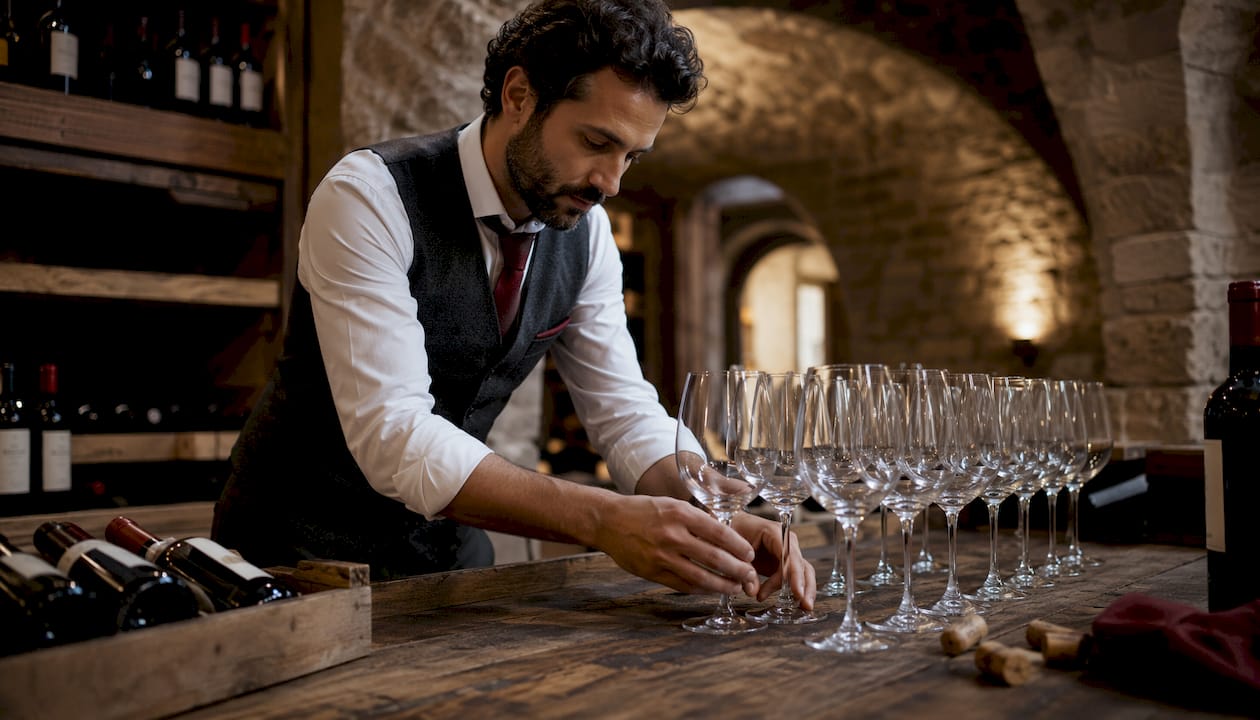
Always polish glasses before use. Detergent residue and cardboard storage odors genuinely suppress delicate aromatics, especially in a wine you’ve taken care to serve at the right temperature.
Proper wine service etiquette for pouring and tasting rituals
Good service etiquette isn’t about formality for its own sake. It’s about making sure the wine reaches the glass in the best possible condition and that everyone at the table feels comfortable and included.
Pouring sequence and technique:
- Present the bottle to the host or guest of honor before opening, label facing outward.
- Pour a small taste (about 1 oz) for the host to evaluate before serving others.
- Serve guests before refilling the host’s glass.
- Pour moderate servings that allow room for swirling and aroma concentration.
- Twist the bottle slightly at the end of each pour to prevent drips.
The tasting ritual:
When evaluating a pour, work through four steps: look at the color and clarity, swirl gently to release aromas, smell before tasting, then take a small sip and let it coat your palate. This sequence, used by professional tasters worldwide, gives you the clearest read on what’s in the glass.
Wine openers and tools:
A waiter’s corkscrew (sommelier knife) is the most reliable tool for most bottles. Cut the foil below the lower lip of the bottle, insert the worm at a slight angle, and lever the cork out in two stages to avoid breaking it. For older corks that may crumble, an Ah-So two-pronged puller grips the cork from both sides without piercing it.
Serving order for multiple wines:
Serve lighter wines before fuller ones, dry before sweet, and younger before older. This order protects your palate from being overwhelmed early and lets each wine show its best qualities. For food and wine pairing, match the weight of the wine to the weight of the dish: a delicate fish course calls for a crisp white, while a rich braise suits a full red.
Enhance your palate with sensory training and practical tasting tips
Building a better palate takes practice, but it’s genuinely enjoyable practice. The more intentionally you taste, the faster your ability to recognize aromas, textures, and structure develops.
Professional sensory analysis follows a structured four-step process: appearance, nose, palate, and conclusions. WSET Level 1 introduces this framework, known as the Systematic Approach to Tasting (SAT), and it’s the same method used by students and professionals worldwide. You don’t need a certification to use it. Just work through each step every time you open a bottle.
- Appearance: Look at color depth, hue, and clarity. A pale ruby versus a deep garnet tells you something about age and grape variety before you’ve smelled anything.
- Nose: Swirl, then smell. Try to identify fruit aromas first (red fruit, citrus, stone fruit), then secondary notes (oak, spice), then tertiary ones (leather, earth, dried fruit in older wines).
- Palate: Note sweetness, acidity, tannin, body, and finish. These structural elements tell you how the wine was made and how it will pair with food.
- Conclusions: Decide whether the wine is ready to drink, needs more time, or is past its peak. Making that judgment, even imperfectly, sharpens your instincts over time.
Aroma training kits, such as the SENSOWISE Wine Experience Kit, isolate individual scents so you can learn to recognize them in actual wines. Aroma wheels from organizations like the Napa Valley Wine Academy serve a similar purpose and are often available for free. Both tools accelerate the process of building scent memory, which is the foundation of tasting skill.
Pro Tip: Keep a simple wine journal. After each bottle, jot down the serving temperature, whether you decanted, and two or three flavor notes. Patterns emerge quickly, and you’ll start to predict what you’ll enjoy before you even open the bottle. Fine-wine-world’s guide to starting a wine journal walks you through exactly how to do it.
Storage considerations prior to serving
Short-term storage in the hours or days before you open a bottle affects the wine more than most people realize. A few simple habits protect what’s in the glass.
Temperature and position:
Store bottles on their side if they have a cork, keeping the cork moist and preventing air from seeping in. For wines you plan to serve within a day or two, a cool, dark spot away from direct sunlight works fine. Avoid storing bottles near the stove or in a warm cabinet, where temperature swings can dull aromatics.
Opened bottles:
Re-cork or use a wine stopper and refrigerate opened bottles promptly. Most wines hold reasonably well for a couple of days in the fridge. High-acid wines like Riesling or cool-climate Chardonnay tend to last longer; delicate sparkling wines and aged reds fade fastest and are best finished within a day.
Pre-service positioning for older wines:
If you’re planning to serve an older red with sediment, stand the bottle upright at least 24 hours before opening. This lets sediment settle to the bottom so your decanting pour stays clean. For very old bottles, 48 hours upright is better.
Temperature adjustment timing:
If a red has been stored in a cool cellar (around 55°F), it’s already close to its ideal serving temperature and may need only a brief warm-up on the counter. A bottle that’s been in a warm room, on the other hand, benefits from that 20-minute fridge stop before serving. Knowing where your bottle started is the first step to getting the temperature right. Fine-wine-world’s guide on wine serving temperature covers this in more detail.
Ready to explore more?
Every bottle you open is a chance to learn something new. Fine-wine-world is here to make that process feel less like homework and more like an adventure. Whether you want to understand wine regions of the world or get smarter about food and wine pairing, there’s always something worth discovering. And if you want personalized wine recommendations to match your evolving palate, Vinoperte offers a structured approach to finding wines you’ll actually love.
Key Takeaways
Serving wine well comes down to three fundamentals: temperature, oxygen, and the right glass. Every other detail supports those three.
| Point | Details |
|---|---|
| Temperature is the top priority | Serve sparkling wines at 43–48°F, whites at 45–54°F, and reds at 54–63°F for best expression. |
| Decanting has two distinct goals | Aerate young tannic reds for 30–90 minutes; gently separate sediment in older bottles without splashing. |
| Glass shape changes what you taste | Wide bowls for complex reds, tulip shapes for sparkling; fill no more than two-thirds full. |
| Pre-service checks catch flaws early | Inspect cork, color, and aroma before serving broadly to protect your guests from a flawed bottle. |
| Tasting notes build a better palate | Recording serving temperature, decanting time, and flavor notes after each bottle accelerates palate development. |