
Wine Aroma Explained: What Every Beginner Should Know
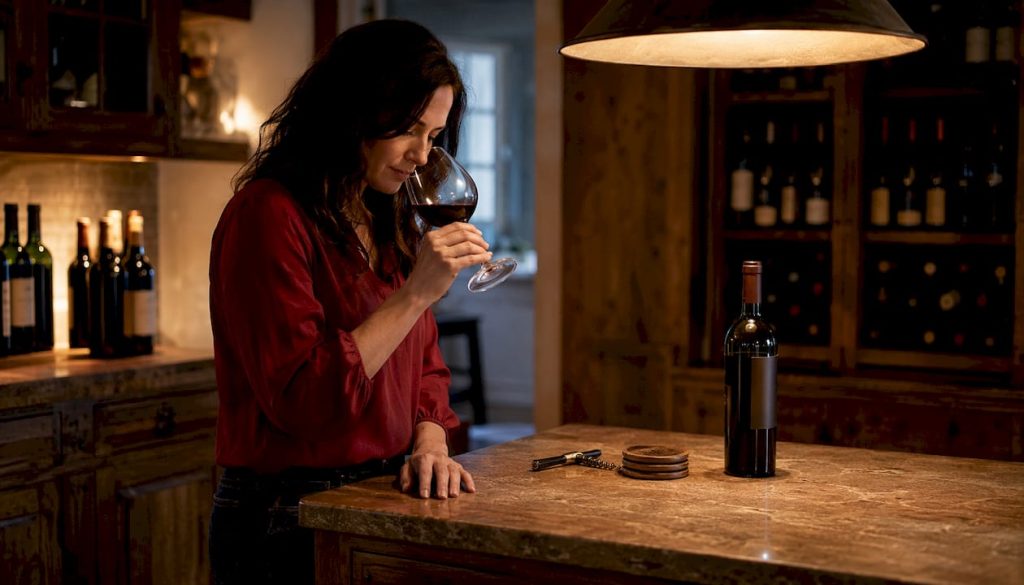
Wine aroma is the collection of pleasant smells a wine gives off, coming from its grapes, the winemaking process, or how it has aged. Knowing what you’re smelling tells you a lot: the grape variety, how the wine was made, how old it is, and whether something has gone wrong. That’s a lot of information packed into a single sniff.
The three-part system wine professionals use breaks it down simply:
- Primary aromas come directly from the grape variety (think blackcurrant in Cabernet Sauvignon or lychee in Gewürztraminer).
- Secondary aromas develop during fermentation and winemaking (bread, butter, vanilla from oak).
- Tertiary aromas (also called the bouquet) emerge through aging in bottle or barrel (leather, tobacco, honey, petrol).
You don’t need a sommelier’s vocabulary to appreciate any of this. A quick read through this guide will give you a clear framework, a practical tasting routine, and a 30-day plan to sharpen your nose.
Affiliate Disclosure: Some links on Fine Wine World are affiliate links, meaning we may earn a paid commission if you click through and make a purchase — at no extra cost to you. Affiliate programs use cookies to track commissions, which may collect personal data. You can read more about how we handle your data in our Privacy Policy and Affiliate Disclosure. We only recommend products we genuinely trust.
Table of Contents
- What’s the difference between aroma, bouquet, and odor?
- The three types of wine aromas, explained with examples
- Where do wine aromas actually come from?
- How to smell wine properly: a step-by-step routine
- Your aroma wheel cheat sheet: families and examples
- What aromas tell you about a wine
- A 30-day plan to build your aroma memory
- Key Takeaways
- The nose knows more than you think
- Useful sources and further reading
What’s the difference between aroma, bouquet, and odor?
These three words get mixed up constantly, even by experienced drinkers. Here’s how to keep them straight.
Aroma refers to pleasant smells, particularly those that come from the grape variety itself. Bouquet technically describes smells that develop from fermentation and aging. Odor is the term used for unpleasant smells, usually pointing to a wine fault.
In practice, professional tasters draw a clear line between aroma and bouquet, while casual drinkers use both words interchangeably. Neither approach is wrong. A few quick examples help:
- “Raspberry” in a young Pinot Noir = varietal aroma (primary)
- “Vanilla” in an oaked Chardonnay = bouquet from oak influence (secondary/tertiary)
- “Honey” in an aged Sauternes = bouquet from bottle development (tertiary)
Jancis Robinson, in the Oxford Companion to Wine, cautions that “bouquet” is used loosely across regions and texts. Tasting terms are tools for communication, not strict scientific categories. So use whatever language helps you describe what you smell, and don’t stress about getting the label exactly right.
The three types of wine aromas, explained with examples
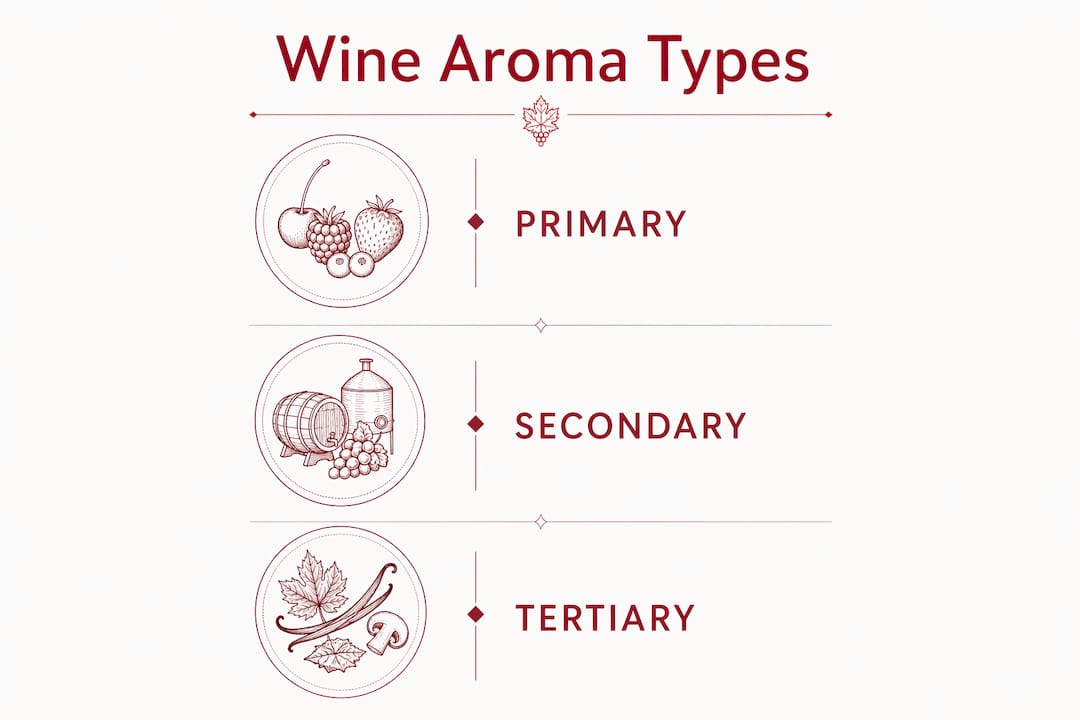
The primary/secondary/tertiary system is the most practical framework you’ll find for understanding wine scents. It tells you not just what you’re smelling, but where it came from.
Primary aromas are the fingerprints of the grape. They’re most vivid in young wines and come directly from compounds in the grape skin and pulp. Secondary aromas form during fermentation and any winemaking interventions like oak aging or malolactic conversion. Tertiary aromas, the bouquet, build slowly over months or years in bottle.
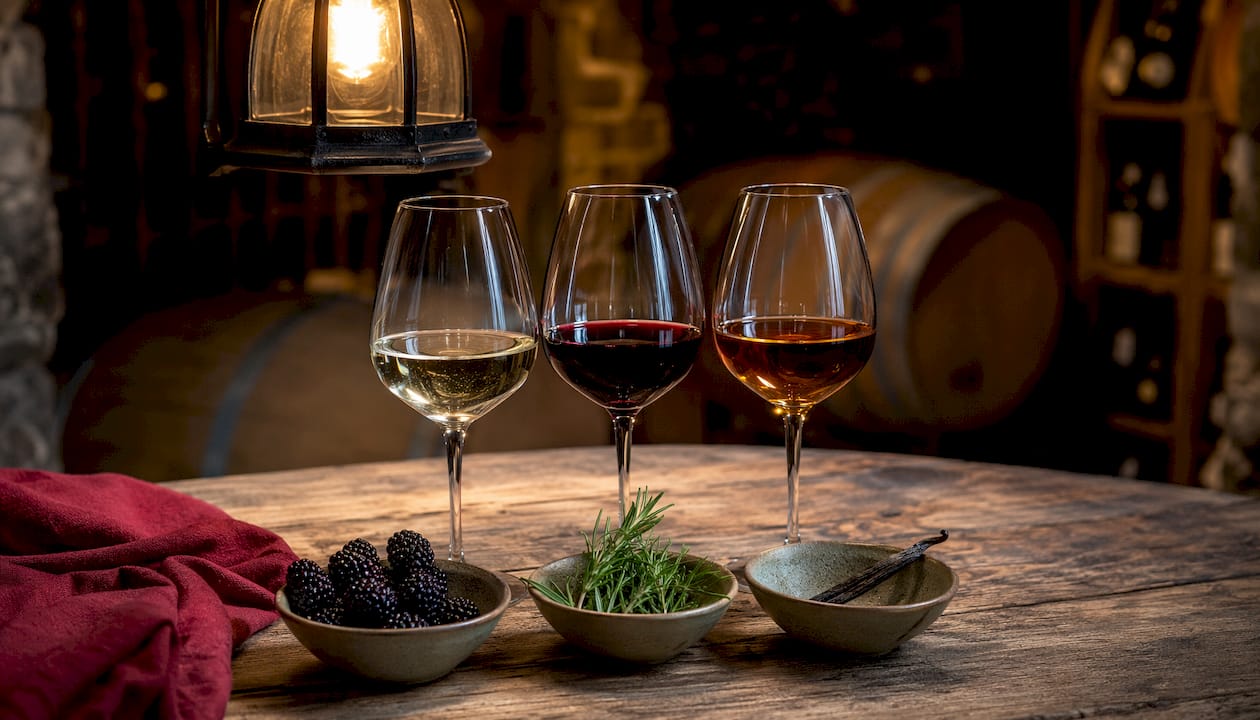
| Type | Origin | Example Descriptors |
|---|---|---|
| Primary | Grape variety | Blackcurrant (Cabernet Sauvignon), lychee (Gewürztraminer), peach (Viognier) |
| Secondary | Fermentation and winemaking | Bread/brioche (yeast), butter (malolactic), vanilla (oak) |
| Tertiary | Bottle and barrel aging | Leather, tobacco, truffle (Pinot Noir), honey (aged Sauternes), petrol (aged Riesling) |
A few things worth knowing:
- Primary aromas are the easiest to learn because they map directly to fruits, flowers, and herbs you already know.
- Secondary aromas tell you how the wine was made, not just what grape it came from.
- Tertiary aromas signal age and development. Petrol in an older Riesling, for example, is a sign of quality and maturity, not a flaw.
Where do wine aromas actually come from?
Aromas are volatile molecules that evaporate from the wine’s surface and travel to your nose. As Master of Wine Anne Krebiehl puts it, wine aroma is organic chemistry in action: the same molecules that make strawberries smell like strawberries are often present in wine.
Here’s a plain-language glossary of the main compound classes:
- Terpenes: Responsible for floral and citrus notes. Linalool gives Muscat its distinctive rose and orange-blossom character.
- Esters: Formed during fermentation. Isoamyl acetate is the compound behind that classic banana or pear drop smell in young wines.
- Pyrazines (methoxypyrazines): Produce green bell pepper and grassy notes. Strongly associated with Cabernet Sauvignon, Sauvignon Blanc, and Merlot.
- Thiols: Sulfur-containing compounds that create grapefruit, passion fruit, and boxwood aromas in Sauvignon Blanc.
- Phenols: Include vanillin, which comes from oak barrels and gives wines a warm vanilla scent.
- Lactones: Oak lactones contribute coconut and sweet wood notes, especially in American oak-aged wines.
Many of these molecules are actually bound to sugars in the grape before fermentation. Yeast breaks those bonds and releases the volatile compounds, which is why a wine that smells closed right after opening can open up beautifully after 20 minutes in the glass.
Pro Tip: You don’t need to memorize molecule names. Focus on recognizing families: floral, fruity, herbal, spicy, earthy, woody. Once you can place a smell in a family, the specific descriptor usually follows naturally.
How to smell wine properly: a step-by-step routine
The goal is a simple, repeatable routine you can use every time you open a bottle. Start with a clear glass, serve the wine at the right temperature (whites around 50°F, reds around 60–65°F), and give yourself a quiet moment.
- Pour a small amount (about two ounces) into a clean, clear wine glass. A tulip-shaped glass concentrates aromas better than a wide tumbler.
- Smell before you swirl. Take one short sniff with the glass still. This first impression often catches the most delicate top notes.
- Swirl gently for 5–10 seconds. Swirling increases the wine’s surface area and releases more volatile compounds.
- Take a medium sniff with your nose just inside the rim. Breathe in for about two seconds, then pause. Try to identify one or two families: is it fruity? Floral? Earthy?
- Take a sip and pay attention to the retronasal channel. When you swallow, aromas travel from the back of your mouth up through your nasal passage. This retronasal path often reveals aromas you missed on the first sniff.
- Write down two or three words immediately. You don’t need to be precise. “Red fruit, a little spice, something earthy” is a perfectly useful note.
Quick dos and don’ts:
- Do use a clean glass with no soap residue or dishwasher smell.
- Do let the wine warm slightly in your hand if it seems too cold and closed.
- Don’t wear perfume or cologne while tasting. External scents override what’s in the glass.
- Don’t inhale too forcefully on the first sniff. A gentle breath is more informative than a deep one.
Pro Tip: Orthonasal smell (sniffing directly) and retronasal smell (after swallowing) activate slightly different perceptions. Many tasters find that oak and spice notes show up more clearly retronasally, while fresh fruit and floral notes hit hardest on the direct sniff.
Your aroma wheel cheat sheet: families and examples
Think of this as a quick-reference guide you can screenshot and keep on your phone. When you’re tasting, pick two or three families to look for rather than trying to identify everything at once.
| Aroma Family | Everyday Examples |
|---|---|
| Fruit (red) | Raspberry, cherry, strawberry, cranberry |
| Fruit (dark) | Blackcurrant, blackberry, plum, blueberry |
| Fruit (white/tropical) | Peach, apricot, pineapple, mango, lychee |
| Floral | Rose, violet, orange blossom, jasmine, lavender |
| Herb/Vegetal | Bell pepper, fresh-cut grass, tomato leaf, mint |
| Spice | Black pepper, clove, cinnamon, anise, nutmeg |
| Earth | Mushroom, forest floor, wet leaves, clay, truffle |
| Wood/Oxidative | Vanilla, cedar, smoke, toast, coconut |
| Dairy/Nutty | Butter, cream, hazelnut, almond, brioche |
| Chemical/Faults | Nail polish, wet cardboard, vinegar, sulfur |
A practical tip: before you taste a wine, pick one family you expect to find based on the grape or region, then actively search for it. This focused approach trains your brain to connect smell signals with stored memories far faster than passive sniffing.
What aromas tell you about a wine
Aromas carry real information about a wine’s origin, production, and condition. Once you know what to look for, a single sniff can tell you whether you’re holding a young, fruit-forward wine or a complex, aged bottle.
Grape variety and origin:
- Green bell pepper and grassy notes point to methoxypyrazines, a hallmark of Cabernet Sauvignon, Sauvignon Blanc, and Merlot.
- Petrol or kerosene in an older white wine almost always signals Riesling. The compound responsible, TDN (1,1,6-trimethyl-1,2-dihydronaphthalene), develops with bottle age and is considered a quality marker.
- Lychee and rose together are a near-certain indicator of Gewürztraminer.
Winemaking choices:
- Butter and cream come from diacetyl, a byproduct of malolactic fermentation. If a Chardonnay smells buttery, it almost certainly went through malo.
- Vanilla, coconut, and toast point to oak aging. American oak tends toward coconut and vanilla; French oak leans more toward spice and cedar.
Faults to know:
- Cork taint: Wet cardboard or damp basement smell, caused by TCA (trichloroanisole). Return the bottle.
- Volatile acidity: Nail polish remover or sharp vinegar. A small amount is acceptable; a strong hit means the wine is flawed.
- Reduction: Struck match or rubber. Often clears with swirling or a few minutes in the glass.
A quick three-question check: Does the aroma point to a grape variety? Does it suggest a winemaking choice like oak or malolactic fermentation? Or does it signal a fault? Running through those three questions takes about ten seconds and gives you a solid read on what’s in the glass.
A 30-day plan to build your aroma memory
Simple daily practice will sharpen your aroma recognition faster than any course. Food & Wine and wine educators consistently recommend building an “aroma library” from everyday items before you ever open a bottle.
Start with your pantry. Gather these items and smell each one deliberately:
- Coffee beans (roast, earth)
- Citrus peel: lemon, orange, grapefruit (terpenes, floral)
- Dried herbs: thyme, rosemary, bay leaf (herbal/vegetal)
- Vanilla extract (phenols, oak)
- Black peppercorns (rotundone, spice)
- Honey (tertiary sweetness)
- Nutmeg (warm spice)
The 30-day micro-practice plan:
- Week 1 (Days 1–7): Smell one pantry item each day for 60 seconds. Close your eyes, name what you smell, and write one word in a notebook.
- Week 2 (Days 8–14): Smell two items back to back and compare them. Notice what makes them different. Then open a bottle and try to find one of those two smells in the wine.
- Week 3 (Days 15–21): Blind sniff. Ask someone to hand you a pantry item without telling you what it is. Try to name it. This trains your brain to retrieve smell memories without visual cues.
- Week 4 (Days 22–30): Taste a wine and write down three aroma descriptors before reading the label or any tasting notes. Compare your notes to the producer’s description afterward.
Keep a simple tasting log: date, wine, three descriptors, one guess at the grape or region. Over 30 days, you’ll see your accuracy improve and your vocabulary grow. The three-tier aroma system gives you a structure to organize those notes so they actually build on each other.
Key Takeaways
Wine aroma breaks into three clear types — primary (grape), secondary (fermentation), and tertiary (aging) — and recognizing each one gives you a reliable shortcut to understanding any wine in your glass.
| Point | Details |
|---|---|
| Three-tier system | Primary, secondary, and tertiary aromas each come from a different stage: grape, fermentation, and aging. |
| Aroma vs. bouquet | “Aroma” refers to grape-derived scents; “bouquet” covers fermentation and aging smells, though both terms are used loosely in practice. |
| Practical tasting routine | Swirl, sniff before and after sipping, and note two or three aroma families rather than chasing exact descriptors. |
| Pantry practice works | Smelling everyday items like vanilla, citrus peel, and peppercorns builds the aroma memory you need for confident wine tasting. |
Ready to put your nose to work? The Fine Wine World guide to aging and cellaring wine is a great next step for understanding how tertiary aromas develop over time.
The nose knows more than you think
There’s a tendency in wine culture to treat aroma recognition as something you either have or you don’t. That’s simply not true. The human nose can distinguish an enormous range of odors, but identification depends on experience and memory, not raw talent. The gap between “I smell something fruity” and “that’s blackcurrant with a hint of cedar” is just practice.
What I find most encouraging is how quickly the pantry exercises work. Within a week of deliberately smelling vanilla extract, citrus peel, and dried herbs, most people start catching those same notes in wine without even trying. The brain makes the connection once you give it the raw material to work with.
The other thing worth saying: don’t worry about using the “right” words. Jancis Robinson herself acknowledges that tasting terms are tools for communication, not scientific absolutes. If a wine smells like “grandma’s garden after rain” to you, that’s a perfectly valid note. Write it down. Over time, you’ll refine it. The goal is to build your aroma library, not to recite someone else’s.
Useful sources and further reading
These are the references worth bookmarking if you want to go deeper on wine aroma.
Aroma of Wine — Wikipedia: A solid, well-sourced overview of the three-tier taxonomy, the aroma/bouquet/odor distinction, and the chemistry behind common wine scents. Good starting point for curious readers.
The Science Behind the Main Wine Aromas — Wine Enthusiast: Anne Krebiehl’s accessible breakdown of terpenes, esters, pyrazines, and other compound classes, with clear everyday analogies. The best single article on the chemistry side.
The Three-Tier Aroma System — Food & Wine: Practical framing of primary, secondary, and tertiary aromas as a training framework, with tips on reducing the anxiety of naming scents.
Bouquet — Oxford Companion to Wine (via CKBK): The authoritative reference on how “bouquet” is defined and why its usage varies across regions and texts. Worth reading if you want the full professional context.
What Is Bouquet in Wine? — Sommo: A concise glossary entry with clear examples of primary and tertiary aromas. Useful as a quick cross-check when building your descriptor list.
Evaluating Sensory Quality in Spirits — Gin de Chimay: If you want to extend your sensory training beyond wine, this partner resource covers aroma evaluation techniques across craft spirits.
Fine Wine World: The home base for beginner-friendly wine guides, food pairing tips, and deeper dives into everything from wine regions to food and wine pairing.