
Easy Ways to Pair Natural Wines with Your Favorite Dishes

Match a natural wine’s dominant trait — acidity, tannin, texture, or funk — to the dish’s dominant element — fat, spice, salt, or umami, and you’ll land a great pairing almost every time. The good news? Natural wines are born to be food wines, and a few simple starting points will get you there without overthinking it.
Quick pairings to try tonight:
- Pét-nat + fried chicken, oysters, or cheese croquettes
- Orange (skin-contact) wine + kimchi fried rice, miso-glazed eggplant, or aged cheese
- Light red (Gamay-style) + tomato pizza or simple pasta
- Dry rosé + grilled vegetables or a charcuterie board
- Mineral-driven white + fresh seafood or herb-forward salads
One thing worth knowing upfront: natural wines evolve in the glass, sometimes dramatically. The first pour might smell funky or tight; by the third glass it could be singing. Taste as you eat, and let the bottle surprise you.
Affiliate Disclosure: Some links on Fine Wine World are affiliate links, meaning we may earn a paid commission if you click through and make a purchase — at no extra cost to you. Affiliate programs use cookies to track commissions, which may collect personal data. You can read more about how we handle your data in our Privacy Policy and Affiliate Disclosure. We only recommend products we genuinely trust.
Table of Contents
- How to pair natural wine with food: the core principles
- Style-by-style pairings you can use at home
- Serving temperature, decanting, and the 20-minute rule
- “What grows together” — regional pairings that almost always work
- Common pairing mistakes and what to avoid
- Quick cheatsheet: natural wine matches for common home meals
- How to taste a natural wine and figure out what it needs
- Pairing natural wine with vegetarian, vegan, and gluten-free meals
- Balancing bold natural wines with delicate dishes, and vice versa
- Key Takeaways
- Natural wine pairing is more forgiving than you think
- Ready to practice? Fine-wine-world has you covered
- Useful sources and further reading
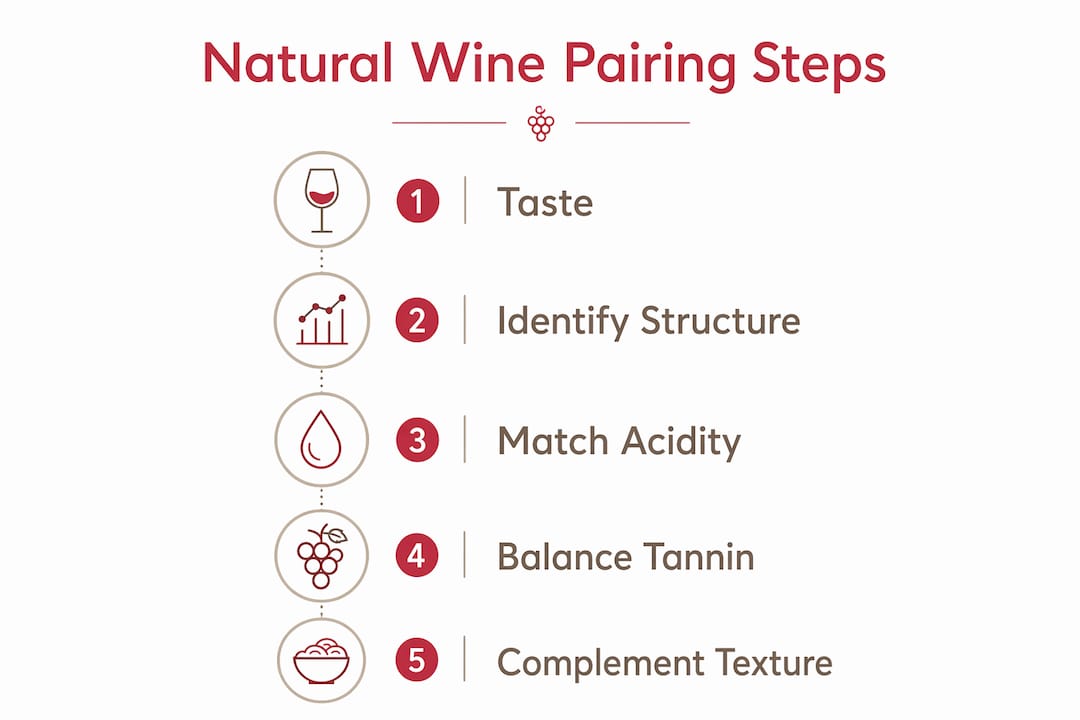
How to pair natural wine with food: the core principles
Natural wines tend to share a few structural traits that make them especially food-friendly once you understand them. Most lean toward higher acidity, lower alcohol, and savory, sometimes earthy complexity. Those qualities are features, not bugs, at the dinner table.
Here’s how the mechanics work:
- Acid cuts fat. A bright, high-acid white next to a creamy pasta or buttery fish dish keeps your palate clean and the food tasting fresh.
- Tannin meets protein. The grippy texture of a skin-contact or medium red softens against protein-rich foods like grilled meat or aged cheese, making both taste better.
- Sweetness tames spice. A touch of residual sugar in a pét-nat or off-dry white cools down chili heat without flattening the dish.
- Salt lifts fruit. Salty foods (cured meats, briny olives, aged cheeses) make a wine’s fruit notes pop. This is why charcuterie boards work so well with almost any natural wine.
- Umami amplifies savory notes. Fermented foods, mushrooms, and miso-based dishes mirror the earthy, savory character many naturals carry naturally.
The wild card is variability. Natural wines can shift noticeably between the first pour and the last, so treat each bottle as a conversation rather than a fixed product. If you’re unsure where to start, reach for a high-acid, low-alcohol white or a pét-nat. They’re the most forgiving styles and work with the widest range of home meals.
Pro Tip: If a natural wine tastes jagged or sharp on its own, that’s often a sign it needs food. Pour a glass, take a bite of something salty or fatty, and taste again. The transformation can be remarkable.
Style-by-style pairings you can use at home
Not all natural wines follow the same logic, so it helps to think by style rather than by a single rule. Here’s a practical breakdown of the most common styles and what to cook alongside them.
| Wine Style | Best Home-Dinner Matches |
|---|---|
| Sparkling / Pét-nat | Fried chicken, oysters, cheese croquettes, salty snacks |
| Skin-contact / Orange | Kimchi, miso dishes, aged cheese, spiced lamb, roasted eggplant |
| Light red (Gamay/Pinot-like) | Tomato pasta, pizza, charcuterie, grilled chicken |
| Medium / tannic red | Grilled meats, mushroom ragu, hearty stews, roasted root vegetables |
| Mineral-driven white | Seafood, fresh salads, herb-forward vegetables, light pasta |
| Dry rosé | Grilled vegetables, tapas, mezze, summer salads |
| Oxidative / funky white | Aged cheese, cured meats, earthy grain bowls, miso-glazed dishes |
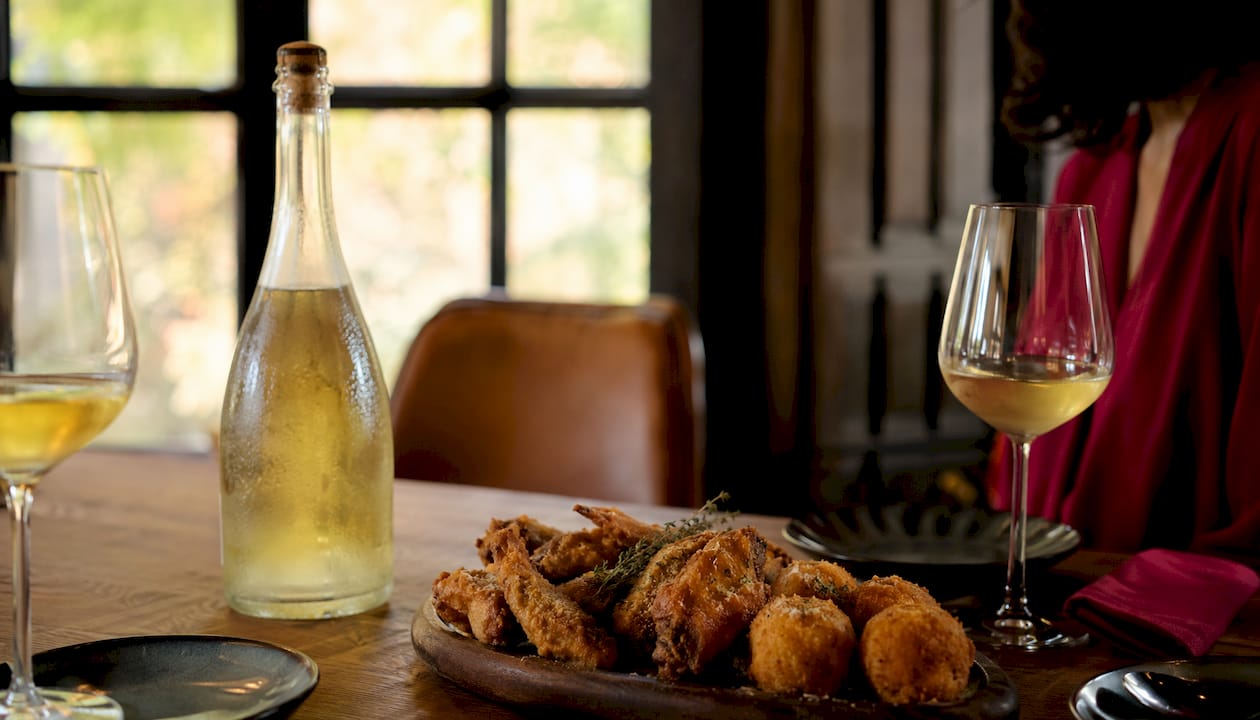
Sparkling and pét-nat are the most versatile style in the lineup. Carbonation and high acidity cut through fat and lift salty textures, which is why fried foods and briny bites are such a natural fit. Think fried chicken, fish tacos, or a bowl of salted almonds.
Skin-contact (orange) wines bring tannin and texture that most white wines simply don’t have. That structure lets them handle spiced, fermented, or umami-rich foods that would overwhelm a conventional white. Kimchi pancakes, miso-glazed tofu, roasted cauliflower with tahini — these are where orange wine shines. One caution: the tannins can bulldoze delicate dishes like steamed fish or a light green salad, so save those for a mineral white instead.
Light reds built on Gamay or Pinot Noir-style grapes are the weeknight workhorses. Serve them slightly chilled (around 55°F) and they’ll glide alongside tomato-based pastas, pizza, lentil salads, or a simple cheese board. Their bright fruit and low tannin mean they rarely clash.
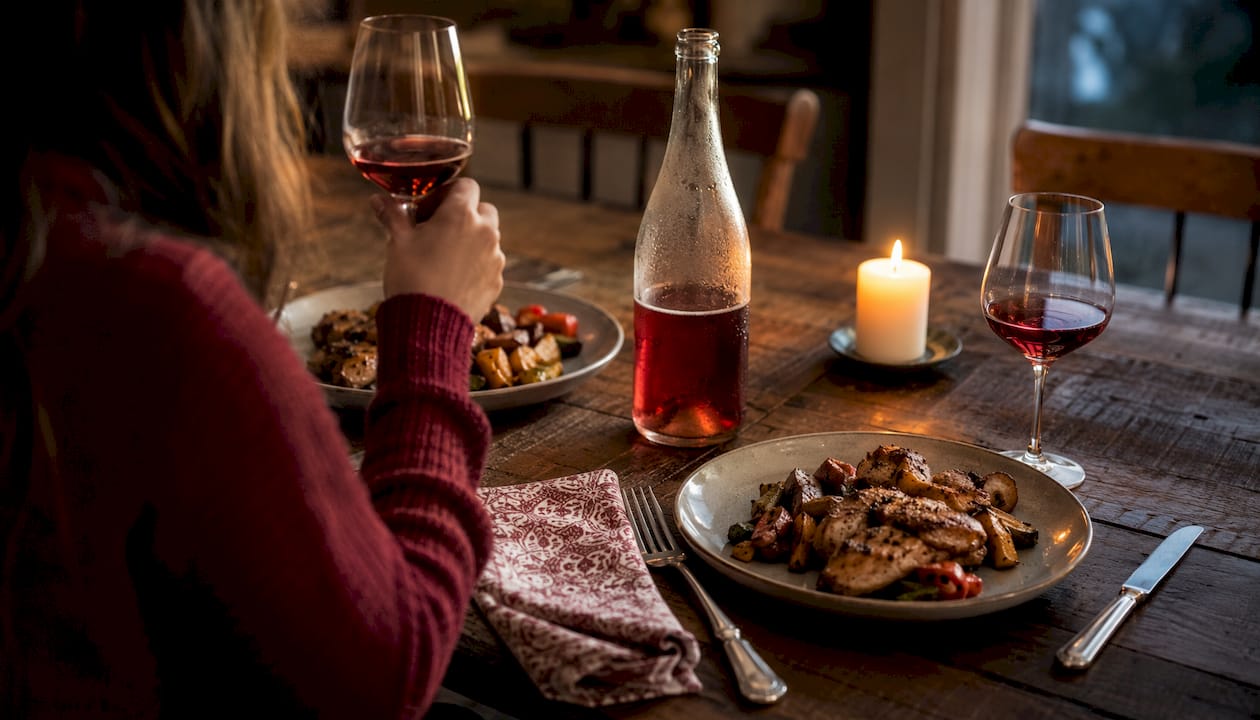
Medium and tannic reds need something to push against. Grilled meats, mushroom ragu, slow-cooked beans with chipotle, or hearty stews give the tannins something to grip, softening the wine while deepening the food’s savory notes.
Pro Tip: High-alcohol natural reds can amplify chili heat rather than soothe it. If your dish is genuinely spicy, switch to a pét-nat or a slightly off-dry white to keep things comfortable.
Serving temperature, decanting, and the 20-minute rule
Getting the temperature right makes a bigger difference with natural wines than with most conventional bottles. Serve them too warm and the alcohol dominates; too cold and the aromatics shut down.
- Pét-nat and sparkling: 45–50°F. Serve well chilled, straight from the fridge.
- Mineral-driven whites and dry rosé: 48–54°F. Pull from the fridge 10 minutes before pouring.
- Orange and skin-contact wines: 54–58°F. Slightly warmer than a standard white to let the texture and aromatics open up. Decant if the wine smells very tight or volatile on first pour.
- Light reds: 55–60°F. A 20-minute chill in the fridge before dinner is the single easiest upgrade you can make.
- Medium and tannic reds: 60–65°F. Room temperature in most American homes is too warm; aim for a cool corner or a brief fridge stint.
The 20-minute rule applies broadly: open the bottle, pour a small taste, and give it time to breathe before the meal starts. Many natural wines smell funky or reductive right out of the bottle, then open into something genuinely beautiful with a little air. Plan your pairings across multiple courses or small plates so you can observe how the wine evolves and adjust what you’re eating accordingly.
Pro Tip: If a bottle smells strongly of vinegar or nail polish even after 20 minutes of air, it may be past its best. Natural wines oxidize faster than heavily preserved conventional wines, so finish open bottles within a day or two and store them in the fridge after opening.
“What grows together” — regional pairings that almost always work
One of the most reliable shortcuts in natural wine food pairing is matching a wine to the cuisine of its home region. Flavors in local food and local wine have co-evolved over generations, which is why the combination tends to feel effortless.
A few examples worth knowing:
- Georgian skin-contact wines (made in buried clay vessels called qvevri) alongside spiced lamb, walnut sauces, or roasted eggplant. The wine’s tannic amber structure was practically built for bold, herb-forward Caucasian cooking.
- Loire Valley Chenin Blanc with fresh goat cheese. The wine’s bright acidity and slight mineral edge cut the cheese’s creaminess perfectly. It’s one of the most reliable pairings in the natural wine world.
- Mediterranean pét-nats with fried seafood, grilled octopus, or anything with olive oil and lemon. Try this alongside a Moroccan chicken tagine for a slightly bolder regional match.
- Italian natural reds (Sangiovese, Nerello Mascalese) with tomato-based pastas. The wine’s acidity mirrors the tomato’s acidity, and the two lift each other rather than competing.
You don’t need to source the exact regional dish. The principle translates: if you’re opening a Georgian amber wine, lean into bold, spiced, or fermented flavors wherever you find them. If you have a Loire white, pull out the goat cheese or try a creamy risotto and let the wine’s acidity do the work. For a deeper look at Mediterranean wine pairings, Fine-wine-world has a dedicated guide worth bookmarking.
Common pairing mistakes and what to avoid
A few combinations reliably underperform with natural wines, and knowing them saves you from a frustrating dinner.
- Heavy cream sauces with tannic orange wines. The tannins and the fat compete rather than complement, leaving both the wine and the dish tasting flat and bitter. Reach for a mineral white or a pét-nat instead.
- Very sweet desserts with dry naturals. A bone-dry natural red next to a chocolate cake tastes harsh and thin. If you want wine with dessert, go off-dry or sparkling, or check out Fine-wine-world’s dessert pairing ideas.
- Intensely spicy dishes with high-alcohol reds. Alcohol amplifies heat. A 14% natural red next to a fiery curry will make the spice feel aggressive. Swap in a pét-nat or a slightly sweet white.
- Delicate dishes with very tannic skin-contact wines. Steamed fish, light soups, or a simple green salad get overwhelmed by the grip of a heavily macerated orange wine. Save the orange wine for bolder plates.
If you find yourself mid-meal with a mismatch, a few quick fixes work well. Add a pinch of salt or a squeeze of lemon to the dish to bring up the acidity and meet the wine halfway. Or pour a glass of pét-nat as a palate reset between courses. For a full rundown of common wine pairing mistakes, that guide covers the most frequent missteps in detail.
Quick cheatsheet: natural wine matches for common home meals
The safe default, when you’re genuinely unsure, is a pét-nat or a high-acid white. Both styles are forgiving, food-friendly, and rarely clash.
| Home Dish | Best Natural Wine Style | Why It Works |
|---|---|---|
| Pizza (tomato) | Light red | Acidity mirrors tomato; fruit lifts the cheese |
| Fried foods | Pét-nat / sparkling | Bubbles and acid cut fat and salt |
| Grilled vegetables | Dry rosé or mineral white | Fresh acidity complements char and herbs |
| Charcuterie / cheese board | Light red or pét-nat | Salt lifts fruit; tannin meets fat |
| Spicy takeout | Pét-nat or off-dry white | Bubbles and slight sweetness cool the heat |
| Pasta with tomato sauce | Light red | Classic acid-on-acid harmony |
| Plant-based grain bowls | Mineral white or oxidative white | Savory, earthy notes mirror grains and herbs |
| Roasted chicken | Light to medium red | Fruit and mild tannin complement roasted skin |
- Unsure what you have? Taste the wine first and identify its dominant trait: bright and tart = high acid (pair with fat or salt); grippy and textured = tannin (pair with protein or umami); light and fruity = low tannin (pair with almost anything mild).
- Fermented foods (kimchi, miso, sauerkraut, aged cheese) are a natural wine’s best friend across almost every style.
- Plant-forward meals — grain bowls, roasted vegetables, legume stews — work especially well with natural wines because both emphasize minimal processing and pure flavors.
How to taste a natural wine and figure out what it needs
You don’t need formal training to read a natural wine’s pairing signals. A quick, structured taste before you sit down tells you almost everything.
Start by swirling and smelling. If the wine smells earthy, funky, or savory, it’s leaning toward umami-friendly foods. If it smells bright and citrusy, it’s high-acid and ready for fat or salt. A floral, fruity nose usually signals lower tannin and lighter body, which means delicate dishes are safe.
Next, take a sip and pay attention to three things: where you feel the wine in your mouth (front = light and acid-driven; back and sides = tannin and texture), how long the flavor lingers, and whether it feels dry or has a hint of sweetness. A wine that makes your mouth water is high-acid and wants something rich or salty alongside it. A wine that dries out your gums needs protein or fat to soften it.
Finally, notice the finish. A short, clean finish means the wine is delicate and won’t overpower subtle dishes. A long, grippy finish means it can handle bold, spiced, or fermented flavors without getting lost. Once you’ve run through those three steps, you’ll have a clear enough picture to pick a dish with confidence.
Pairing natural wine with vegetarian, vegan, and gluten-free meals
Natural wines are a genuinely great match for plant-forward eating, and not just because many are vegan-friendly by production. Their savory depth and acidity complement vegetables, legumes, and grains in ways that conventional wines often don’t.
For vegetarian meals, the same structural rules apply. Creamy dishes (risotto, goat cheese pasta, gratin) want high-acid whites. Roasted or caramelized vegetables pair well with light reds or dry rosé. Earthy mushroom dishes sing alongside oxidative whites or medium reds with some tannin.
Vegan plates built around fermented ingredients (tempeh, miso, kimchi) are tailor-made for skin-contact orange wines. The wine’s tannin and texture match the boldness of fermented flavors without needing any animal protein in the equation. Grain bowls with herb dressings, lentil stews, and roasted cauliflower with tahini all follow the same logic.
Gluten-free meals don’t require any special adjustment to the pairing approach. Focus on the dish’s dominant flavor profile (fatty, spicy, umami, acidic) and apply the same matching principles. A gluten-free pizza with tomato sauce still wants a light red; a rice noodle bowl with peanut sauce still benefits from a pét-nat’s cleansing bubbles.
Balancing bold natural wines with delicate dishes, and vice versa
The biggest pairing risk with natural wines isn’t choosing the wrong grape variety. It’s mismatching weight and intensity. A bold, tannic skin-contact wine will flatten a delicate steamed fish dish; a light, low-tannin pét-nat will disappear next to a slow-braised short rib.
When you have a bold natural wine (heavy tannin, high alcohol, strong funk), build the dish up to meet it. Add salt, fat, or umami. Roast the vegetables instead of steaming them. Use aged cheese instead of fresh. The goal is to give the wine something to push against so neither element dominates.
Going the other direction, when you have a delicate natural wine (light body, low tannin, subtle aromatics), keep the dish restrained. Avoid heavy sauces, aggressive spices, or very smoky preparations. A simple herb-roasted chicken, a fresh salad with citrus vinaigrette, or a light pasta with olive oil and garlic will let the wine’s nuance come through rather than burying it. The wine and pasta pairing guide on Fine-wine-world goes deeper on this balance for pasta dishes specifically.
Key Takeaways
Natural wine food pairing works best when you match the wine’s dominant structural trait — acidity, tannin, texture, or funk — to the dish’s dominant element: fat, protein, salt, or umami.
| Point | Details |
|---|---|
| Match structure to flavor | High-acid wines cut fat; tannic wines need protein; funky wines want umami-rich dishes. |
| Pét-nat is the safe default | When unsure, a sparkling pét-nat pairs with almost any home meal from fried food to cheese boards. |
| Regional pairings rarely fail | Matching a wine to its home cuisine (Georgian amber + spiced lamb; Loire Chenin + goat cheese) produces reliable results. |
| Taste across the meal | Natural wines evolve in the glass; the best pairing may shift from first course to last, so keep tasting. |
| Fine-wine-world resources | The food and wine pairing guide on Fine-wine-world offers structured practice for building pairing intuition at home. |
Natural wine pairing is more forgiving than you think
Here’s a perspective worth sitting with: most pairing anxiety around natural wines comes from treating them like conventional wines with stricter rules. The opposite is closer to the truth.
Natural wines are, almost by definition, made to go with food. Their higher acidity, lower alcohol, and savory complexity mean they integrate with a meal rather than competing with it. A bottle that smells a little funky on its own often becomes genuinely delicious alongside a salty, fatty, or fermented dish. That transformation is the whole point.
The one thing worth pushing back on is the idea that natural wines are too unpredictable to pair confidently. Yes, they vary. Yes, a bottle can change dramatically between the first glass and the last. But that variability is actually an invitation to pay attention, to taste with curiosity rather than anxiety. Think of it less as a problem to solve and more as a reason to stay engaged with what’s in your glass throughout the meal. The most memorable pairings tend to come from exactly that kind of attentive, low-pressure experimentation.
Ready to practice? Fine-wine-world has you covered
If this guide has you excited to experiment at home, Fine-wine-world is a great place to keep going. The food and wine pairing section covers everything from basic principles to style-specific matches, and the wine tasting resource walks you through how to run a focused tasting at home so you can sharpen your palate with every bottle you open.
Whether you’re just getting started with natural wines or looking to build real pairing confidence, Fine-wine-world is built for exactly that kind of curious, hands-on learning. Head to Fine-wine-world to browse guides, tasting notes, and pairing ideas curated for everyday wine lovers.
Useful sources and further reading
These are the sources cited throughout this guide, along with a couple of recipe links for putting pairings into practice:
- Sommy — Natural Wine Guide: Practical overview of natural wine characteristics, serving tips, and why these wines need food to show their best.
- Foodism — Honey Spencer on natural wine pairings: The “road-trip” framing for how natural wines evolve in the glass and how to pair across a meal.
- KERB Wine — Pairing natural wine with food: Solid breakdown of contrast pairing, regional matching, and skin-contact wine logic.
- Dry Farm Wines — Quick pairing guide: Focused on pét-nat and sparkling naturals with fried and salty foods.
- Martha Stoumen Wines — Serving temperature guide: Concrete temperature ranges and decanting advice for each natural wine style.
- Uncorked Conversations — Natural wine and modern cuisines: Plant-forward and fermented food pairings for contemporary home cooking.
- Forkward — Moroccan Chicken Tagine recipe: A tested recipe for testing skin-contact wine pairings at home.
- Forkward — Creamy Instant Pot Risotto: A simple risotto to practice high-acid white pairings.
Bookmark the Fine-wine-world food and wine pairing page for ongoing practice as you explore new bottles.